Seine Water Quality Test: Beyond Hydrocarbon Traces

Virtual Roundtable
A high-profile diving competition in Paris has exposed the complex and potentially fragile nature of the city's ambition to reclaim the Seine for aquatic sports.
The framing
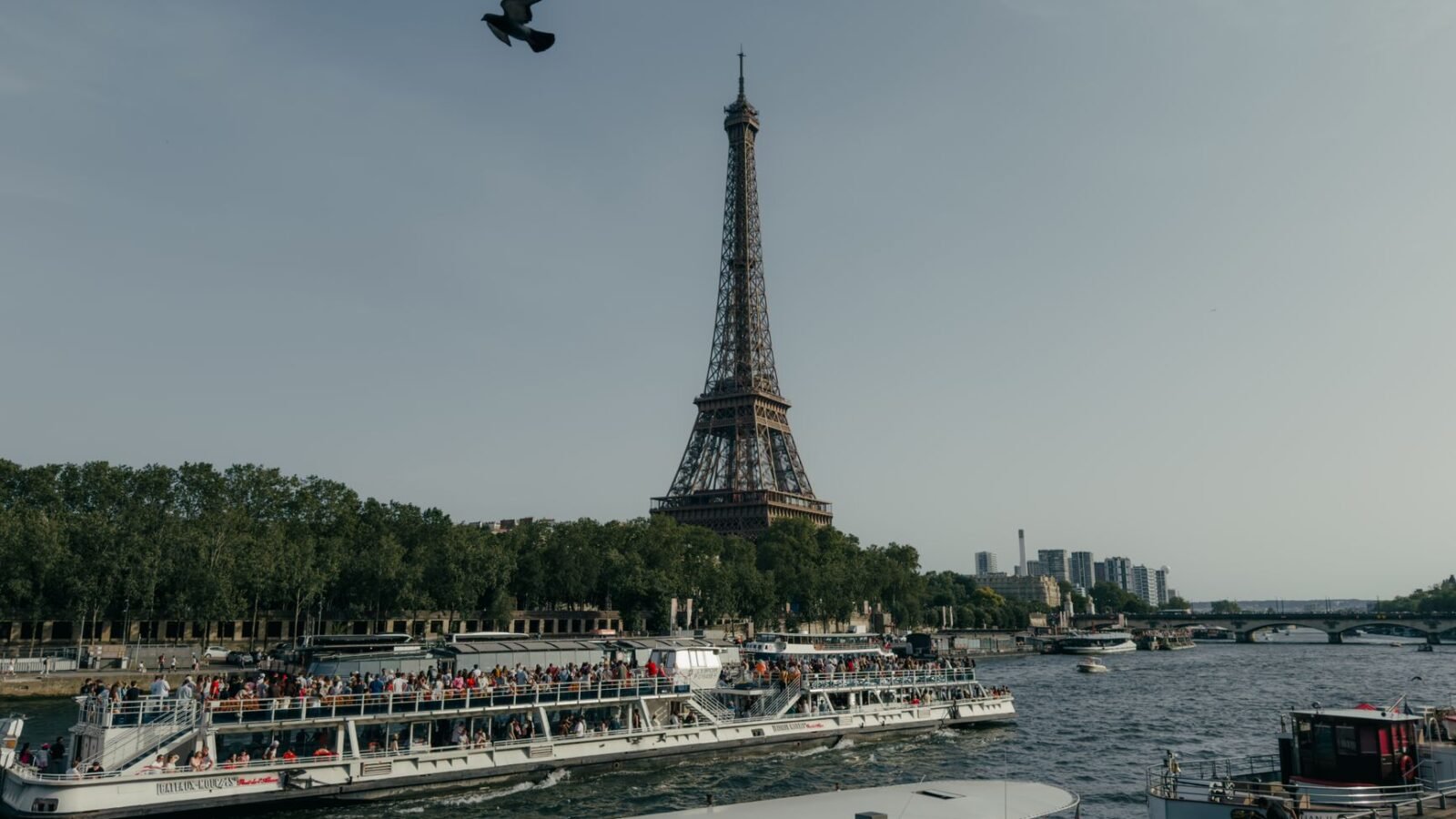
The recent high-diving competition in the Seine, staged as a prelude to broader aquatic championships, was intended as a powerful symbol of Paris's efforts to rejuvenate its iconic river. From a spectacle of athleticism set against the Eiffel Tower, the event swiftly transformed into a stress test of environmental reclamation. The detection of hydrocarbon traces upstream, leading to a temporary halt in training, pulled back the curtain on the inherent complexities of integrating competitive sport with a remediated urban waterway. This incident moves beyond a simple matter of pollution control; it forces a reassessment of the practical thresholds for environmental ambition and the observable criteria by which such projects ought to be judged.
The question is no longer merely whether the Seine can host events, but under what conditions, with what resilience, and at what cost – both financial and reputational – when those conditions are not met. The episode invites a deeper inquiry into the systemic challenges of urban river purification, the reliability of monitoring protocols, and the political economy of environmental pledges. It is a reminder that the narrative of urban renewal, however compelling, remains subject to the immutable laws of hydrology and chemistry.
Where the panel disagrees
While there is broad consensus that the Seine's water quality remains a critical variable, our panel offers divergent interpretations on the implications of the recent incident. One perspective posits that the temporary suspension, followed by remediation and resumption, demonstrates an effective, albeit reactive, monitoring and response system. This view suggests that occasional setbacks are inevitable in large-scale environmental projects and that the ability to address them swiftly is a mark of progress, not failure. The counter-argument, however, maintains that the very occurrence of such an interruption, particularly for a highly visible test event, exposes a fundamental fragility in the underlying system. This reading suggests that the current remediation efforts may be insufficient to guarantee the consistent, high-standard conditions required for sustained competitive use, especially given the unpredictable nature of urban run-off and upstream industrial activity. The core tension lies between viewing the event as a successful demonstration of adaptive management versus an alarming indicator of persistent, structural vulnerabilities.
The exchange
Disclosure: This roundtable is an analytical synthesis. The panellists are composite professional personas, and no statement below is a quotation from any real person.
A political risk consultant to institutional investors, Europe
What does this incident signal to international investors about Paris's infrastructure and environmental commitments?
The immediate signal is one of heightened uncertainty. Large-scale urban regeneration projects, particularly those tied to major international events, carry significant reputational and financial capital. When a highly visible test event encounters a setback, even a temporary one, it introduces a discount factor for future commitments. Investors will scrutinise not just the initial promise but the resilience and adaptability of the underlying infrastructure and regulatory frameworks. The question becomes: how robust are these systems when faced with unexpected environmental variables? It’s not just about the hydrocarbons; it’s about the perceived reliability of the entire environmental governance structure. This could lead to more stringent due diligence on future public-private partnerships in the region, particularly those with an environmental component.
A career diplomat, recently retired, France
From a diplomatic perspective, how does this affect France's image on the global stage, especially concerning environmental leadership?
Diplomatically, this is an awkward moment. France has often positioned itself as a leader in environmental policy and sustainable urban development. The Seine project was intended as a powerful symbol of this commitment, a tangible demonstration of revitalising a major European capital's natural assets. A temporary suspension due to contamination, even if quickly resolved, creates a narrative challenge. It opens a window for competitors or critics to question the depth of the commitment or the efficacy of the execution. While the immediate impact might be contained, the longer-term concern is whether this incident erodes some of the soft power associated with France's environmental advocacy. It underscores that even the most ambitious environmental pledges are ultimately judged by their practical, observable outcomes, particularly when under global scrutiny.
A commodities desk head, Europe
What are the unseen logistical or supply chain implications of such a contamination event, even a contained one?
While not directly a commodities issue in the traditional sense, the logistical implications are significant for the specific industries involved in remediation. Consider the rapid deployment of treatment agents, the sourcing of specific filtration materials, or even the logistical challenge of mobilising monitoring equipment and personnel at short notice. This isn't off-the-shelf procurement; it often involves specialised chemicals or technologies. A sudden, unexpected demand for these can create localised supply chain stresses. Furthermore, if the contamination source is identified as industrial, there could be downstream implications for specific industrial operations, potentially requiring temporary shutdowns or process modifications, which then ripple through their own supply chains. Even a 'treated' area implies a rapid, coordinated, and resource-intensive response that is not without its own logistical footprint.
A political risk consultant to institutional investors, Europe
Does the ability to quickly 'treat' the affected area inspire confidence or raise further questions about the nature of the contamination and its recurrence?
It's a double-edged sword. On one hand, a rapid response demonstrates operational capability and a functional emergency protocol. This can mitigate immediate panic. However, it also prompts a more fundamental question: what kind of contamination can be 'treated' so quickly? Was it a superficial issue, or does it point to a system that can mask deeper, intermittent problems? Investors are less concerned with a single, isolated incident and more with systemic risk. If this rapid 'treatment' is indicative of a recurring, manageable problem, then the long-term cost of maintenance and remediation becomes a permanent operational expenditure. If it signifies a vulnerability to unpredictable, larger-scale events, then the risk profile changes dramatically. The key is transparency on the root cause and the long-term solution, not just the immediate fix.
A career diplomat, recently retired, France
How might this incident influence future urban development and environmental projects in other major cities aspiring to similar river revitalisation efforts?
This event serves as a critical case study for other global cities contemplating ambitious river revitalisation. It highlights the inherent challenges and the need for robust, transparent, and resilient systems. Other cities will observe that the political will and significant investment are not, by themselves, sufficient. The technical execution, the reliability of monitoring, and the capacity for rapid and effective remediation are paramount. Critically, it underscores the importance of public perception and the potential for a single incident to overshadow years of effort. For those cities, the takeaway will be to build in greater contingencies, to manage public expectations more carefully, and to invest heavily in both proactive prevention and reactive capacity, understanding that the river's health is a dynamic, not a static, condition.
A commodities desk head, Europe
Beyond the immediate remediation, what long-term investments or policy shifts might this incident necessitate from a resource perspective?
From a resource perspective, this incident could drive increased investment in advanced real-time water quality monitoring technologies, moving beyond periodic sampling to continuous, sensor-based systems. This creates a market for specialised environmental tech. It also might necessitate more rigorous 'source control' policies upstream – identifying and mitigating potential industrial or agricultural discharge points before contamination occurs. This could involve upgrades to industrial wastewater treatment facilities, changes in agricultural practices, or new urban drainage infrastructure. These are significant capital expenditures. Furthermore, there could be a push for more 'green' infrastructure solutions, like constructed wetlands or permeable surfaces, to naturally filter runoff, reducing reliance on chemical remediation. Each of these represents a shift in resource allocation and policy direction.
Source material: World news | The Guardian