Resumption of Palestinian Football: A Fragile Normalisation
Virtual Roundtable
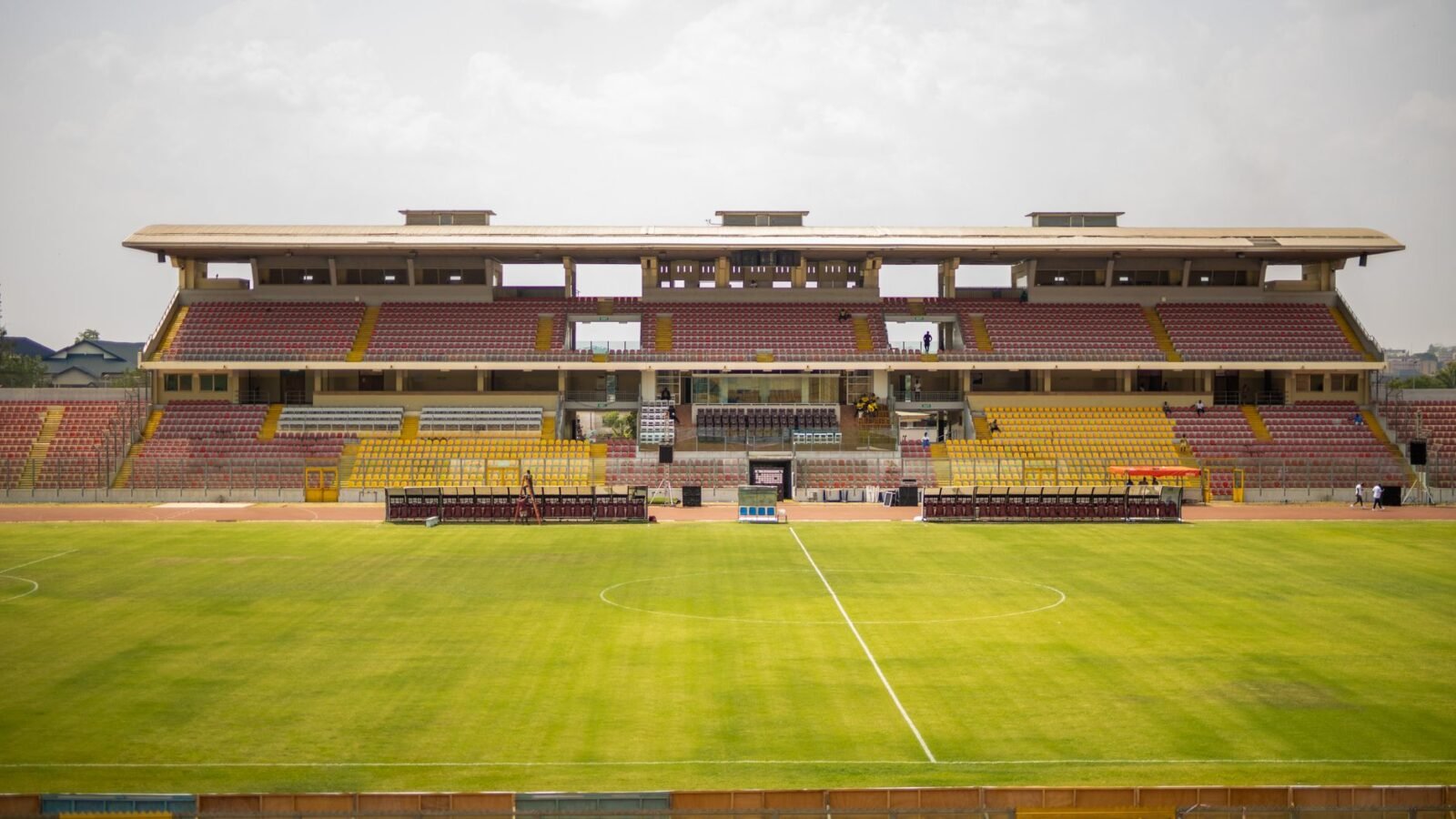
The decision to restart Palestinian club football in September, following a suspension during the Gaza conflict, reveals complex political and social undercurrents.
The framing
The announcement that Palestinian club football will restart in September, following its suspension during the recent conflict in Gaza, is more than a simple scheduling update. This decision, emerging from a landscape profoundly altered by sustained military action and humanitarian crisis, invites a deeper interrogation of its underlying political and social utility. Sport, particularly football, frequently serves as a potent symbol of national identity and a vehicle for collective expression, making its resumption a loaded act. The question is not merely what it means for the players and fans, but what message it is intended to convey, both internally and externally, regarding the state of Palestinian society and governance.
The timing of such a resumption, while conflict continues to cast a long shadow over daily life, suggests a deliberate calculation. Is this a defiant assertion of resilience, a strategic attempt to project an image of control and stability by the Palestinian Authority, or perhaps a concession to external pressures for some semblance of order? Furthermore, the implications extend to the international sporting community, which has long grappled with the complexities of separating sport from politics. The return of Palestinian football forces a re-evaluation of how such bodies navigate humanitarian crises and territorial disputes, and whether their stated principles of neutrality can withstand the pressures of such fraught geopolitical realities.
Where the panel disagrees
While there is broad agreement that the return of football is a politically charged event, our panellists diverge significantly on the primary drivers and likely efficacy of this move. The career diplomat views it as a calculated, if fragile, attempt by the Palestinian Authority to reassert its administrative capacity and project an image of normalcy, potentially for international consumption. The political risk consultant, however, interprets it more as a response to internal societal pressures for a return to routine, albeit one that carries substantial risks for the Authority if conditions deteriorate further. The defence procurement analyst, in contrast, sees it as a peripheral indicator, arguing that such cultural gestures have limited bearing on the deeper strategic calculus of the conflict and the underlying security dynamics, which remain largely unchanged by the resumption of sporting events. The tension lies in whether this is primarily an internal political manoeuvre, a societal coping mechanism, or a largely symbolic act with minimal material impact on the broader geopolitical landscape.
The exchange
Disclosure: This roundtable is an analytical synthesis. The panellists are composite professional personas, and no statement below is a quotation from any real person.
A career diplomat, recently retired
What is the primary diplomatic signal conveyed by the decision to restart Palestinian football leagues at this juncture?
The most significant diplomatic signal is one of attempting to project administrative capacity and a degree of normalisation. In situations of prolonged conflict and humanitarian crisis, the ability to organise and execute large-scale public events, even something as ostensibly apolitical as a football league, serves to demonstrate a functioning bureaucracy. For the Palestinian Authority, this move can be interpreted as an effort to counter narratives of collapse or total disarray, both internally and to international partners whose support is crucial. It suggests an attempt to reclaim some agency in the face of overwhelming external pressures, indicating that life, however precariously, continues under their purview. The challenge, of course, is that such a signal is inherently fragile, easily undermined by any deterioration in the security situation.
A political risk consultant to institutional investors
From a political risk perspective, what are the internal and external risks associated with this decision?
Internally, the primary risk for the Palestinian Authority is the potential for this 'normalisation' to be perceived as tone-deaf or premature by a populace still reeling from the conflict's impact. If daily life remains severely disrupted, or if further violence erupts, the resumption of football could be seen as an affront, highlighting the disconnect between the leadership's priorities and the people's suffering. This could exacerbate existing grievances and undermine legitimacy. Externally, the risk is that it could be interpreted as a premature declaration of stability, potentially reducing international focus or pressure on humanitarian aid and reconstruction efforts. Conversely, if the resumption is disrupted by external actors, it could be framed as further evidence of an inability to maintain basic societal functions, reinforcing narratives of instability. It's a calculated gamble to project control, but one with substantial downside if the underlying conditions do not support the illusion of normalcy.
A defence procurement analyst
Does the resumption of football offer any meaningful insight into the strategic or security calculus of any of the parties involved?
From a purely strategic and security perspective, the resumption of football is a second-order indicator at best. It tells us very little about force postures, command and control capabilities, or the strategic objectives of the primary actors. While it might reflect a desire by the Palestinian Authority to re-establish some semblance of civil order – which has tangential security implications in terms of internal stability – it doesn't alter the fundamental military balance or the operational environment. Security forces will, of course, need to manage the events, which represents a resource allocation. But it's a civilian administrative decision, not a military one. The core security calculus, which revolves around intelligence, materiel, and strategic intent, remains largely unaffected by whether a football match is played or not. It's a symptom of underlying political conditions, not a driver of them.
A career diplomat, recently retired
How might international sporting bodies react to this resumption, and what dilemmas does it pose for them?
International sporting bodies, such as FIFA, are placed in a perpetual dilemma when conflict intersects with their mandate. On one hand, they often espouse principles of universality and the 'apolitical' nature of sport, which would generally favour the resumption of organised play wherever possible. On the other hand, they face immense pressure from human rights advocates and some member states to consider the broader context of conflict and humanitarian suffering. The resumption of Palestinian football allows them to point to a functioning league, which might be seen as upholding their principle of supporting sport regardless of political circumstances. However, it also raises questions about whether they are implicitly endorsing a 'business as usual' narrative in a region where 'usual' is anything but. Their primary concern will be the safety and security of players and officials, but also avoiding being drawn into political controversies that could damage their global standing. It’s a tightrope walk between appearing neutral and being perceived as indifferent.
A political risk consultant to institutional investors
What would be the most immediate observable trigger that would indicate this attempt at normalisation is failing?
The most immediate and unambiguous trigger would be a significant and sustained disruption to the league schedule itself. This could manifest as matches being cancelled or postponed due to renewed security incidents, mass public boycotts by fans and players protesting the perceived disconnect with ongoing suffering, or the inability of teams to travel safely between venues. If the logistical framework — security, transport, public attendance — cannot be reliably maintained, then the projection of normalisation collapses. A secondary indicator would be a significant decline in public engagement, suggesting that the population is either too preoccupied with more immediate concerns or views the resumption as an inappropriate distraction from the realities on the ground. The failure to sustain the illusion of normalcy would be acutely visible through these operational and social metrics.
A defence procurement analyst
Given the ongoing conflict, how resilient is the infrastructure required to support a professional football league?
The resilience of such infrastructure is highly contingent on the specific nature and intensity of the conflict. Football requires not just stadiums, but also training facilities, reliable transportation networks for teams and fans, consistent power supply, and a basic level of public safety that allows for large gatherings. In areas directly affected by recent hostilities, physical damage to facilities or transport routes would be a direct impediment. Even in less directly impacted areas, the strain on public services, the psychological toll on the population, and the diversion of resources towards immediate recovery efforts can severely degrade the support structures for non-essential activities like professional sport. The 'resilience' here is less about the physical robustness of a stadium and more about the societal capacity and political will to prioritise and maintain such an endeavour amidst competing, existential demands. It's a fragile construct, vulnerable to even minor escalations or disruptions.
Source material: Al Jazeera – Breaking News, World News and Video from Al Jazeera