Mojtaba Khamenei’s Health: A Succession Signal, Not a Health Report
Predictive Analysis
President Pezeshkian's statement on Mojtaba Khamenei's health appears to be a deliberate political signal, not merely a medical update, against a backdrop of complex succession dynamics.
The signal
President Masoud Pezeshkian's recent declaration that Mojtaba Khamenei is in 'perfect health' is not merely a medical update; it is a political signal, meticulously calibrated for both domestic and international audiences. In the opaque and highly symbolic realm of Iranian politics, particularly concerning the Supreme Leader's succession, such pronouncements are rarely coincidental. The health of senior figures, especially those within the inner circle of the current Supreme Leader, Ayatollah Ali Khamenei, is a closely guarded matter. Public statements on such a sensitive topic, especially by the President, carry significant weight, often serving as proxies for deeper political manoeuvres.
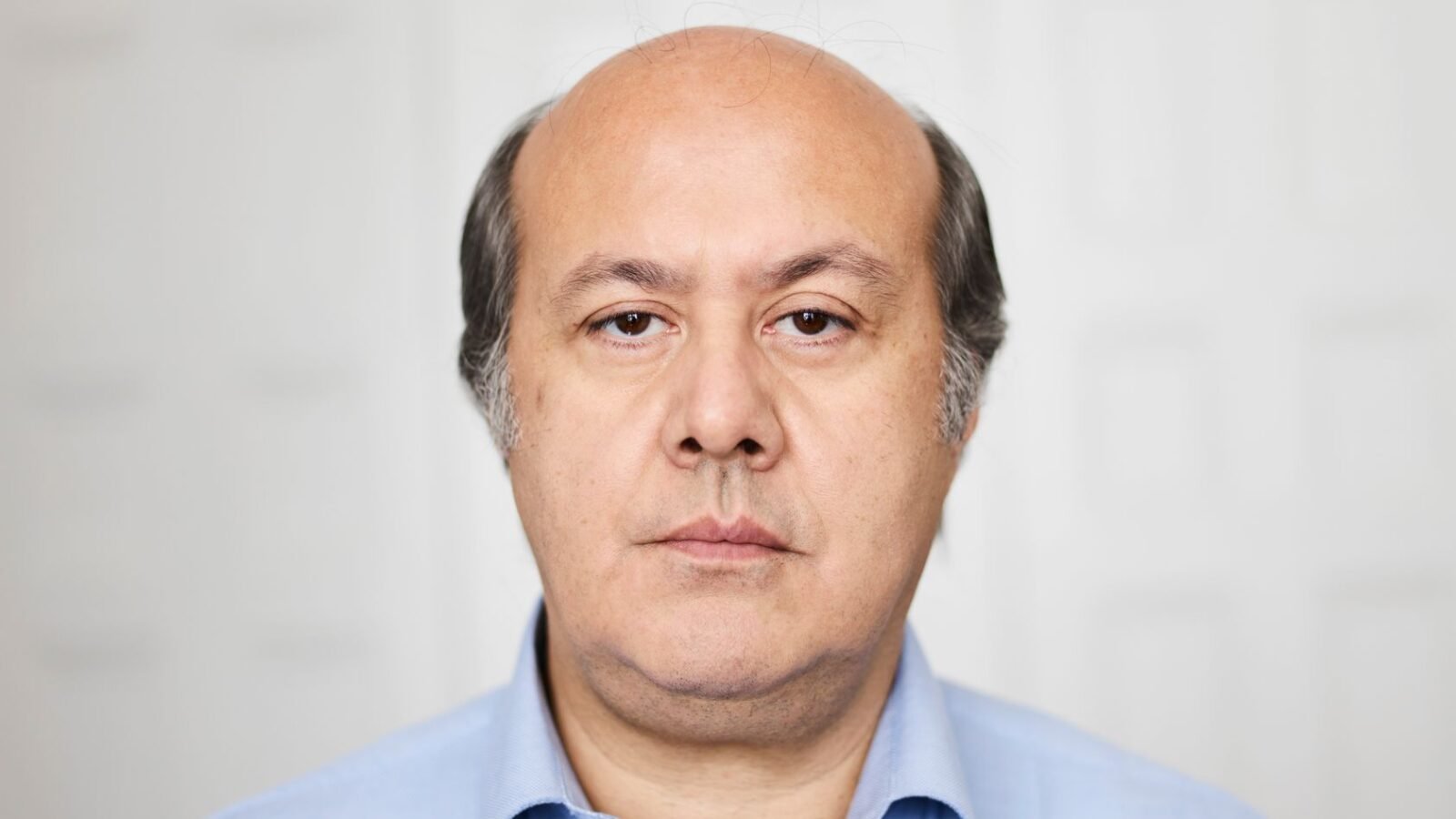
This specific declaration concerning Mojtaba Khamenei, the Supreme Leader's son, immediately elevates his profile and implicitly addresses any speculation, real or manufactured, about his fitness or viability for future leadership roles. It can be interpreted as an official endorsement, or at least a clearing of the path, for his potential ascension or a more prominent role within the power structure. The very act of making such a statement, rather than allowing silence or rumour to persist, suggests a deliberate strategy to shape perceptions around his standing.
The mechanism
The mechanism at play here is one of carefully managed political messaging within a system that eschews direct public campaigning for high office. The Supreme Leader's succession is not determined by popular vote or even a transparent electoral process; it is the prerogative of the Assembly of Experts, a body of senior clerics. However, the influence of the current Supreme Leader and powerful factions within the Revolutionary Guard and the clerical establishment are paramount in shaping the Assembly's decisions. For a candidate like Mojtaba Khamenei, whose legitimacy partly derives from his lineage, the cultivation of an image of strength, stability, and divine favour is crucial.
Pezeshkian's statement functions as an authoritative counter-narrative to any potential whispered doubts about Mojtaba Khamenei's capabilities or physical resilience, which could be exploited by rival factions. It provides a formal, presidential imprimatur that attempts to inoculate his position against future challenges. Furthermore, it could be interpreted as a subtle directive to the various power centres in Iran – the Revolutionary Guard, the judiciary, and the economic conglomerates – to align their expectations and support behind a perceived frontrunner. This is less about confirming a fact and more about establishing a narrative that reinforces a desired outcome.
Who gains and who is exposed
The most immediate beneficiary of this declaration is Mojtaba Khamenei himself. The statement bolsters his public image and reinforces his standing as a viable candidate for succession, or at least for a significantly enhanced role in the country's leadership. It signals a degree of institutional backing, suggesting that powerful elements within the regime are actively working to consolidate his position. This public endorsement, particularly from the President, can deter potential rivals from openly challenging his perceived trajectory, at least in the short term, by demonstrating the strength of his patronage network.
Conversely, those who are exposed are any other potential successors or rival factions who might have been positioning themselves. The statement implicitly marginalises alternative candidates by focusing attention and legitimacy on Mojtaba. This could force other aspirants to recalibrate their strategies, potentially pushing them to either publicly align with the stated narrative or risk being seen as operating against the perceived consensus. It also exposes the fragility of the political system's outward unity, as such a direct intervention suggests an active effort to manage internal power struggles, rather than a universally agreed-upon succession plan.
Leading indicators to track
To discern the true implications of this statement, several leading indicators warrant close observation. Firstly, monitor the frequency and prominence of Mojtaba Khamenei's public appearances and his involvement in high-profile religious or state events. An increase would suggest a concerted effort to familiarise the public and the elite with his leadership persona. Secondly, track the rhetoric from other senior officials, particularly within the Assembly of Experts and the Revolutionary Guard; do they echo Pezeshkian's sentiment, or do they offer more ambiguous or divergent views? Any explicit or implicit challenges to the narrative would be significant.
Thirdly, examine the state media's portrayal of Mojtaba Khamenei. A shift towards more frequent, positive, and leadership-oriented coverage would indicate a deliberate public relations campaign. Fourthly, observe any changes in the composition or public statements of the Assembly of Experts, particularly regarding their internal deliberations or the criteria for succession. Finally, any shifts in the Supreme Leader's health or public schedule would provide crucial context, potentially accelerating or delaying the succession process that this statement appears to pre-emptively address.
The twelve-month forecast
The next twelve months will likely see an intensified, albeit subtle, campaign to consolidate Mojtaba Khamenei's position within the Iranian power structure. This will manifest through increased visibility, carefully orchestrated endorsements, and a narrative consistent with his perceived fitness for future leadership. The statement serves as a foundational block in this process, aiming to establish a baseline of acceptance and deflect early challenges. However, the very public nature of this declaration also reveals the ongoing tension within the succession process, indicating that the path is not yet entirely clear or universally agreed upon.
The key uncertainty remains the extent to which this signal will be universally accepted by all powerful factions, particularly those who might favour a different candidate or a less dynastic approach to leadership. The declaration does not guarantee a smooth transition; rather, it marks a significant escalation in the pre-succession jockeying. The coming year will test the ability of the current leadership to manage these internal dynamics and project a unified front, even as the underlying competition for influence continues.
Scenario matrix
| Scenario | Probability | Confirming trigger |
|---|---|---|
| Mojtaba Khamenei's profile is steadily elevated, securing his position as the leading successor candidate. | 55% | Consistent, positive state media coverage of Mojtaba Khamenei, increased public appearances in significant state or religious events, and explicit endorsements from key clerical or military figures. |
| The declaration sparks subtle but persistent internal dissent, leading to a more contested succession process. | 30% | Ambiguous or non-committal statements from other powerful figures (e.g., senior clerics, Revolutionary Guard commanders) regarding future leadership, or a lack of unified narrative in state-affiliated media on Mojtaba Khamenei's role. |
| The statement proves to be a temporary manoeuvre, with another candidate emerging as a strong contender due to shifting political alignments. | 15% | A significant public event involving another potential successor, or a notable decline in Mojtaba Khamenei's public visibility and official mentions over several months without clear explanation. |
Probabilities are estimates, not certainties. They are published so the forecast can be scored later.
Source material: Al Jazeera – Breaking News, World News and Video from Al Jazeera