Astronomical Alignment: Europe’s Eclipse and its Unforeseen Implications
Virtual Roundtable
As Europe anticipates its first total solar eclipse in nearly three decades, experts consider the broader, often overlooked, societal and infrastructural implications.
The framing
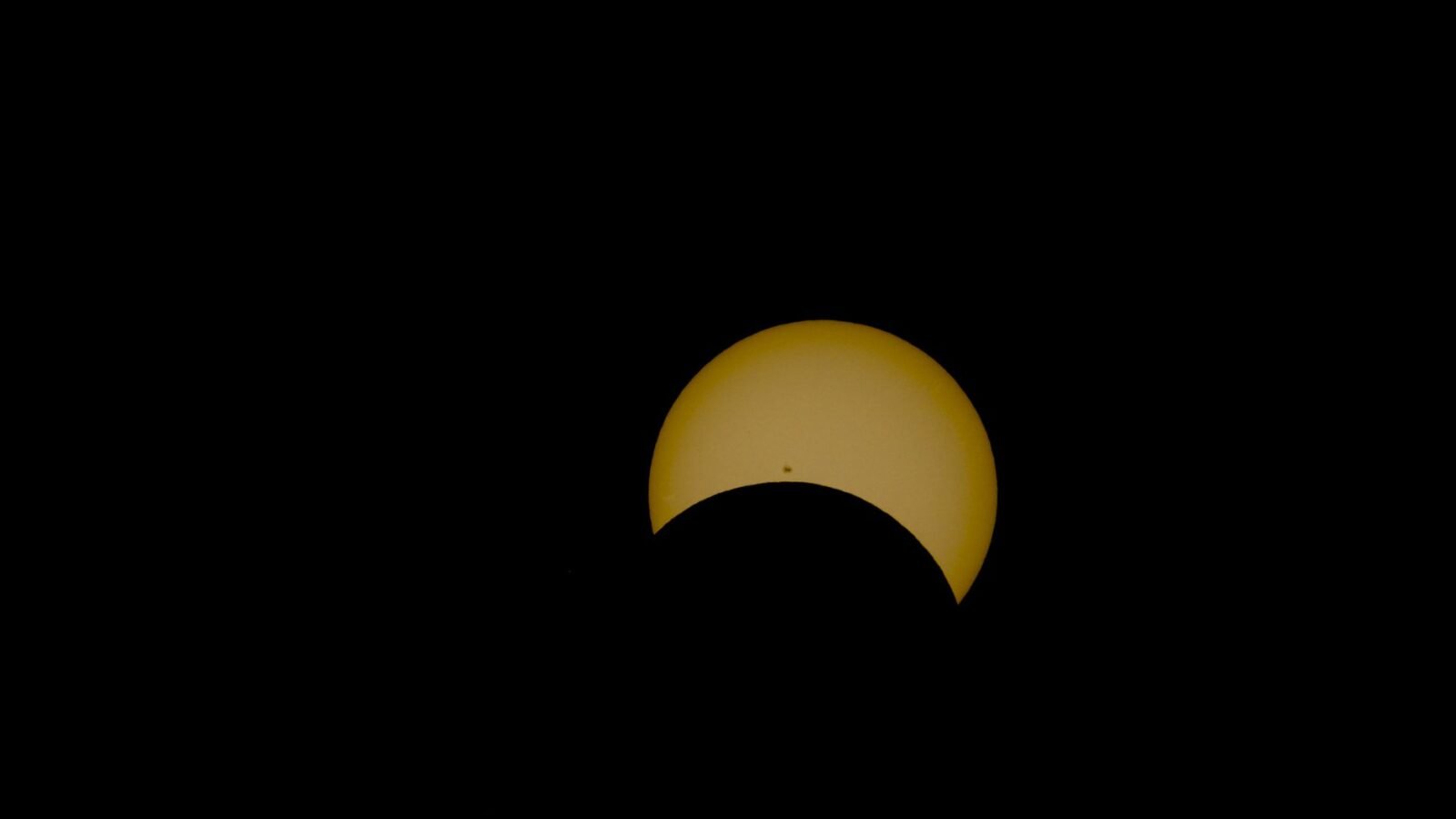
Europe is poised to experience its first total solar eclipse in 27 years, a celestial event that, while universally anticipated as a spectacle, also serves as an unscheduled test of critical infrastructure and societal resilience. Beyond the astronomical observation, such a rare phenomenon can illuminate the intricate interdependencies of modern life, prompting questions not merely of scientific curiosity but of operational readiness and human behavioural response. This event offers a unique opportunity to consider how a predictable, yet infrequent, natural occurrence might ripple through complex systems that are designed for routine conditions.
The analysis moves beyond the immediate visual impact to explore the less obvious consequences: the subtle shifts in energy grids, the logistical challenges for public services, and the psychological effects on populations experiencing a rare alteration of their daily environment. What does it take for a continent to absorb such a transient yet profound change? And what does this event reveal about the underlying assumptions of uninterrupted normalcy upon which much of contemporary society is built? These are the second-order questions that demand consideration as Europe gazes skyward.
Where the panel disagrees
Our panel holds differing views on the magnitude of the eclipse's potential impact. While there is consensus that the direct, immediate effects will be minimal, the debate centres on the second-order societal and infrastructural reverberations. One perspective suggests that modern systems are sufficiently robust and adaptable to absorb such a predictable, short-duration event without significant incident, viewing any disruptions as isolated and easily managed. The opposing view argues that the very predictability of the event might mask underlying vulnerabilities, as preparations may focus solely on the most obvious challenges, overlooking more subtle, cascading effects across interconnected systems. The tension lies between an assessment of inherent resilience and the potential for unforeseen interactions within complex environments.
The exchange
Disclosure: This roundtable is an analytical synthesis. The panellists are composite professional personas, and no statement below is a quotation from any real person.
A political risk consultant to institutional investors (Europe)
Beyond the immediate spectacle, what is the most significant second-order effect of a total solar eclipse across a densely populated region like Europe?
The primary second-order effect is not infrastructural failure, but rather the collective psychological and behavioural shift across a large population. While brief, the experience of sudden midday darkness is profoundly disorienting. This can manifest in unexpected ways, from altered consumer patterns in the immediate aftermath to a heightened, albeit temporary, focus on existential questions. For institutional investors, the question is not one of direct economic damage, but rather how such a shared, anomalous experience might subtly influence sentiment and decision-making over the subsequent days or weeks. It challenges the assumption of routine, which is foundational to market stability.
A commodities desk head (European power grids)
From an energy perspective, how does a sudden, predictable drop in solar irradiance across a large area affect grid operators, particularly given Europe's increasing reliance on renewables?
The challenge for grid operators is less about the absolute drop in solar generation and more about the rate of change. While the eclipse is predictable, the transition from full sun to near-darkness and back occurs rapidly. This necessitates swift and precise ramp-up and ramp-down of conventional or stored power sources to maintain grid stability. The issue is not a lack of supply, but the agility required to manage the fluctuating load. It’s a stress test for frequency regulation and the responsiveness of backup capacity. The systems are designed for this, but the margin for error during such a rapid transition is narrower than during a typical sunset or cloud event.
A career diplomat, recently retired (European Union)
Does an event like this, affecting multiple nations simultaneously, have any discernible impact on cross-border cooperation or public policy, however minor?
Direct policy impact is unlikely, given the transient nature of the event. However, it does offer a subtle, shared experience that transcends national borders, a rare occurrence in a continent often focused on internal divergences. There is a psychological element of shared wonder, or perhaps shared minor disruption, that can, for a fleeting moment, foster a sense of collective European experience. This is not to say it will lead to new treaties, but it provides a common reference point, a shared memory that can subtly reinforce the notion of a common European identity, even if only at a subconscious level. It's a reminder of shared vulnerability and shared marvel.
A political risk consultant to institutional investors (Europe)
What does the focus on eclipse preparedness, particularly regarding public safety and infrastructure, tell us about underlying societal anxieties or priorities?
The preparedness efforts, while pragmatic, reveal a deep-seated societal imperative to maintain control and order even in the face of natural phenomena. It underscores the modern expectation of uninterrupted service and safety. The anxiety is not about the eclipse itself, but about the potential for human error or systemic failure in managing its predictable effects. It highlights how reliant we are on complex systems functioning flawlessly, and how any deviation, even a planned one, requires extensive contingency planning. This vigilance is a proxy for broader concerns about resilience in an increasingly interconnected and vulnerable world.
A commodities desk head (European power grids)
Could this event provide any valuable data or insights for future energy grid management, particularly as renewable energy penetration continues to increase?
Absolutely. This is a real-world, large-scale, and highly predictable experiment. The data collected on grid response, the performance of various balancing mechanisms, and the actual load shifts will be invaluable. It will allow operators to refine their models for managing rapid changes in renewable output, especially for solar. While the conditions are unique, the lessons learned about system inertia, frequency regulation, and the effectiveness of different types of backup generation will directly inform strategies for a grid with even higher levels of intermittent renewables. It's a dress rehearsal for a future energy landscape.
A career diplomat, recently retired (European Union)
Is there any historical precedent for how such a widespread, albeit temporary, natural phenomenon has subtly altered social cohesion or public discourse in Europe?
Historically, celestial events were often imbued with significant meaning, influencing everything from religious beliefs to political legitimacy. In a secularised, technologically advanced Europe, the direct impact on public discourse is diminished. However, the shared experience of a natural wonder, especially one that evokes primal responses, can briefly shift the collective gaze from mundane concerns to broader, more universal themes. It’s a moment of shared reflection, an opportunity for discourse that transcends the usual political or economic divisions, however ephemeral that opportunity may be. It allows for a brief, collective contemplation of humanity's place in the cosmos, which is a rare and unifying sentiment.
Source material: Al Jazeera – Breaking News, World News and Video from Al Jazeera