India’s Protest Crackdown: A Strategy of Containment, Not De-escalation
Predictive Analysis
Amnesty International's findings on the use of kinetic force against student protesters in India suggest a deliberate shift in state-society relations.
The signal
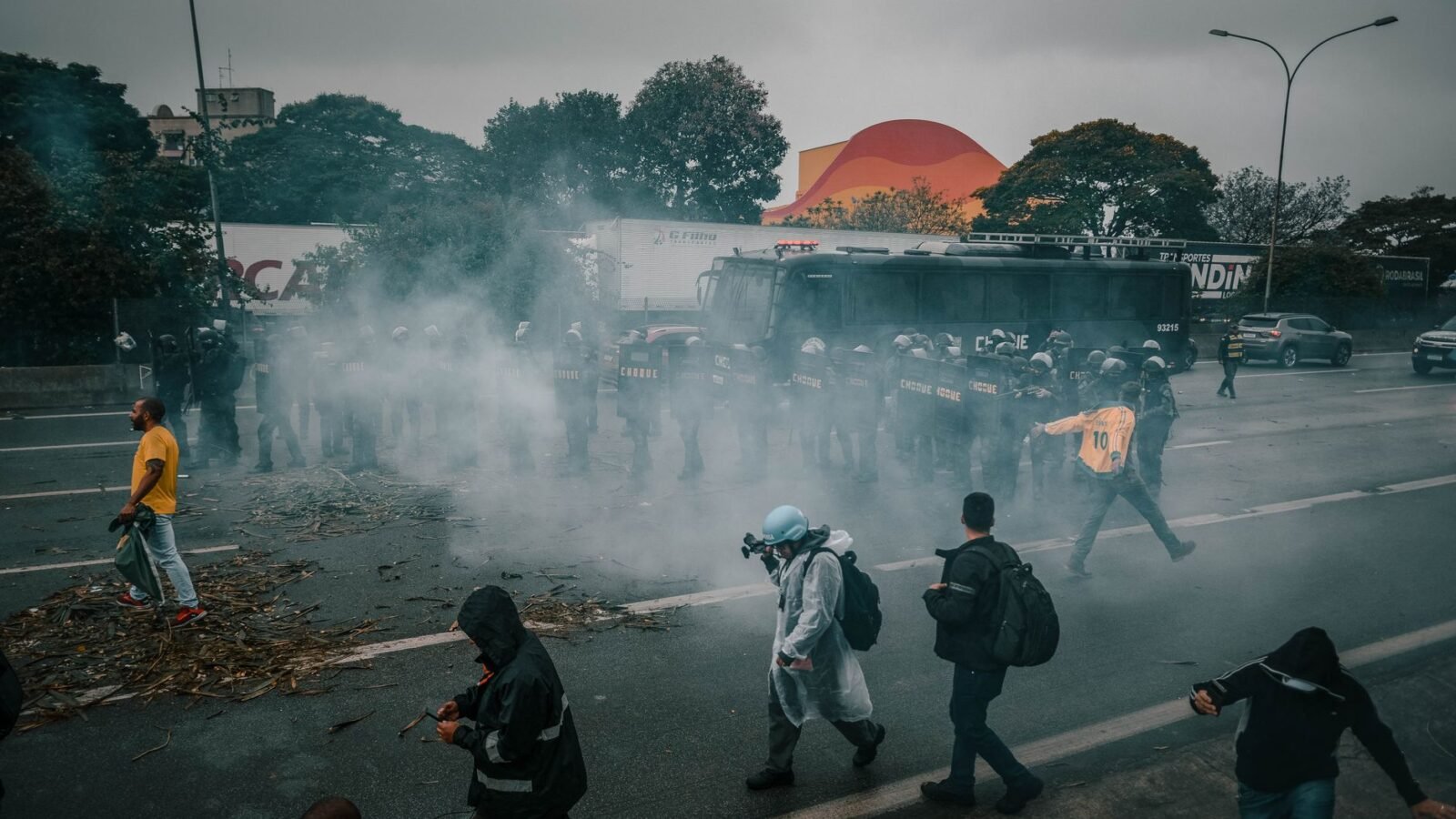
Amnesty International's documentation of Indian security forces employing tear gas, pellet guns, and electric shock devices against student protesters is more than an isolated incident; it constitutes a discernible signal regarding the state's evolving posture towards domestic dissent. The choice of these specific implements, particularly the indiscriminate nature of pellet guns and the direct application of electric shock, indicates a preference for rapid, incapacitating force over graduated response protocols typically associated with crowd control. This is not merely a tactical deployment but a strategic communication: the state is prepared to escalate the physical cost of protest, particularly for a demographic often perceived as less politically engaged or more easily deterred.
The significance is amplified by the demographic targeted. 'Gen Z' protests, by their very nature, often emerge from digitally native, horizontally organised networks, presenting a different challenge to conventional state security apparatuses accustomed to more hierarchical movements. The state's response, therefore, appears designed to disrupt the very calculus of participation, aiming to deter through pain and injury rather than through negotiation or political concession. This marks a potential normalisation of a more coercive approach to maintaining public order, with implications extending far beyond the immediate context of student demonstrations.
The mechanism
The mechanism driving this shift appears multifaceted. Firstly, there is the immediate objective of control. When faced with large-scale, potentially sustained protests, especially those galvanised by social media, authorities may perceive a need to reassert dominance quickly. Kinetic force offers an immediate, if brutal, means to disperse crowds and create disincentives for future assembly. The specific tools chosen suggest a dual aim: to inflict pain that deters individual participation and to generate a collective fear that discourages broader mobilisation.
Secondly, the deployment of such methods can be understood as a calibration of domestic political risk. In a context where certain forms of dissent are increasingly framed as unpatriotic or destabilising, a robust, even harsh, response can play to a domestic constituency that prioritises order and state authority. This instrumentalisation of force serves not only to control the streets but also to shape the broader political narrative around protest, potentially isolating and delegitimising dissenting voices. The absence of widespread domestic condemnation, or the ability to frame such condemnation as externally influenced, would reinforce the viability of this mechanism.
Crucially, the mechanism also involves a test of red lines. By deploying these measures, the state observes the domestic and international reactions. A muted or manageable response from external actors, coupled with effective internal narrative control, could solidify this approach as a standard operating procedure for future unrest. This dynamic suggests a deliberate, rather than reactive, policy choice, indicating a move towards a more assertive management of internal challenges.
Who gains and who is exposed
The immediate beneficiaries of this approach are those within the state apparatus who prioritise stability and order above all else, viewing robust crowd control as essential to governance. This includes hardline elements within security forces and political decision-makers who believe that a firm hand is necessary to prevent perceived anarchy or external interference. For them, the 'gain' is the maintenance of control and the signalling of unwavering resolve, both internally and to any perceived adversaries. It also reinforces the perception of a strong state, which can be politically advantageous.
Conversely, those exposed are multiple and varied. The most immediate are the protesters themselves, who face physical harm and potential long-term trauma. Beyond this, the exposure extends to the broader civil society, which may experience a chilling effect on freedom of assembly and expression. The international standing of India is also exposed, as reports from organisations like Amnesty International draw scrutiny and potentially damage its reputation as a democratic nation upholding human rights. This can have downstream effects on diplomatic relations, trade, and soft power projections.
Perhaps most critically, the state itself is exposed to the risk of radicalisation. When avenues for peaceful protest are perceived as closed or met with disproportionate force, it can push grievances underground or towards more extreme forms of expression. This dynamic risks fostering a deeper, more intractable distrust between the state and a significant segment of its younger population, creating long-term challenges for social cohesion and political stability. The legitimacy of the state, particularly among the demographic targeted, is placed under considerable strain.
Leading indicators to track
To discern the trajectory of this evolving state-society dynamic, several leading indicators warrant close observation. Firstly, monitor the official rhetoric surrounding future protests: any sustained framing of dissent as seditious or externally manipulated would suggest a hardening, rather than softening, of the state's stance. Conversely, a shift towards acknowledging legitimate grievances or offering dialogue would indicate a policy recalibration.
Secondly, track legislative or administrative actions related to public assembly and digital communication. New restrictions on protest, expanded surveillance powers, or more stringent internet shutdowns would confirm a trend towards greater state control. Conversely, any relaxation of such measures would be a significant counter-indicator. Thirdly, observe the nature of international responses. While direct intervention is unlikely, the level and consistency of diplomatic pressure, particularly from key allies, could influence policy. Finally, and perhaps most tellingly, pay attention to the scale and frequency of future protests and the demographic composition of their participants. A sustained increase in youth participation, despite the risks, would suggest a failure of deterrence and a deepening of societal fissures.
The twelve-month forecast
The next twelve months will likely see India navigate a complex interplay between maintaining internal order and managing external perceptions. The strategic choice to employ kinetic force against student protesters is unlikely to be an isolated incident, but rather a component of a broader, evolving doctrine for managing dissent in a digitally connected age. The immediate challenge for the state will be to contain the narrative and prevent the radicalisation of a demographic critical for its future economic and social stability. The long-term implications, however, remain deeply uncertain, poised between entrenchment and recalibration.
Scenario matrix
| Scenario | Probability | Confirming trigger |
|---|---|---|
| Entrenched Containment: The state continues to prioritise rapid dispersal through kinetic force, with limited political de-escalation. | 55% | Continued reports of similar force application in response to new protests, coupled with official rhetoric that dismisses grievances or frames dissent as destabilising. |
| Strategic Recalibration: International pressure and domestic political considerations prompt a measured shift towards less kinetic methods and increased dialogue. | 30% | A noticeable decrease in the use of pellet guns and electric shock devices, accompanied by official statements acknowledging the right to peaceful protest or initiating dialogue with student representatives. |
| Escalatory Spiral: The use of force leads to greater radicalisation among protesters, prompting an even harsher state response and a deepening crisis. | 15% | An increase in the size and intensity of protests, potentially involving acts of civil disobedience, met with an even more severe and sustained deployment of kinetic force, leading to widespread international condemnation. |
Probabilities are estimates, not certainties. They are published so the forecast can be scored later.
Source material: Al Jazeera – Breaking News, World News and Video from Al Jazeera