Mourning in Myla: A Microcosm of Strategic Resilience
Predictive Analysis
The targeted killing of a local leader in Myla, Ukraine, underscores a shift in the conflict's strategic undercurrents, moving beyond mere territorial control.
The signal
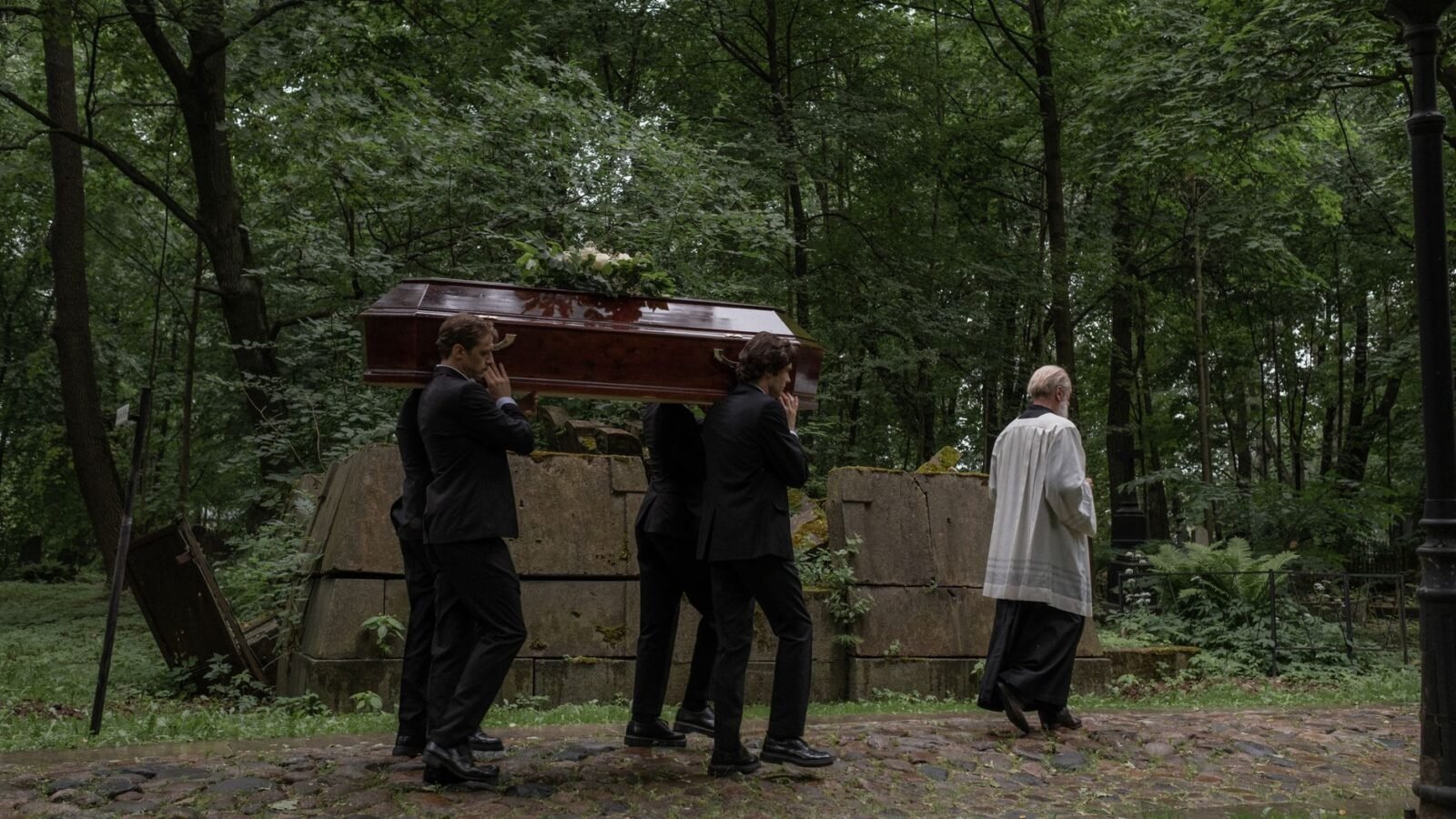
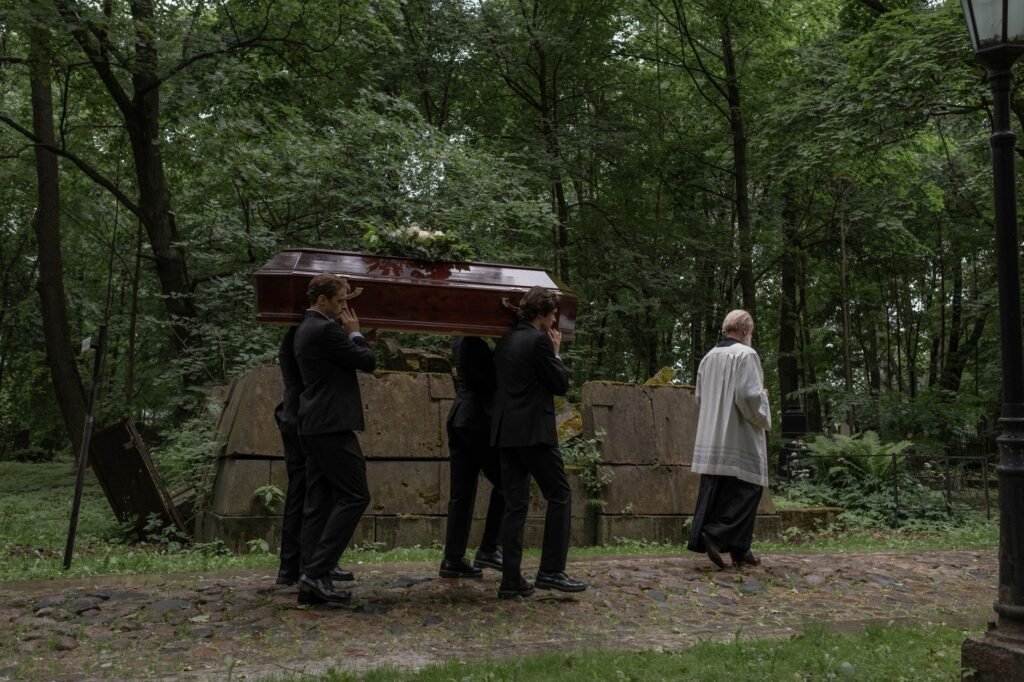
The death of Taras Didych in Myla, killed while responding to a Russian strike, is more than a localised tragedy. It serves as a potent signal that the conflict is evolving beyond conventional military engagements and infrastructure targeting. The deliberate or incidental elimination of local community leaders, particularly those engaged in humanitarian or organisational efforts, indicates a potential strategic shift by Russian forces. Such events suggest an intent to degrade not just military capacity but also the social and administrative fabric that underpins Ukrainian resilience. This goes beyond the immediate tactical objective of a strike; it aims to unravel the very structures of local governance and mutual aid that allow communities to function under duress.
The specific circumstances — a community leader killed while assisting after an attack — raise questions about the precision and intent behind such strikes. Was this an opportunistic outcome of a broader strike, or does it reflect an intelligence-driven effort to identify and neutralise individuals critical to local mobilisation and morale? The answer dictates whether this is a grim byproduct of war or a calculated escalation in Russia's efforts to destabilise Ukrainian society from within. The immediate aftermath, marked by public mourning, simultaneously reinforces community bonds and exposes the profound vulnerability of these networks.
The mechanism
The mechanism by which such incidents exert strategic pressure operates on multiple levels. At the most immediate, it removes a critical node in local coordination and leadership. Community leaders often act as indispensable conduits between citizens and broader administrative structures, facilitating everything from aid distribution to emergency response. Their loss creates a vacuum that is difficult to fill, particularly in contested or front-line areas. This disruption is not merely administrative; it is deeply psychological, fostering a sense of vulnerability and potentially undermining collective action. When leaders are targeted, the implicit message is that no one is truly safe, and no level of civic engagement is without extreme risk.
Furthermore, such events can exacerbate internal divisions or anxieties within Ukraine. The national government relies heavily on local authorities and civil society to maintain order and provide essential services, especially in areas distant from Kyiv. If these local structures are systematically degraded, the burden on central resources increases, potentially straining national cohesion and resource allocation. This mechanism, therefore, seeks to achieve strategic fragmentation by attacking the very sinews of local autonomy and self-organisation. It is a form of pressure that aims to exhaust the social capital of resistance, rather than merely its military hardware.
Who gains and who is exposed
Russia stands to gain from any sustained pattern of targeting local leaders, whether direct or indirect. The primary gain is the erosion of Ukrainian societal resilience and administrative capacity. By creating an environment of fear and uncertainty at the local level, Russia can hope to paralyse community initiatives, slow down reconstruction efforts, and complicate the provision of humanitarian aid. This strategy aims to make the daily lives of Ukrainian citizens increasingly untenable, potentially fostering internal dissent or accelerating emigration, thereby weakening the demographic and social base of the Ukrainian state. It also serves to demonstrate an extended reach of Russian power, capable of striking beyond military targets.
Ukraine is acutely exposed to this evolving threat. Its decentralised governance structure, while a source of strength in fostering local initiative, also presents numerous points of vulnerability. The loss of experienced local leaders leaves communities exposed, particularly those in proximity to the front lines where the pool of leadership talent may already be depleted by displacement or military service. Moreover, the psychological toll on the civilian population is significant. The constant threat of strikes, coupled with the targeting of figures who embody community support, can lead to widespread fatigue and despair. The challenge for Kyiv is to reinforce local leadership structures and demonstrate continued protection and support, even as the nature of the threat becomes more diffuse and insidious. International humanitarian organisations operating in Ukraine are also exposed, as the targeting of local facilitators could impede their ability to deliver aid safely and effectively, potentially leading to a broader humanitarian crisis.
Leading indicators to track
Several leading indicators will be crucial in assessing whether the Myla incident represents an isolated event or a developing pattern of strategic targeting. First, track the frequency and geographical distribution of strikes that result in the deaths of non-military local officials, community organisers, or humanitarian volunteers. A concentration of such incidents, particularly in areas not immediately adjacent to active front lines, would strongly suggest a deliberate shift in targeting doctrine. Second, observe public messaging from both Russian and Ukrainian sources regarding such deaths. Russian denial or silence, contrasted with Ukrainian emphasis on 'terrorist acts' against civilians, will indicate each side's interpretation of the strategic utility of such events.
Third, monitor changes in local administrative capacity and the speed of recovery efforts in affected communities. Any discernible slowdown in the restoration of services or the organisation of relief efforts following such incidents would signal that the intended effect of disruption is being achieved. Fourth, assess the rhetoric from international bodies and NGOs regarding the safety of humanitarian operations. An increase in warnings or a reduction in operational scope due to security concerns would confirm a heightened risk environment for civil society actors. Finally, observe shifts in local population movements; an acceleration of internal displacement from areas experiencing these types of strikes could indicate a successful psychological impact.
The twelve-month forecast
Over the next twelve months, the strategic landscape in Ukraine will likely be shaped by Russia's ongoing efforts to degrade Ukrainian societal cohesion, potentially through an increased focus on non-military targets that underpin local resilience. The Myla incident, while a single data point, offers a glimpse into a potential future where the conflict's front lines are not just geographic but also social and administrative. Ukraine's ability to withstand this pressure will depend on its capacity to adapt its local governance structures, protect its community leaders, and maintain morale under conditions of sustained, multi-faceted pressure. The international community's response to such targeting will also be critical, influencing the perceived cost-benefit calculus for Russian forces.
The coming year will test the limits of what a society can endure when its civic infrastructure becomes a battleground. The open question is whether the resilience observed in communities like Myla, in the face of immense personal loss, can be sustained and replicated across the nation, or if a prolonged campaign of attrition against its social fabric will begin to yield the strategic fragmentation Russia seeks.
Scenario matrix
| Scenario | Probability | Confirming trigger |
|---|---|---|
| Escalated targeting of civil society and local leadership, leading to significant disruption of Ukrainian administrative capacity and social cohesion. | 45% | Three or more documented incidents of high-profile local non-military leaders or significant humanitarian aid workers killed in strikes outside active combat zones within a three-month period. |
| Continued but sporadic incidents of local leader casualties, maintaining a high level of psychological pressure but without achieving systemic breakdown of Ukrainian resilience. | 40% | Fewer than three such incidents per quarter, with Ukrainian authorities consistently demonstrating the rapid replacement of leadership and continuity of services in affected areas. |
| A de-escalation of strikes impacting civil society leaders, possibly due to international pressure or a shift in Russian strategic priorities towards conventional military objectives. | 15% | A sustained period of six months without any documented high-profile casualties among local non-military leaders or humanitarian workers, alongside a public shift in Russian military rhetoric. |
Probabilities are estimates, not certainties. They are published so the forecast can be scored later.
Source material: Al Jazeera – Breaking News, World News and Video from Al Jazeera