US Carrier Visit Tests Evolving Thai-American Military Relationship
Trending Global
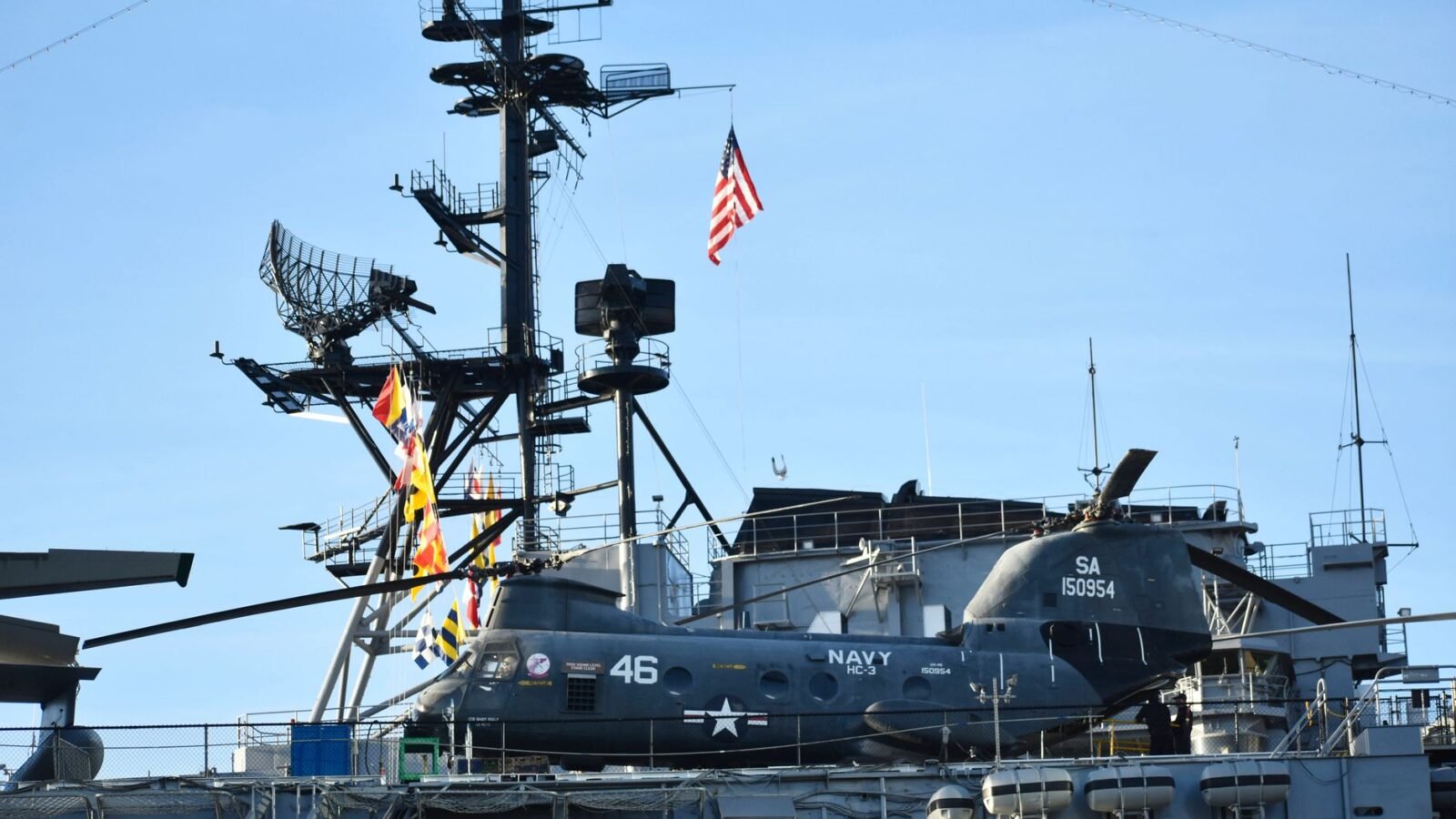
The arrival of a US aircraft carrier near Pattaya, Thailand, rekindles historical ties while prompting scrutiny of the contemporary strategic alignment between Washington and Bangkok.
What just happened
A United States Navy aircraft carrier recently concluded a protracted deployment of 250 days at sea with a port visit near Pattaya, Thailand. This operational stop, while seemingly routine for a vessel of its class, carries particular resonance given Pattaya's historical association with the American military. The city, once a fishing village, transformed significantly during the Vietnam War era, becoming a prominent rest-and-recreation destination for US servicemen. This history imbues any large-scale US military presence with a layer of public and political scrutiny that extends beyond mere logistical considerations.
Why it is contested
The significance of this carrier visit is not uniformly interpreted. For some, it represents a reaffirmation of the enduring US-Thai alliance, a bedrock of regional security for decades. They view it as a signal of Washington's continued commitment to its oldest treaty ally in Southeast Asia, essential for maintaining a balance of power in a strategically vital region. Conversely, a competing perspective suggests the visit is less about reinforcing a deep strategic partnership and more about transactional diplomacy, or even a tacit acknowledgement of Thailand's increasingly diversified foreign policy. This view posits that while the historical links are undeniable, Thailand's contemporary strategic interests may no longer align exclusively with Washington, particularly given its growing economic and political engagement with other major powers.
The competing narratives
One narrative asserts that the carrier's presence is a deliberate, high-profile demonstration of US naval power and a direct message of solidarity to Thailand, underscoring the mutual benefits of their alliance. Proponents of this view point to the shared security objectives, such as freedom of navigation and regional stability, which necessitate close military cooperation. The strongest objection to this reading is that such visits, while symbolically important, do not necessarily translate into a deeper commitment from Bangkok, particularly as Thailand seeks to balance its relationships with both the United States and China. The historical association with Pattaya, rather than exclusively fostering goodwill, can also evoke memories of a past era, potentially complicating modern strategic messaging.
An alternative narrative contends that the visit, while welcomed, is primarily an operational necessity for the US Navy and a diplomatic courtesy for Thailand, rather than a profound strategic pivot. This perspective suggests that Thailand, in its pursuit of an independent foreign policy, is unlikely to commit exclusively to either the US or China. Instead, it seeks to maximise its leverage by engaging with multiple partners, acquiring defence materiel from diverse sources, and avoiding entanglement in great power rivalry. The strongest objection to this interpretation is that the sheer scale and symbolism of an aircraft carrier visit cannot be entirely divorced from strategic intent. Even if Thailand seeks balance, the readiness to host such a significant asset still signals a degree of alignment and trust that is not extended to all nations, suggesting a more robust relationship than mere transactional engagement.
What to watch next
The future trajectory of the US-Thai military relationship will be illuminated by several indicators. Observe the nature and frequency of joint military exercises: an intensification or expansion in scope could signal a revitalisation of the alliance. Conversely, a reduction or diversification of partners in such exercises might indicate Thailand’s continued pursuit of strategic autonomy. Further, monitor Thailand’s defence procurement decisions. Any significant shifts in the sourcing of major military hardware, particularly between Western and Eastern suppliers, will provide insight into its long-term strategic orientation. Finally, track high-level diplomatic exchanges and the rhetoric employed by both Washington and Bangkok regarding regional security challenges; these will offer qualitative insights into the depth of their strategic convergence or divergence.
The bottom line
The US carrier visit to the vicinity of Pattaya serves as a contemporary touchstone for a historically rich but increasingly complex alliance. While the imagery evokes past associations, the underlying question is whether this engagement represents a genuine re-anchoring of the US-Thai relationship in a new geopolitical era, or merely a skilled navigation by Bangkok through the currents of great power competition, leveraging historical ties without committing to exclusive alignment. What degree of strategic autonomy can Thailand genuinely maintain while continuing to host such significant expressions of US power?
Source material: BBC News