Belgium’s Largest Wildfire: A New Normal for European Climate Policy
Trending Global
The unprecedented scale of Belgium's wildfire challenges the continent's climate adaptation strategies and resource allocation.
What just happened
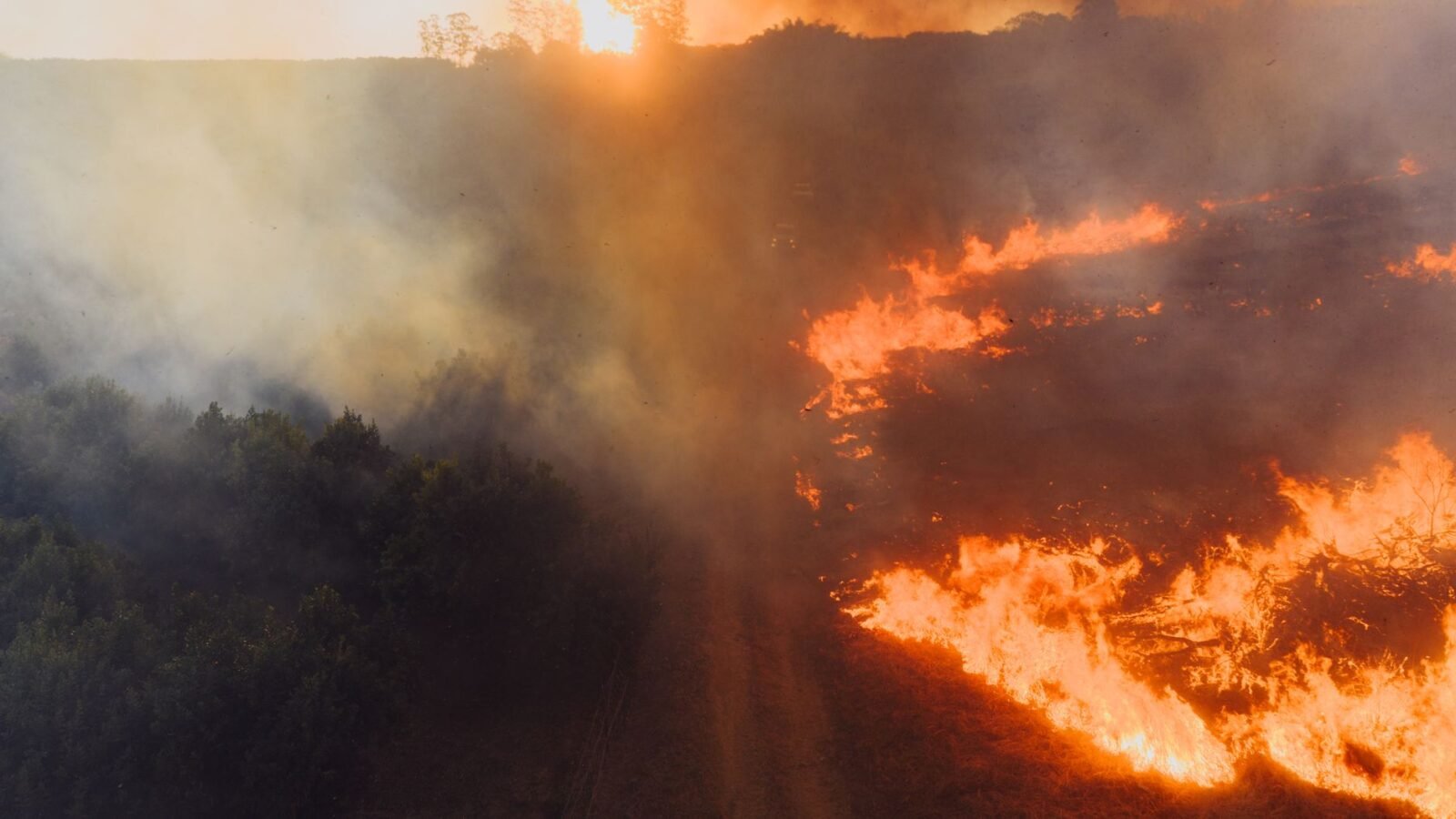
Belgium is currently contending with its largest recorded wildfire, a blaze of unprecedented scale that has necessitated the evacuation of 600 residents and is now spreading towards the German border. This event, occurring in a region not historically prone to such extensive conflagrations, immediately elevates questions regarding climate change's immediate impacts on European geography and the preparedness of national emergency services. The sheer size of the fire in a densely populated and generally temperate country marks a significant departure from previous environmental challenges and demands a re-evaluation of established risk assessments.
The operational response has involved considerable national resources, with the cross-border advance prompting discussions with German authorities concerning potential containment and mitigation efforts. The immediate focus remains on life safety and property protection, but the incident's magnitude has already begun to shift the discourse beyond tactical firefighting to the strategic implications for regional resilience and climate adaptation.
Why it is contested
The interpretive contestation surrounding the Belgian wildfire does not revolve around the facts of the blaze itself, but rather its underlying causes and what it signifies for future policy. One perspective frames this as an isolated, albeit severe, natural disaster, exacerbated by specific, perhaps anomalous, local conditions. This reading tends to focus on the immediate response — the efficacy of evacuation procedures, the speed of deployment, and the adequacy of firefighting assets. The strongest objection to this view is that it risks exceptionalising an event that may, in fact, be part of a discernible pattern of increasing climate volatility across Europe.
Conversely, another interpretation posits the fire as a direct and potent manifestation of broader climate change trends, arguing that such events are no longer anomalies but harbingers of a 'new normal' for European ecosystems and human settlements. This perspective directs attention to long-term climate adaptation strategies, land management practices, and the allocation of resources for preventative measures rather than reactive containment. The primary objection here is that it might overdetermine the climate link, potentially diverting attention from critical, remediable local factors such as forest management, urban planning at the wildland-urban interface, or even accidental human ignition, which could be addressed more immediately.
The competing narratives
Two dominant narratives are emerging from the Belgian wildfire. The first, which might be termed the 'Operational Resilience Narrative', emphasises the need for enhanced national and regional emergency response capabilities. Proponents of this view argue that while climate change is a factor, the immediate imperative is to ensure that fire services, civil defence, and cross-border cooperation mechanisms are robust enough to handle increasing severity of events. This narrative often points to specific deficiencies in equipment, personnel, or inter-agency coordination that could be addressed through targeted investment and training. The strongest objection to this narrative is that it treats the symptoms without adequately addressing the root cause; merely improving firefighting capacity will become a Sisyphean task if the underlying climatic conditions continue to deteriorate unchecked.
The second narrative, the 'Climate Adaptation Imperative', frames the wildfire as a critical warning shot demanding accelerated and more aggressive climate adaptation and mitigation policies. Adherents to this view argue that the event underscores the inadequacy of current long-term planning, particularly in regions not traditionally associated with large-scale wildfires. They advocate for systemic changes in land use, urban planning, early warning systems, and a significant increase in investment for climate resilience across the European Union. The most potent objection to this narrative is that while compelling, it risks deflecting accountability from immediate, tangible failures in preparedness and response by placing an overwhelming emphasis on long-term, diffuse climate action, which may not prevent the next immediate crisis.
What to watch next
The immediate trajectory of the fire itself will remain paramount, particularly its advance towards the German border and the effectiveness of coordinated bilateral responses. Beyond the immediate crisis, attention will shift to the political and budgetary implications. Will this event catalyse a more robust European Union-level disaster response mechanism, potentially leading to pooled resources or a more integrated approach to cross-border emergencies? Observers will be looking for any indication of increased funding for climate adaptation measures in the upcoming EU budget cycles, especially for member states now facing novel environmental threats.
Furthermore, the public discourse and subsequent policy adjustments in Belgium and Germany will be indicative. Will there be a push for stricter land management regulations, particularly concerning fire breaks and vegetation control? The extent to which this wildfire is framed as an isolated incident versus a climate change indicator by national governments will dictate the nature and ambition of future policy interventions. The political appetite for substantial, potentially unpopular, preventative measures will be a key determinant of whether this event serves as a genuine turning point or merely a costly lesson.
The bottom line
Belgium's unprecedented wildfire serves as a stark reminder that climate change impacts are increasingly felt even in regions previously considered less vulnerable. The ongoing debate over whether this represents an operational failure or a systemic climate warning will shape not only immediate response strategies but also the long-term trajectory of European environmental policy. The critical question remains: will this event be sufficient to force a fundamental reassessment of climate preparedness and resource allocation across the continent, or will it be absorbed into the growing catalogue of 'unprecedented' events without triggering the commensurate policy shift?
Source material: Al Jazeera – Breaking News, World News and Video from Al Jazeera