Lake Kariba Tragedy Signals Emerging African Climate Migration Pressures
Strategic Foresight
The sinking of a vessel on Lake Kariba, though a localised tragedy, may prefigure broader demographic shifts across Africa.
The starting conditions
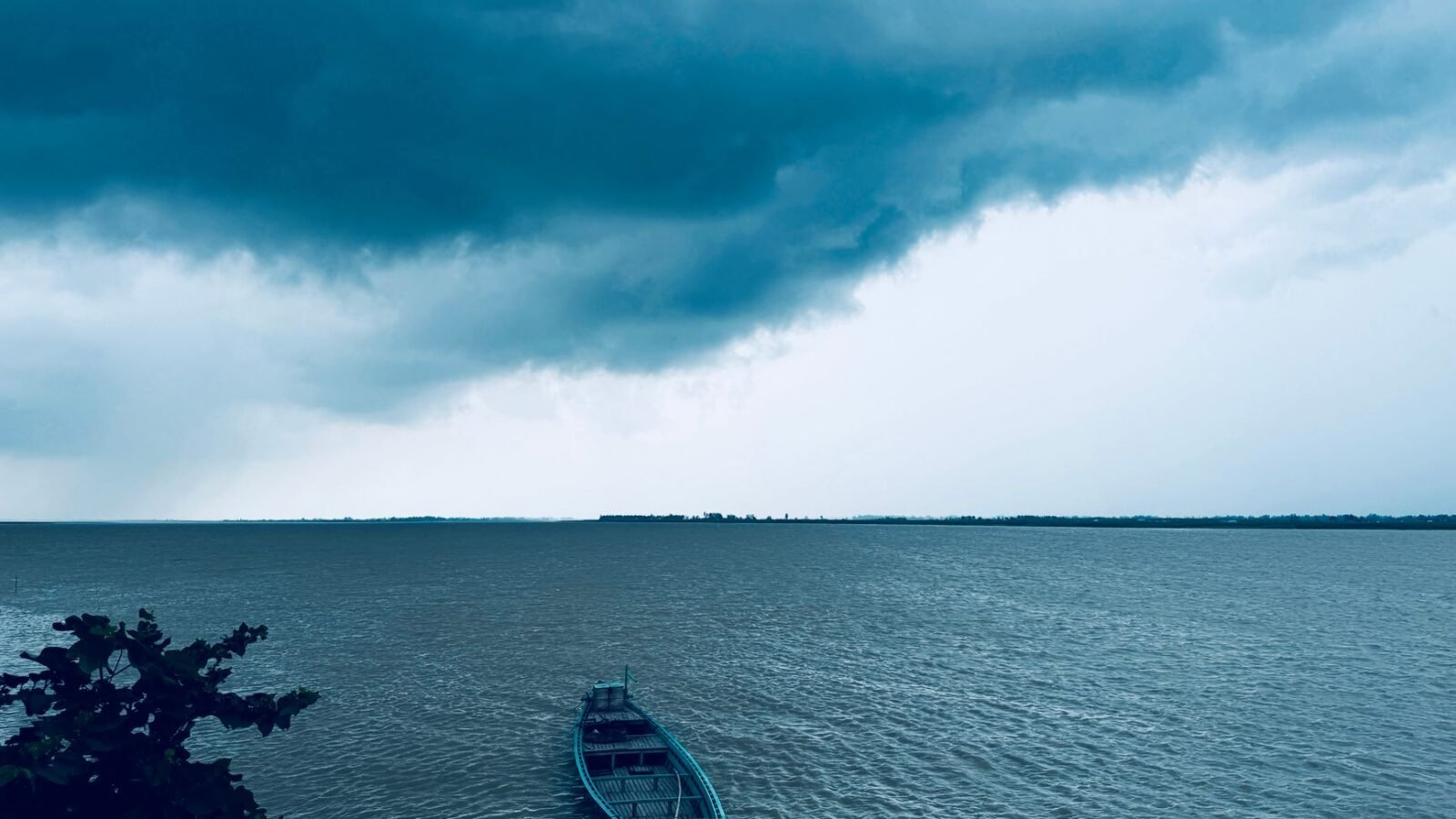
The recent capsizing of a vessel on Lake Kariba, reportedly due to extreme weather, underscores the immediate and acute dangers posed by environmental shifts in Africa's Great Lakes region. While the precise circumstances of this incident are still emerging, the attributing factor of 'strong waves' points to increasingly volatile meteorological conditions. Lake Kariba, an artificial reservoir shared by Zambia and Zimbabwe, is a vital artery for local commerce, fishing, and transport, often relying on informal and sometimes unregulated maritime operations.
This event occurs against a broader backdrop of escalating climate change impacts across Africa. The continent is experiencing more frequent and intense extreme weather phenomena, including unseasonal storms, prolonged droughts, and flash floods. These conditions directly affect agricultural productivity, water security, and habitability, driving internal displacement. Existing infrastructure, particularly in rural and peri-urban areas, is frequently ill-equipped to withstand such pressures, leading to a reliance on ad-hoc solutions for movement and survival. The Lake Kariba incident, therefore, may not be an isolated maritime accident but rather a sharp symptom of a systemic vulnerability now reaching critical thresholds.
Scenario one: Intensified internal displacement and ad-hoc migration routes
By 2030, a primary scenario projects a significant increase in internal climate-induced migration across sub-Saharan Africa, with the Lake Kariba incident serving as a micro-analogy for broader trends. As agricultural lands become less viable due to altered rainfall patterns and desertification, and coastal regions face sea-level rise and increased storm surges, populations are likely to move towards urban centres or more climatically stable rural areas. This displacement would primarily occur within national borders, though cross-border movements to adjacent countries with perceived better conditions could also intensify.
The increasing volume of displaced persons would likely overwhelm formal transport infrastructure and existing humanitarian aid mechanisms. Consequently, a proliferation of informal and unregulated transport networks, including makeshift vessels on large bodies of water like Lake Kariba, could emerge as a primary mode of transit. These routes would inherently carry heightened risks, mirroring the dangers observed in the recent sinking. State capacity to monitor, regulate, or even respond effectively to incidents on these routes would likely remain limited, leading to a rising human toll from such journeys. The strain on destination communities, often already resource-scarce, could also exacerbate social tensions and competition for land and services.
Scenario two: Regional climate-migration compacts and managed corridors
An alternative scenario for 2030 posits that the escalating human cost of unmanaged climate migration, exemplified by events like the Lake Kariba tragedy, could catalyse regional cooperation. Faced with the undeniable evidence of climate-driven displacement and the associated humanitarian crises, regional bodies such as ECOWAS, SADC, or the AU might move beyond existing protocols to establish more robust frameworks for managed migration. This could involve the creation of designated 'climate migration corridors' or 'resettlement zones' within and across national borders, agreed upon by member states.
Under this scenario, international development aid might be strategically redirected to support the establishment and maintenance of these corridors, including investment in safer transport infrastructure and basic services in resettlement areas. The focus would shift from reactive disaster response to proactive adaptation and planned relocation. While still challenging to implement given sovereignty concerns and resource limitations, the political will could be forged by the sheer scale of the humanitarian imperative. The Lake Kariba incident, in this context, would be remembered as a critical turning point that galvanised political action rather than merely a tragic statistic.
Scenario three: Enhanced localised resilience and reduced mobility
A third scenario suggests that by 2030, a concerted effort towards localised climate adaptation and resilience-building could temper the impetus for large-scale migration. This scenario hinges on significant investment in climate-smart agriculture, water harvesting, and renewable energy at the community level, alongside robust early-warning systems for extreme weather events. The objective would be to enhance the capacity of vulnerable populations to remain in their traditional lands, reducing the need for perilous journeys on routes such as Lake Kariba.
This would require a substantial and sustained infusion of capital and technical expertise, likely from international donors, directed towards grassroots initiatives. Investments in climate-resistant infrastructure, such as improved roads and bridges less susceptible to flooding, and safer, more regulated local transport options, would also be critical. If successful, this approach could mitigate the pressure on informal transport networks and reduce the frequency of tragedies like the Lake Kariba sinking. However, this scenario demands a level of coordinated, long-term commitment that has historically proven difficult to sustain across diverse political landscapes.
Wildcards that would break every scenario
Several unpredictable factors could fundamentally alter the trajectory of climate migration in Africa, rendering the preceding scenarios obsolete. A sudden and dramatic acceleration of global warming, pushing key regions beyond critical tipping points faster than currently projected, could trigger mass movements on an unprecedented scale, overwhelming any planned response. Conversely, a breakthrough in geoengineering or carbon capture technologies, deployed at scale and with immediate effect, could significantly slow environmental degradation and reduce the urgency for migration, though the feasibility and ethical implications of such interventions remain highly contested.
Major geopolitical shifts, such as widespread interstate conflict or the collapse of key regional alliances, could divert resources and attention away from climate adaptation and migration management, exacerbating humanitarian crises. Similarly, a global economic depression could drastically reduce the availability of international aid and investment, crippling efforts to build resilience or manage migration. Finally, a pandemic of significantly greater lethality than recent outbreaks could decimate populations, altering demographic pressures in unforeseen ways, or impose severe restrictions on movement that fundamentally restructure migration patterns, regardless of climate drivers.
Strategic implications
The Lake Kariba incident, while a localised tragedy, provides a stark lens through which to view the strategic challenges posed by climate change in Africa. For international policymakers, the incident underscores the growing imperative to integrate climate adaptation with migration policy, moving beyond humanitarian relief to preventative measures. Investment in early warning systems, climate-resilient infrastructure, and regulated transport options for vulnerable populations could mitigate future disasters.
For regional governments, the event highlights the urgent need to strengthen maritime safety regulations and enforcement on major water bodies, many of which serve as critical arteries for informal movement. Furthermore, the incident should serve as a catalyst for deeper regional cooperation on managed migration frameworks, acknowledging that climate impacts do not respect national borders. The choice between reactive crisis management and proactive adaptation will define the human cost of climate change in Africa over the coming decade. The question remains whether the scale of the impending challenge will finally compel the necessary, coordinated strategic response.
Scenario matrix
| Scenario | Probability | Confirming trigger |
|---|---|---|
| Intensified internal displacement and ad-hoc migration routes | 55% | A sustained increase in extreme weather events across multiple African regions, coupled with stagnant or declining international aid for climate adaptation, leading to a rise in reported deaths on informal transport routes. |
| Regional climate-migration compacts and managed corridors | 30% | The announcement and initial funding of at least two new, multi-national agreements for planned climate-induced relocation and managed corridors, supported by major international donors, within the next three years. |
| Enhanced localised resilience and reduced mobility | 15% | A demonstrable, measurable reduction in climate-induced internal displacement in at least three highly vulnerable regions, attributed to significant, sustained investment in community-level climate adaptation projects and improved local infrastructure by 2027. |
Probabilities are estimates, not certainties. They are published so the forecast can be scored later.
Source material: BBC News