Lebanon’s Southern Border: Escalation Pathways to 2030
Strategic Foresight
The recent Israeli strike in Ansar underscores the fragility of deterrence, suggesting multiple pathways for regional conflict evolution.
The starting conditions
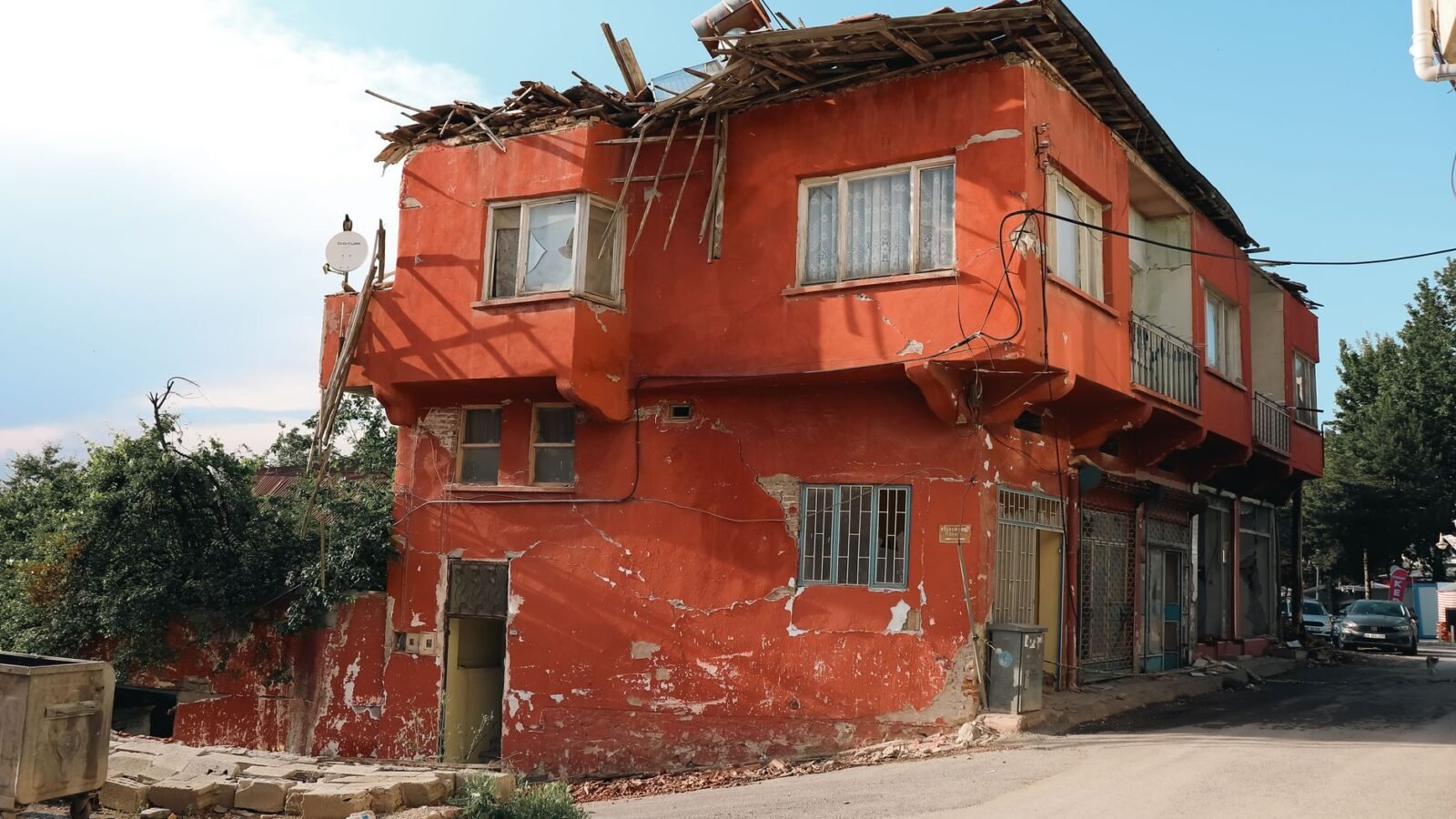
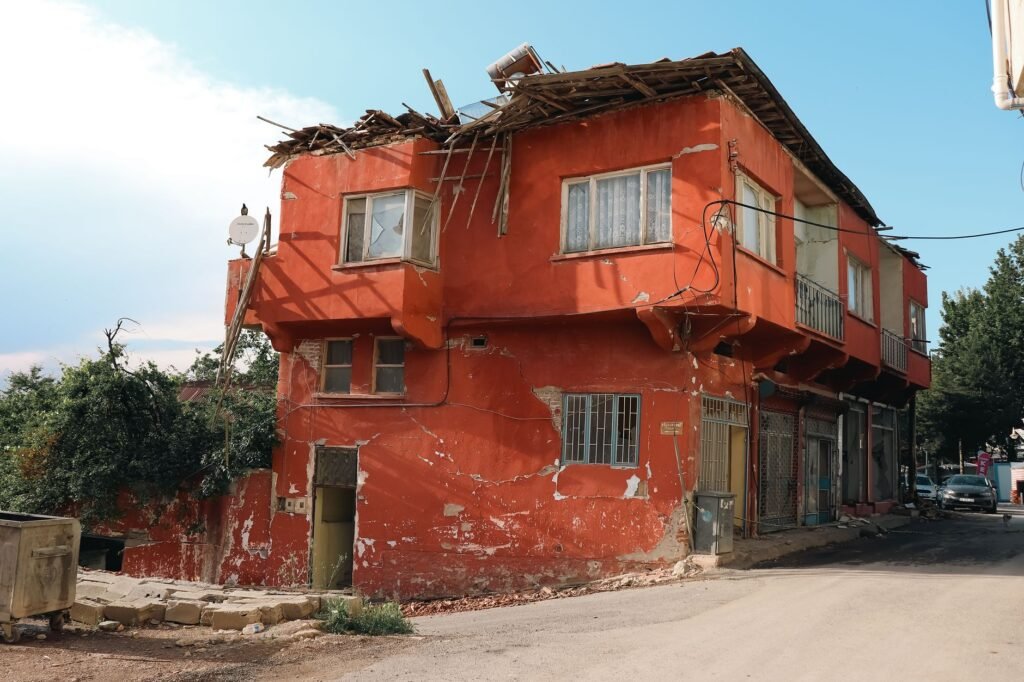
The Israeli strike on a family residence in Ansar, southern Lebanon, resulting in seven fatalities, represents a significant event within an already volatile security environment. This incident occurred outside what had been perceived as the conventional operational zone for such engagements, raising questions about the established, albeit unstated, parameters of conflict between Israel and non-state actors operating from Lebanese territory. The immediate aftermath suggests a recalibration of risk assessment by all parties involved.
Lebanon itself remains in a state of profound internal political and economic fragmentation. A caretaker government, a protracted presidential vacuum, and a collapsing financial system collectively diminish the state's capacity to exert sovereign control, particularly over its southern border. This internal weakness creates a permissive environment for non-state actors to operate with a degree of autonomy that complicates any de-escalation efforts or future diplomatic resolutions. The presence of multiple armed groups, each with distinct allegiances and objectives, further fragments the decision-making landscape.
Regionally, the broader geopolitical context is characterised by heightened tensions. The ongoing conflict in Gaza has demonstrably raised the temperature across the Levant, creating a permissive environment for opportunistic actions by various proxies and state actors. The strategic calculus of key regional powers and international stakeholders will be instrumental in either containing or exacerbating any further escalation stemming from incidents like the Ansar strike. The absence of robust, functional diplomatic channels further increases the probability of miscalculation.
Scenario one: Controlled Escalation and Deterrence Re-establishment
In this scenario, the Ansar strike is interpreted by all principal actors as a warning shot, rather than a definitive shift towards full-scale conflict. The immediate response from the targeted non-state actor might be proportionate, aiming to signal resolve without provoking an unmanageable retaliation. Subsequent engagements would likely revert to a more limited geographical scope and target profile, reflecting a mutual interest in avoiding a broader conflagration. The underlying logic would be a re-establishment of a fragile deterrence, where each side demonstrates capability without pushing the other to an irreversible decision.
External actors, particularly those with significant influence over the combatants, would likely intensify diplomatic efforts behind the scenes. This could involve renewed pressure to adhere to existing, albeit often violated, UN resolutions or to establish new, informal understandings regarding rules of engagement. The objective would be to de-escalate without appearing to concede weakness. This scenario anticipates a continued state of 'no war, no peace' along the border, punctuated by periodic, contained flare-ups that do not fundamentally alter the strategic balance.
By 2030, this pathway would see the Lebanese-Israeli border remain a zone of significant tension but without a full-scale war. The internal Lebanese political paralysis would persist, limiting the state's capacity to assert control. Non-state actors would continue to operate, but their actions would be constrained by a renewed, albeit precarious, understanding of red lines. The regional context would likely remain volatile, but the specific dynamics of the Lebanese front would not become the primary driver of broader conflict.
Scenario two: Protracted, Localised Conflict
This scenario posits that the Ansar strike marks a genuine and sustained expansion of the conflict's operational parameters. The initial responses would likely be more robust and less constrained by previous norms, leading to a tit-for-tat escalation over an extended period. This would not necessarily involve a full-scale invasion or an all-out war, but rather a prolonged series of intensified cross-border engagements, targeting infrastructure, military assets, and potentially civilian areas, albeit with varying degrees of intent. The objective of each side would be to degrade the other's capabilities and impose costs, without necessarily seeking total victory.
The defining characteristic of this scenario would be the erosion of previous 'red lines' and the expansion of acceptable targets. Civilian casualties could become more frequent, increasing international pressure but potentially also hardening resolve among combatants. The internal weakness of the Lebanese state would be further exposed, as it struggles to protect its population and infrastructure. Displacement of populations along the border would become a significant humanitarian concern, exacerbating Lebanon's already dire socio-economic crisis.
By 2030, this pathway would see southern Lebanon effectively transformed into a protracted conflict zone, mirroring aspects of previous low-intensity conflicts in the region. Economic recovery would be severely hampered, and the prospect of a political resolution would recede. The conflict might attract greater involvement from regional state actors, providing material support to their respective proxies, thereby deepening the proxy dimension of the conflict and making an independent Lebanese resolution even more remote.
Scenario three: Regional Conflagration
This scenario represents the most severe escalation, where the Ansar strike, or a subsequent similar incident, acts as a trigger for a broader regional conflict. This could occur if a retaliatory strike by a non-state actor results in significant Israeli casualties, or if Israel's response targets critical infrastructure or high-value assets in a way that is perceived as an existential threat by a regional power. The conflict would quickly expand beyond the immediate border, drawing in other state and non-state actors across the Levant and potentially beyond.
The defining feature of this scenario would be the direct involvement of regional state militaries, either through proxy support on an unprecedented scale or through direct engagement. Airspace violations, missile exchanges, and naval confrontations could become commonplace. The humanitarian consequences would be catastrophic, with widespread displacement, infrastructure destruction, and a severe regional economic downturn. International diplomatic efforts would likely be overwhelmed by the pace and intensity of the conflict.
By 2030, this pathway would see the region fundamentally reshaped by widespread conflict. Borders could be redrawn, existing state structures challenged, and new alliances forged. The economic and human cost would be immense, potentially leading to a prolonged period of instability and reconstruction. The initial incident in Ansar would be viewed in retrospect as the spark that ignited a much larger, pre-existing tinderbox of regional grievances and power struggles.
Wildcards that would break every scenario
Several unforeseeable developments could fundamentally alter the trajectory of these scenarios. A significant internal political collapse within Israel, for instance, leading to a radical shift in its security doctrine, could either dramatically escalate or de-escalate tensions in unexpected ways. Similarly, a complete breakdown of the Lebanese state, beyond its current paralysis, could create a vacuum that either invites external intervention or leads to a chaotic fragmentation of power, making any predictable response impossible.
Technological breakthroughs, particularly in areas like drone warfare, anti-missile defence, or offensive cyber capabilities, could also rapidly shift the balance of power. The introduction of novel weaponry by any party could render existing deterrence models obsolete, forcing a rapid recalibration of strategy. Furthermore, a major external geopolitical shock, such as a direct confrontation between global powers, could overshadow regional dynamics, leading to either a neglect of the Lebanese front or its instrumentalisation within a larger conflict.
Finally, a genuine, unexpected diplomatic breakthrough, perhaps facilitated by an unconventional mediator or driven by an acute awareness of shared risk, could establish a new framework for de-escalation that none of the current scenarios fully account for. Such a development would require a profound shift in political will and a willingness to compromise that is not currently evident among the primary actors.
Strategic implications
For international actors, the Ansar strike underscores the imperative of robust diplomatic engagement and the urgent need to support state-building efforts in Lebanon. The absence of a strong, legitimate central authority exacerbates the risk of non-state actors dictating the pace of escalation. Any policy aimed at regional stability must contend with the reality of Lebanon's internal fragility and the resulting permissive environment for conflict.
For regional powers, the incident highlights the precarious balance of deterrence and the high stakes involved in any miscalculation. The temptation to leverage proxy forces for strategic advantage must be weighed against the genuine risk of uncontrolled escalation. The long-term economic and social costs of protracted conflict would likely outweigh any short-term tactical gains.
The critical question for the coming decade is whether the international community and regional stakeholders can collectively re-establish credible mechanisms for de-escalation and deterrence, or if the current trajectory of incremental erosion of red lines will inevitably lead to a more severe and widespread conflict. What specific conditions would need to be met for a genuine, lasting de-escalation to take root, rather than a mere temporary cessation of hostilities?
Scenario matrix
| Scenario | Probability | Confirming trigger |
|---|---|---|
| Controlled Escalation and Deterrence Re-establishment | 45% | A return to pre-Ansar engagement patterns, limited retaliatory strikes, and renewed back-channel diplomatic activity by external powers. |
| Protracted, Localised Conflict | 35% | A sustained increase in the frequency and intensity of cross-border strikes, targeting a wider array of assets, without direct state-on-state military confrontation. |
| Regional Conflagration | 20% | Direct military intervention by regional state actors, large-scale missile exchanges, or significant targeting of critical national infrastructure by any party. |
Probabilities are estimates, not certainties. They are published so the forecast can be scored later.
Source material: Al Jazeera – Breaking News, World News and Video from Al Jazeera