Norris’s McLaren Extension: A Litmus Test for F1’s Competitive Future
Strategic Foresight
The long-term commitment of a reigning champion to a single constructor offers a unique lens on Formula One's strategic trajectory.
The starting conditions
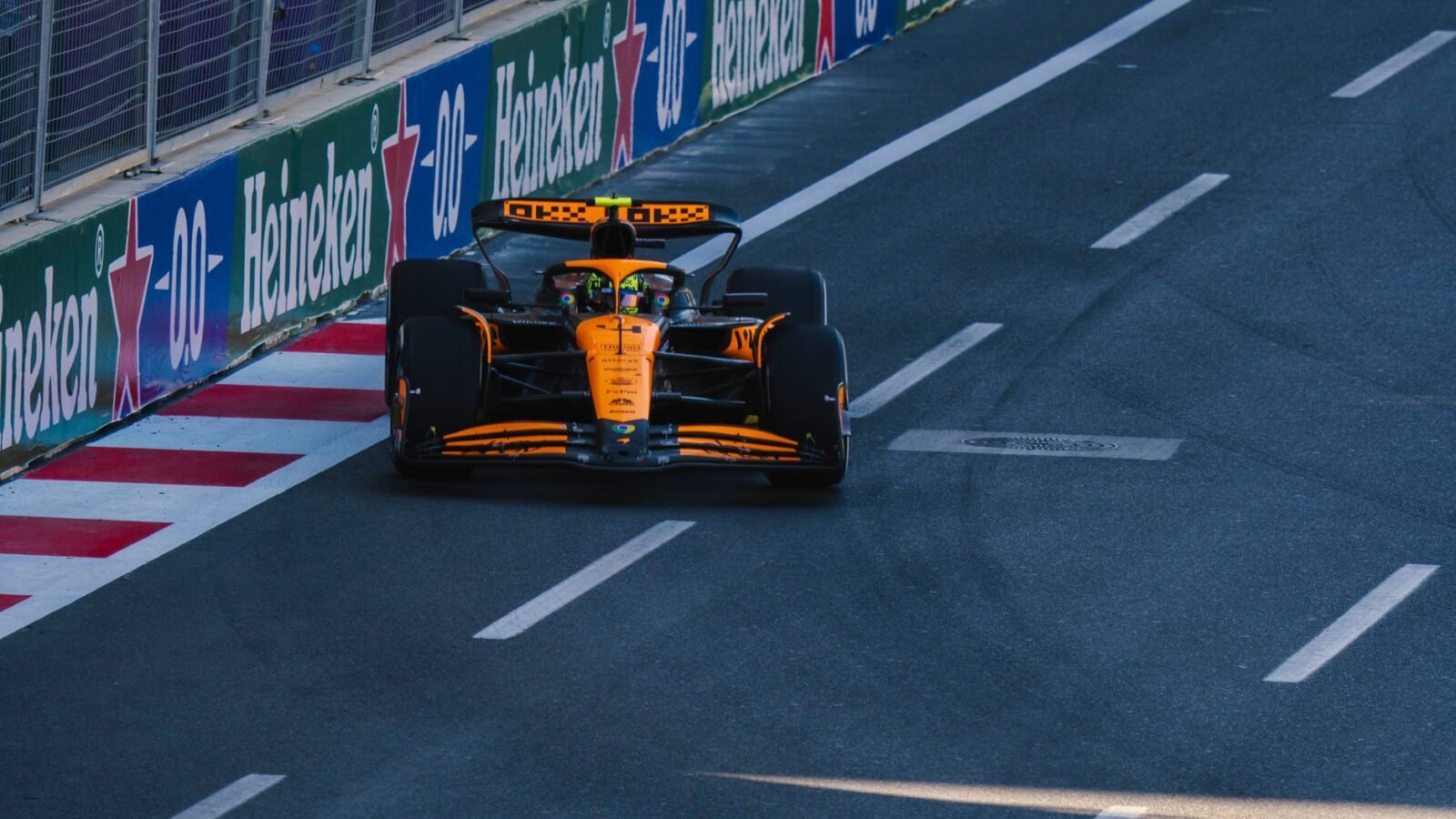
The announcement of Lando Norris's contract extension with McLaren, securing his services until 2030, introduces a novel variable into the strategic calculus of Formula One. At 26, and a reigning Drivers' Champion, Norris represents both established talent and long-term potential. His decision to commit to a single constructor for such an extended period, particularly in an era often characterised by driver movement and team reshuffles, suggests a profound alignment of ambition and perceived capability. This commitment follows a season where Norris delivered McLaren’s first drivers' title since 2008, an achievement that validates the team’s development trajectory and investment strategy.
The context for this extension is a Formula One landscape that has undergone significant regulatory shifts in recent years, aimed at fostering greater competitive parity. Budget caps, revised aerodynamic regulations, and standardised components were all introduced with the stated goal of preventing prolonged single-team dominance. Norris's long-term deal will serve as a definitive test of whether these measures can truly prevent the emergence of a new dynasty or if, conversely, they merely shift the locus of power. The investment in a proven champion for a six-year horizon indicates McLaren’s confidence in its technical roadmap and its capacity to sustain a competitive edge under evolving rules. However, it also places considerable pressure on the team to consistently deliver a championship-contending car, year after year, in a sport where competitive advantages can prove fleeting.
Scenario one: McLaren establishes a new era of sustained dominance
Under this scenario, Norris's extension proves to be the cornerstone of a multi-year McLaren ascendancy. The team's current technical prowess, combined with the stability provided by a reigning champion, could allow them to consistently interpret and exploit regulatory frameworks more effectively than their rivals. This outcome would likely necessitate the effective integration of future power unit regulations, expected around the mid-point of the decade, into McLaren's car design philosophy without significant disruption. A sustained period of dominance would mean McLaren consistently producing a car that is not merely competitive, but demonstrably superior, across a variety of circuit types and conditions. This would imply that their internal development pipeline, talent acquisition, and operational efficiency remain unparalleled.
The implications for the wider sport would be profound. While some might view sustained dominance as detrimental to competitive spectacle, it could also elevate Norris to an iconic status, akin to previous multi-championship winners, drawing a new generation of fans to witness a consistent peak performer. Rival constructors would face immense pressure to innovate and close the gap, potentially leading to increased investment and more aggressive technical gambles in pursuit of McLaren. This scenario hinges on McLaren’s ability to avoid the complacency that can sometimes follow success and to maintain a culture of relentless innovation against a backdrop of evolving technical challenges and resurgent competitors.
Scenario two: The 'Max Verstappen effect' is diffused, F1 sees a fragmented grid
An alternative reading suggests that while Norris's signing is a strong signal, the underlying competitive forces in Formula One are too robust for any single team or driver to achieve prolonged, unchallenged dominance. In this scenario, the regulatory framework, particularly the budget cap, proves effective in compressing the performance differential between the top teams. Norris might secure further championships, but these would be hard-fought, potentially against different rival constructors each season. McLaren's advantage, rather than being overwhelming, could manifest as a consistent contender status, but not necessarily a guaranteed winner.
This outcome would likely see a rotating cast of race winners and potentially multiple constructors vying for the championship each year. The 'Max Verstappen effect' – where one driver-team combination achieves a period of near-unbroken success – would be diffused by the inherent competitiveness of the field. Driver talent, team strategy, and even luck would play a more pronounced role in individual race outcomes and championship battles, preventing any single entity from monopolising the top step of the podium. This scenario would be characterised by a heightened sense of unpredictability, where the outcome of each season remains genuinely open until its final races, fostering a more dynamic and less predictable narrative for the sport.
Scenario three: Norris's long-term bet becomes a strategic constraint
A third scenario posits that Norris's long-term commitment, while initially appearing as a strength, could evolve into a strategic constraint for both driver and team. This could materialise if McLaren's competitive performance declines relative to other constructors, or if a rival team develops a genuinely superior package that Norris, by virtue of his contract, is unable to join. The F1 landscape is notoriously fluid; technical regulations can shift dramatically, and the fortunes of engine manufacturers can rise and fall. Should McLaren fail to adapt to these changes, or if a competitor makes a significant technological leap, Norris could find himself locked into a team no longer capable of competing for the highest honours.
For McLaren, while having a champion driver is an asset, a long-term contract at a high valuation could become an encumbrance if the team's performance does not justify the investment. It could limit their flexibility in the driver market or impose financial pressures that divert resources from critical technical development. This scenario would highlight the inherent risks of long-term commitments in a sport defined by rapid technological evolution and intense competitive pressures. It would underscore the tension between securing talent and maintaining adaptability, leaving open the question of whether stability can sometimes become a liability in a high-velocity environment.
Wildcards that would break every scenario
Several unforeseen developments could fundamentally alter the trajectory of Formula One, rendering all current scenarios obsolete. A significant, unexpected regulatory overhaul, particularly one impacting engine architecture or chassis design beyond current projections, could reset the competitive order entirely. Such a change, if radical enough, might invalidate current team advantages and force a complete rethinking of car development. Similarly, a major global economic downturn or geopolitical instability could impact sponsor investment, team budgets, and even the viability of certain races, fundamentally altering the sport's financial ecosystem and, by extension, its competitive dynamics.
Furthermore, a sudden withdrawal or entry of a major automotive manufacturer as a power unit supplier or a full constructor could dramatically shift the balance of power. The departure of a dominant engine supplier, for instance, could leave several teams scrambling, while a new, well-resourced entrant could rapidly ascend and challenge established hierarchies. Finally, a significant, unexpected technological breakthrough by a rival team, perhaps in battery technology or sustainable fuels, could create an insurmountable advantage that no existing strategy could counter, forcing all other teams to play catch-up from a significant deficit.
Strategic implications
Norris's long-term contract is not merely a driver signing; it is a strategic declaration from McLaren, signalling their belief in a sustained competitive advantage and a commitment to building a dynasty around a proven champion. For rival teams, this move necessitates a re-evaluation of their own long-term driver strategies and investment in technical development. The question for competitors is whether to pursue their own 'franchise driver' or to focus on a more agile, opportunistic approach to talent acquisition, adapting to the ebb and flow of driver market dynamics.
For Formula One as a whole, the implications revolve around the effectiveness of its regulatory framework. If McLaren, with Norris, achieves sustained dominance, it will raise questions about whether the budget cap and other measures are truly achieving their stated goal of competitive parity. Conversely, if the grid remains fragmented and competitive, it will validate the current regulatory direction. The ultimate test will be whether Norris's tenure at McLaren becomes a period of unchallenged supremacy, a series of hard-fought victories, or a testament to the unpredictable nature of F1, where even the most promising long-term bets can be undone by the relentless pace of change.
Scenario matrix
| Scenario | Probability | Confirming trigger |
|---|---|---|
| McLaren establishes a new era of sustained dominance, with Norris securing multiple championships. | 45% | McLaren wins two consecutive Constructors' Championships by 2027, with Norris as Drivers' Champion in at least one of those seasons, maintaining a significant points lead over rivals. |
| The competitive balance remains highly fragmented, with multiple teams and drivers contending for championships annually. | 35% | Between 2025 and 2028, no single team wins more than two Constructors' Championships, and no driver secures back-to-back Drivers' Championships. |
| Norris's long-term contract becomes a strategic constraint, as McLaren's competitive performance declines relative to rivals. | 20% | McLaren finishes outside the top three in the Constructors' Championship for two consecutive seasons between 2026 and 2028, with Norris publicly expressing frustration over car performance. |
Probabilities are estimates, not certainties. They are published so the forecast can be scored later.
Source material: Al Jazeera – Breaking News, World News and Video from Al Jazeera