Pakistan-Saudi-Turkiye Pact: Strategic Convergence or Diversion?

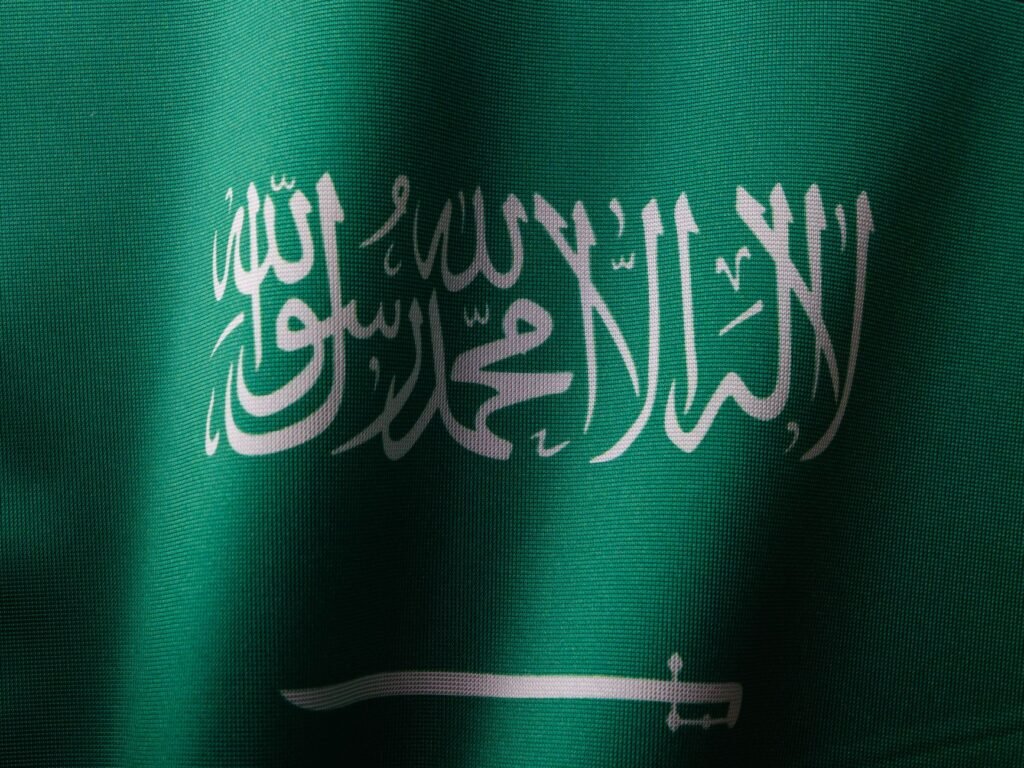
Predictive Analysis
The nascent defence agreement between Riyadh, Islamabad, and Ankara signals a complex recalibration of security interests across the Middle East and South Asia.
The signal
The reported defence pact between Pakistan, Saudi Arabia, and Turkiye represents a material signal of evolving security alignments in the broader Middle East and South Asia. This is not merely a bilateral arms deal or a symbolic expression of solidarity; it suggests a more formalised, trilateral security framework. For decades, regional security architectures have largely been structured around alliances with, or opposition to, external powers. This emergent pact, however, hints at an attempt to forge an indigenous security pillar, drawing on substantial military, economic, and demographic strengths of its constituent members. The significance lies less in the immediate operational implications and more in the implicit redefinition of regional agency.
The very existence of such a pact, whether initially defensive or aspirational, prompts a re-evaluation of long-held assumptions about strategic dependencies. It suggests a growing willingness among these states to pool resources and coordinate responses to shared security challenges, potentially independent of, or even in parallel to, existing partnerships with extra-regional powers. The question it poses is whether this is a manifestation of shared strategic goals within an existing framework, or a deliberate step towards constructing an alternative one. The ambiguity is precisely what makes the signal so potent: it forces observers to consider both possibilities simultaneously.
The mechanism
The operational mechanism of this pact, while not yet fully delineated, would likely involve a combination of intelligence sharing, joint military exercises, and potentially coordinated defence procurement. Each nation brings distinct capabilities: Pakistan offers significant conventional military strength and nuclear deterrence, along with extensive experience in counter-insurgency. Saudi Arabia contributes substantial financial resources, regional diplomatic weight, and a strategic geographic position. Turkiye provides advanced defence industrial capabilities, a technologically sophisticated military, and an increasingly assertive foreign policy posture in the Eastern Mediterranean and Africa. The convergence of these assets could form a formidable, self-sustaining security bloc.
The pact could function as a collective security arrangement, explicitly or implicitly targeting perceived threats, most notably from Iran, or addressing broader regional instability. For Saudi Arabia, the pact offers a potential counterweight to Iranian influence and a diversification of security partnerships beyond its traditional reliance on Western powers. For Pakistan, it provides economic investment and strengthens its strategic depth, particularly in relation to its western borders. For Turkiye, it extends its geopolitical reach and provides a platform for its burgeoning defence industry. The mechanism is therefore less about specific military actions and more about establishing a framework for coordinated strategic influence and mutual defence assistance, which could be activated across a range of scenarios from internal security to external aggression.
Who gains and who is exposed
The most immediate beneficiaries of this pact would be the three signatory nations themselves, by enhancing their collective security and diplomatic leverage. They gain a platform for coordinated action, potentially reducing their individual vulnerabilities and increasing their bargaining power on the international stage. Economically, closer defence ties could spur industrial cooperation, technology transfer, and lucrative arms deals within the bloc. Politically, it projects an image of regional leadership and self-reliance, appealing to domestic audiences and other states seeking alternatives to established alliances.
Conversely, the pact exposes several actors to new strategic calculations. The United States, a long-standing security guarantor for Saudi Arabia and a significant partner for Pakistan and Turkiye, faces a potential dilution of its influence. If the pact evolves into a genuinely independent bloc, it could complicate US efforts to coordinate regional security policies and maintain its strategic footprint. Iran, already facing regional isolation, would perceive this as a direct challenge, potentially exacerbating existing tensions and prompting a re-evaluation of its own defence posture. Other regional powers, such as Egypt and the UAE, might view the pact with a mix of apprehension and opportunity, potentially seeking to align or counter-balance its growing influence. The long-term exposure for any single state depends entirely on the pact's trajectory: whether it remains a loose consultative forum or evolves into a robust military alliance with shared command structures.
Leading indicators to track
To discern the true intent and trajectory of this trilateral pact, several leading indicators warrant close observation. Firstly, the specificity and depth of any announced joint military exercises will be crucial. General declarations are one thing; integrated command structures and shared logistics are another. The scale, frequency, and nature of these exercises – particularly whether they involve inter-operability drills for complex scenarios – will signal the level of commitment. Secondly, track defence procurement patterns: a shift towards intra-pact defence industrial cooperation, joint development projects, or preferential purchasing from member states' defence industries would indicate a deeper integration than mere political alignment.
Thirdly, monitor the diplomatic rhetoric from Washington regarding this pact. Any public expressions of concern, attempts to mediate, or shifts in aid packages or military assistance to the signatory nations would reveal how the US interprets the threat or opportunity it presents. Conversely, US silence or endorsement would be equally telling. Finally, observe the reactions of other regional powers, particularly Iran and the UAE. Their diplomatic statements, security posture adjustments, or efforts to form counter-alliances will provide a barometer of the pact's perceived impact on the regional balance of power. The absence of specific, actionable outputs beyond initial announcements would suggest a more symbolic, rather than substantive, arrangement.
The twelve-month forecast
The immediate future of the Pakistan-Saudi-Turkiye defence pact is poised at a critical juncture between rhetoric and tangible implementation. Over the next twelve months, the emphasis will be on translating initial agreements into concrete actions, or revealing the limitations of the political will to do so. The most significant determinant will be the extent to which the three nations are willing to commit financial resources and political capital to institutionalise the pact beyond a series of high-level meetings. External reactions, particularly from the United States, will also shape the pace and ambition of its development.
Should the pact gain momentum, it could fundamentally alter regional security dynamics, potentially creating a new pole of influence that challenges existing power structures. However, internal disagreements, financial constraints, or pressure from traditional allies could equally relegate it to a symbolic gesture. The coming year will reveal whether this is a genuine realignment of strategic interests or a temporary convergence born of specific, immediate pressures. The question remains whether the constituent states possess the collective will to sustain a long-term, independent security framework in the face of competing external pressures and internal priorities.
Scenario matrix
| Scenario | Probability | Confirming trigger |
|---|---|---|
| Formalisation and Modest Integration: The pact progresses with regular joint military exercises and intelligence sharing, but avoids explicit treaty obligations or shared command structures. Defence procurement sees some intra-bloc preference, but traditional partnerships remain dominant. | 55% | Announcement of a standing secretariat for defence coordination and the scheduling of at least two trilateral military exercises within the next six months. |
| Symbolic Arrangement: The pact remains largely rhetorical, with infrequent, low-level cooperation. Internal disagreements or external pressures (e.g., US diplomatic pushback) prevent significant operationalisation. Focus shifts to bilateral ties rather than trilateral integration. | 30% | No concrete joint military exercises or defence industrial projects are announced or initiated within the next nine months, and public statements become increasingly vague. |
| Accelerated Alliance: The pact rapidly evolves into a more robust military alliance, with explicit defence commitments, shared logistics, and significant defence industrial collaboration. This scenario would likely be driven by a perceived escalation of a common threat or a significant shift in US regional policy. | 15% | Public declaration of a mutual defence clause or the establishment of a joint military planning body, accompanied by substantial new defence industrial investments within the bloc. |
Probabilities are estimates, not certainties. They are published so the forecast can be scored later.
Source material: Al Jazeera – Breaking News, World News and Video from Al Jazeera