Qusra Confrontation Reveals Deepening Impasse in West Bank Settlement Disputes

Trending Global
A Palestinian-American's confrontation with an Israeli settler in Qusra illuminates the escalating tensions over land claims and legal frameworks in the West Bank.
What just happened
In Qusra, a village located south of Nablus in the West Bank, Loui Abu Ridi, a Palestinian-American, confronted an Israeli settler at his residence. The reported incident involved Abu Ridi asserting his claim to the property against the settler's presence. While the precise details of the exchange remain limited to the immediate report, the confrontation itself is indicative of the persistent and often personal nature of land disputes in the West Bank.
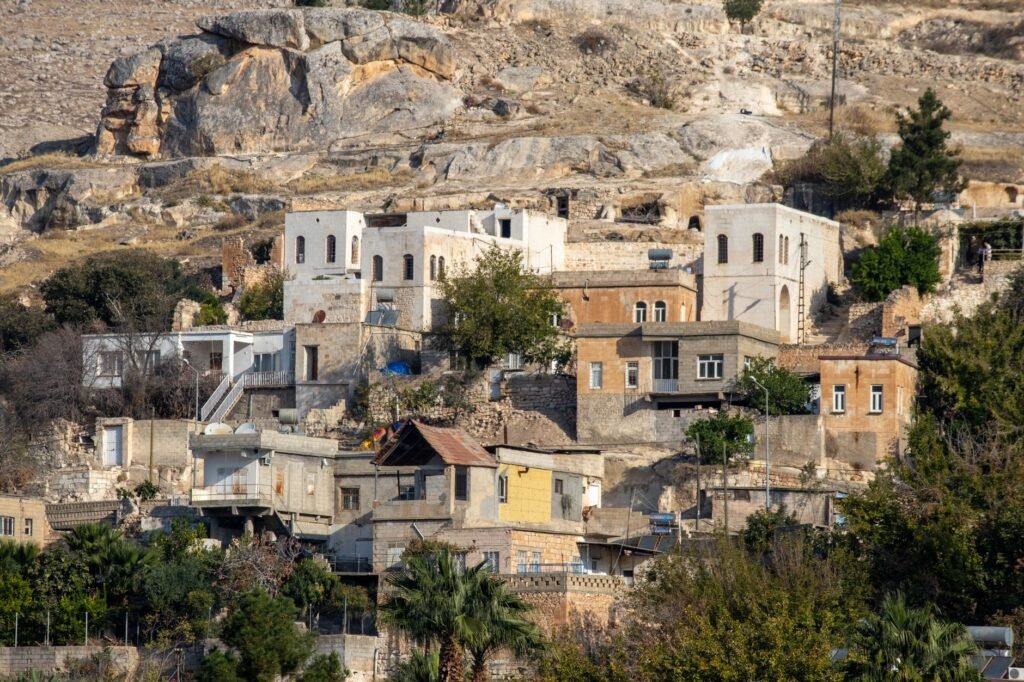
The setting of Qusra is critical. It is an area where Palestinian villages frequently find themselves in close proximity to Israeli settlements, leading to recurring friction over land access, water resources, and property boundaries. These encounters are not isolated events but rather manifestations of a systemic contest over sovereignty and ownership that has been unfolding for decades.
Why it is contested
The contestation surrounding incidents like the one in Qusra stems from fundamentally divergent legal and historical claims to the land. From an international law perspective, most of the international community considers Israeli settlements in the West Bank illegal under the Fourth Geneva Convention, which prohibits an occupying power from transferring its own population into occupied territory. This view underpins Palestinian claims to the land as part of a future independent state.
Conversely, Israel disputes the applicability of the term 'occupied territory' to the West Bank, referring to it instead as 'disputed territory' or 'Judea and Samaria.' Israeli legal arguments often cite historical and biblical connections to the land, as well as specific land registration laws from Ottoman and British Mandate periods, to validate the presence and expansion of settlements. This creates a legal lacuna where two mutually exclusive frameworks are applied to the same physical space, rendering almost any property dispute inherently political and deeply contested.
The competing narratives
One dominant narrative frames the Qusra confrontation as a clear instance of an indigenous population defending its property rights against an illegal occupation. In this reading, Abu Ridi's actions represent a legitimate stand for ancestral land, underscoring the daily reality of dispossession faced by Palestinians. The involvement of a Palestinian-American citizen also introduces an element of international attention, potentially drawing focus from the United States to the plight of its citizens and their property rights abroad. The strongest objection to this narrative is that it often simplifies the complex legal history of land acquisition, where some land within settlements was purchased or designated by Israeli authorities based on interpretations of existing land laws, which are themselves contested.
An alternative narrative views the settler's presence as a lawful exercise of property rights within an area that is either legitimately settled or under Israeli administrative control. Proponents of this view often argue that settlers are reclaiming land historically connected to the Jewish people and that their presence is secured by Israeli law and security needs. They might also point to instances where Palestinian construction is deemed illegal under Israeli planning laws, framing the conflict as one of competing legal claims rather than outright occupation. The strongest objection to this narrative is its dismissal of international law principles regarding occupied territories and the inherent power imbalance between an occupying force and the civilian population, which can render local legal processes inherently unjust or coercive.
What to watch next
The immediate aftermath of the Qusra incident will likely involve further legal challenges or security interventions. The critical question remains whether this particular confrontation will escalate beyond a localised dispute. Will the Palestinian Authority or international bodies become more directly involved in supporting Abu Ridi's claim? Conversely, will Israeli authorities take steps to reinforce the settler's presence, potentially through further security measures or legal proceedings?
Beyond the specific individuals involved, observers should monitor how this incident influences broader policy discussions regarding settlement expansion and enforcement in the West Bank. The involvement of a dual national could prompt diplomatic engagement, particularly if the US government is pressed to protect the property rights of its citizens. The response, or lack thereof, from various international actors will signal the perceived urgency and political sensitivity of these ongoing land disputes.
The bottom line
The Qusra confrontation is more than a property dispute; it is a flashpoint exposing the irreconcilable legal and political frameworks governing the West Bank. It highlights the profound challenge of achieving any resolution when fundamental claims to land are mutually exclusive and deeply intertwined with national identities and historical grievances. The question that remains is not merely who owns a specific plot of land, but rather, what legal and political authority will ultimately determine that ownership, and at what human cost?
Source material: Al Jazeera – Breaking News, World News and Video from Al Jazeera