Racial Justice Advocacy Confronts Institutional Power Through 2030
Strategic Foresight
The Arday case underscores a pivotal juncture for racial justice movements, forcing a re-evaluation of strategies against systemic discrimination.
The starting conditions
The death of Jason Arday, framed by some as an 'institutional murder' fuelled by anti-Black racism, establishes a critical baseline for understanding the future of racial justice advocacy. This framing implies a confluence of individual actions and systemic failures, where institutional environments are seen not merely as passive backdrops but as active enablers of harm. The specific allegation of a 'vicious campaign' suggests a deliberate, sustained targeting, which, if substantiated, would necessitate a re-evaluation of institutional safeguards and accountability mechanisms.
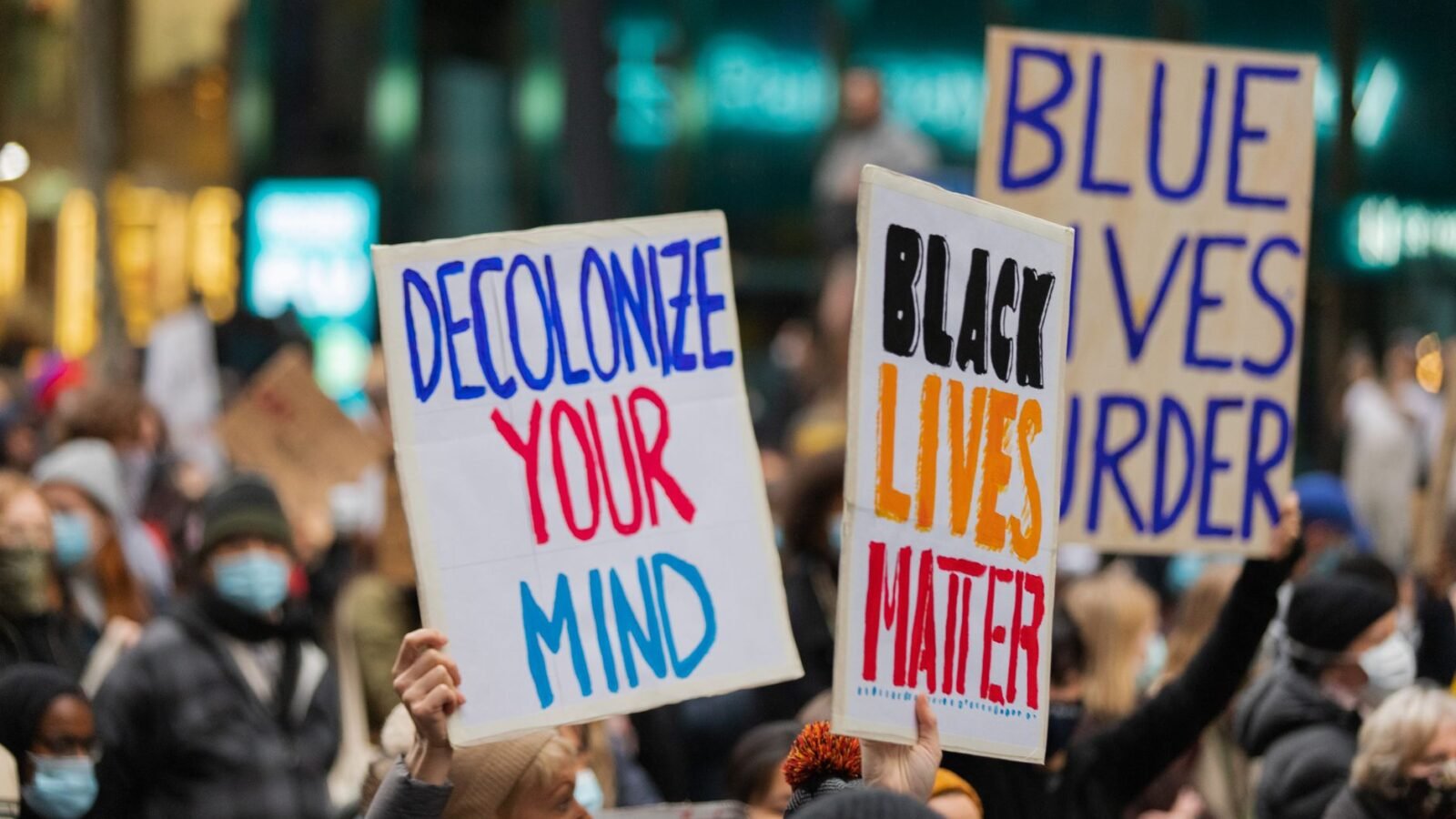
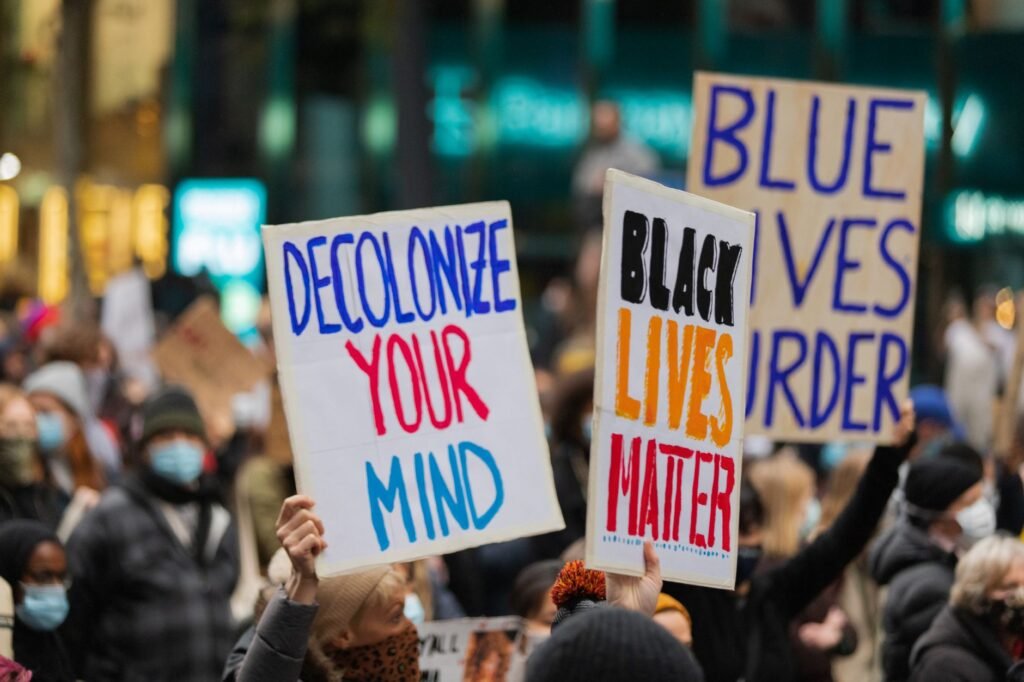
This incident resonates within a broader global context where discussions of systemic racism have gained prominence but also face significant backlash. Movements like Black Lives Matter have elevated awareness of racial disparities in policing, justice, and socio-economic outcomes. However, this increased visibility has also generated counter-narratives that question the extent of systemic bias or attribute disparities to other factors. The Arday case thus enters an already contested analytical space, where the interpretation of events is heavily influenced by pre-existing ideological frameworks regarding race, power, and institutional responsibility.
Scenario one: The accountability pivot
In this scenario, the Arday case, or similar high-profile incidents, could catalyse a strategic pivot within racial justice advocacy towards an intensified focus on institutional accountability. This would manifest as a concerted effort to establish legal precedents and policy frameworks that explicitly define and penalise institutional complicity in racial discrimination. Advocacy groups might increasingly collaborate with legal experts to develop novel theories of liability for 'institutional murder' or 'systemic harm,' moving beyond individual prejudice to target organisational structures and leadership.
The emphasis would be on mandatory reporting, independent oversight bodies with enforcement powers, and the imposition of significant financial and reputational penalties on institutions found to have fostered discriminatory environments. This shift would likely involve sophisticated data analytics to demonstrate patterns of bias, and a more aggressive use of litigation and legislative lobbying. The goal would be to make the cost of institutional inaction or complicity prohibitively high, thereby incentivising proactive systemic change rather than merely reactive damage control. This approach would seek to embed anti-racism into the operational DNA of organisations, rather than relying on voluntary diversity initiatives.
Scenario two: The cultural re-entrenchment
Conversely, the Arday case could inadvertently contribute to a re-entrenchment of cultural and ideological divisions surrounding race. In this scenario, the framing of 'institutional murder' might be perceived by some segments of society as an overreach or an attempt to politicise individual tragedies. This perception could fuel a backlash, leading to intensified resistance against anti-racist initiatives and a hardening of positions among those who believe that discussions of systemic racism are divisive or unfounded.
This scenario would see a proliferation of alternative explanations for racial disparities, often emphasising individual responsibility or socio-economic factors unrelated to race. Political discourse might become even more polarised, with debates over 'wokeness' and 'cancel culture' eclipsing substantive discussions about institutional reform. Advocacy efforts could struggle to gain broad public consensus, finding themselves confined to increasingly siloed ideological spaces. Institutions, fearing reputational damage from either side, might adopt a defensive posture, implementing performative diversity measures without addressing underlying structural issues, or even rolling back initiatives to avoid controversy.
Scenario three: The technological amplification
A third scenario posits that technological advancements will fundamentally reshape the landscape of racial justice advocacy and its opposition. The Arday case, in this context, becomes a data point amplified and dissected by sophisticated digital tools. Advocacy groups could leverage AI-driven analytics to identify patterns of discrimination in hiring, promotion, and disciplinary actions within institutions, creating irrefutable statistical evidence of systemic bias.
Concurrently, social media platforms and decentralised communication networks would enable rapid mobilisation and information dissemination, allowing for global solidarity campaigns and direct challenges to institutional narratives. However, this technological amplification is a double-edged sword. Opposing forces could also utilise similar tools for counter-mobilisation, disinformation campaigns, and the organised harassment of activists. The battle for narrative control would increasingly be fought in the digital sphere, with algorithms playing a decisive role in shaping public perception and the reach of different messages. The core challenge would be distinguishing credible evidence from algorithmically generated or manipulated content, potentially leading to increased digital fragmentation and epistemic uncertainty.
Wildcards that would break every scenario
Several unforeseeable events could drastically alter these trajectories. A global economic collapse, for instance, could shift societal focus almost entirely towards economic survival, potentially de-prioritising racial justice concerns or re-framing them within an economic class struggle. Conversely, a universally acknowledged, unambiguous global racial justice crisis — such as a coordinated, state-sanctioned campaign of discrimination on a massive scale — could unite disparate advocacy groups and force international consensus on systemic reform, overriding internal ideological divisions.
Rapid advancements in genetic editing or brain-computer interfaces could introduce entirely new dimensions to discussions of race and identity, potentially rendering current frameworks obsolete. A major geopolitical realignment, leading to the formation of new global blocs, could also redefine the international norms around human rights and racial equality, either accelerating or retarding progress depending on the dominant ideologies of the new powers. Finally, the emergence of a truly transformative, widely accepted philosophical framework for understanding and addressing systemic injustice, transcending current political divides, could fundamentally alter the debate.
Strategic implications
For institutions, the strategic imperative through 2030 will be to move beyond performative diversity initiatives towards genuine structural transformation. Ignoring or downplaying incidents like the Arday case risks not only legal and reputational damage but also an erosion of legitimacy. Proactive engagement with independent oversight, transparent data sharing, and the empowerment of internal anti-racist champions could mitigate future risks. The challenge lies in dismantling entrenched power structures without triggering internal resistance that could paralyse reform efforts.
For racial justice advocates, the period ahead demands strategic agility. Relying solely on moral persuasion may prove insufficient against institutional inertia or organised opposition. Developing sophisticated legal strategies, mastering digital advocacy tools, and building broad, intersectional coalitions will be crucial. The core strategic tension will remain: how to achieve meaningful structural change while navigating deeply entrenched resistance and the potential for a fragmented, hyper-polarised public sphere. The question is not merely whether institutions will change, but under what specific, measurable pressures they will be compelled to do so, and how those pressures will be sustained against inevitable counter-movements.
Scenario matrix
| Scenario | Probability | Confirming trigger |
|---|---|---|
| The accountability pivot: Legal and policy frameworks define and penalise institutional complicity in racial discrimination. | 45% | A major legislative package or landmark court ruling establishes new categories of institutional liability for systemic discrimination. |
| The cultural re-entrenchment: Increased polarisation and backlash against anti-racist initiatives, leading to defensive institutional postures. | 35% | Public opinion polling consistently shows declining support for systemic anti-racism initiatives, coupled with increased electoral success for parties opposing such measures. |
| The technological amplification: AI and digital tools reshape advocacy and opposition, intensifying the battle for narrative control. | 20% | Widespread adoption of AI-driven tools by both advocacy groups and their opponents demonstrably impacts public discourse or institutional decision-making on racial issues. |
Probabilities are estimates, not certainties. They are published so the forecast can be scored later.
Source material: Al Jazeera – Breaking News, World News and Video from Al Jazeera