Southern Africa’s Climate Anomaly Signals Broader Global Instability
Strategic Foresight
Unseasonal snowfall in Southern Africa challenges established climate models, raising questions about future regional stability and global climate trends by 2030.
The starting conditions
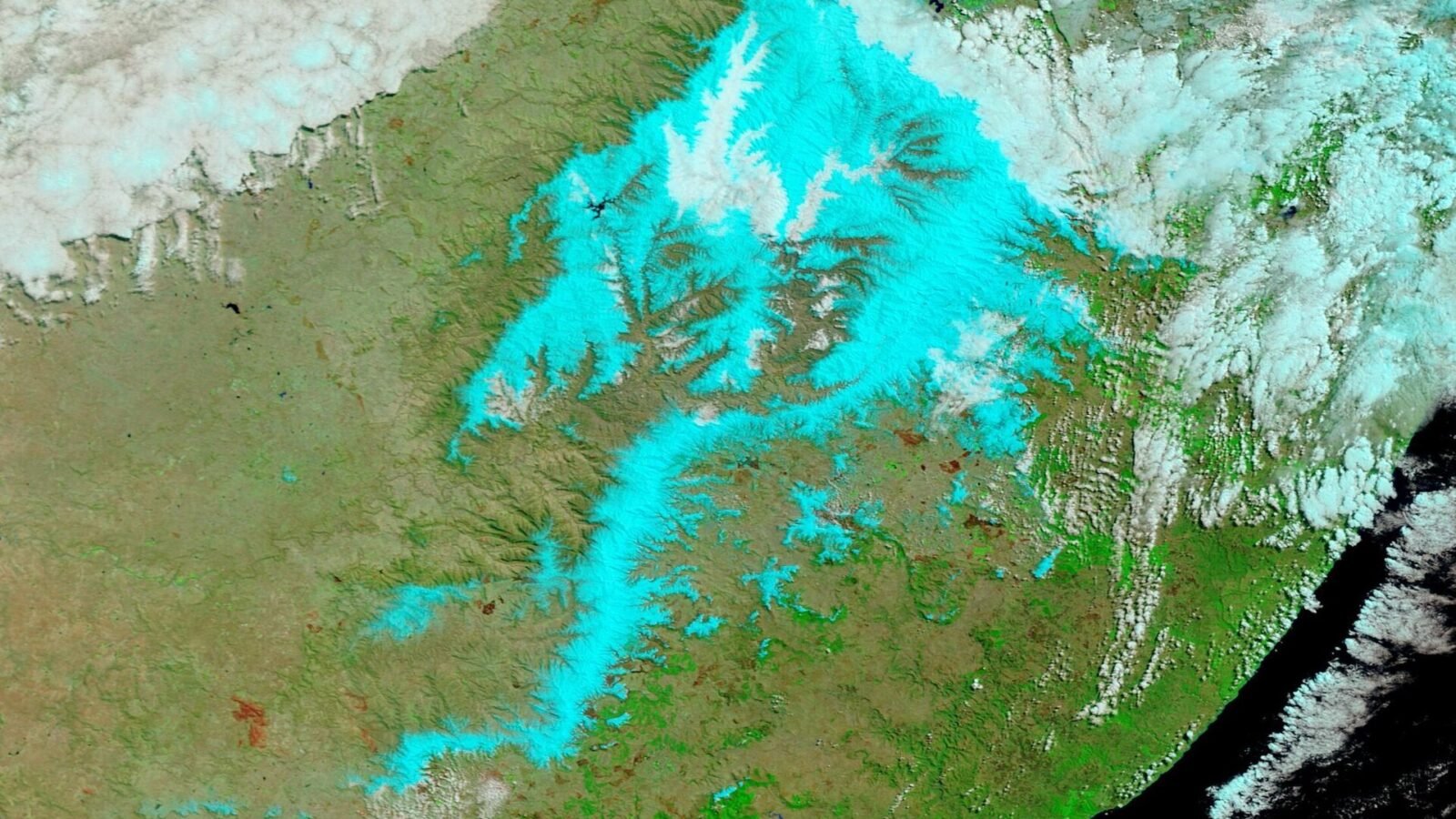
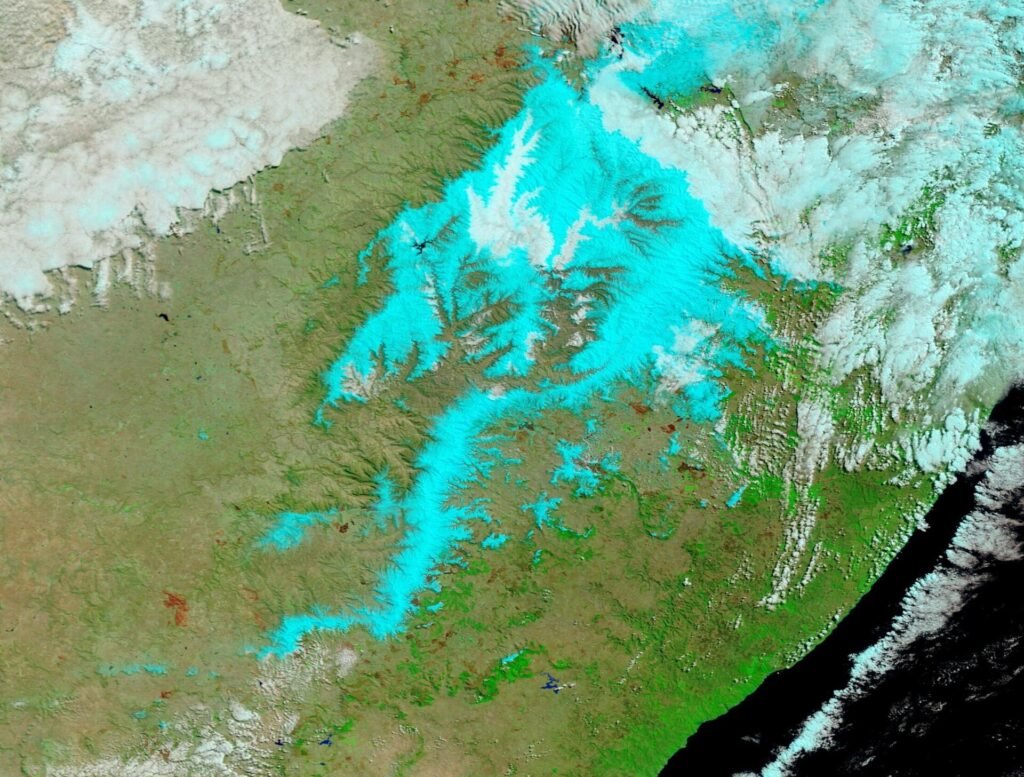
The recent, unseasonal late-winter snowfall across parts of South Africa and Lesotho presents a notable climatic anomaly, occurring as the Northern Hemisphere endures extreme heat and wildfires. This event defies a simplistic interpretation of global warming as uniformly increasing temperatures, instead suggesting a more complex, potentially destabilising, pattern of climate volatility. While Southern Africa is accustomed to winter precipitation, the timing and extent of this particular snowfall introduce a variable that challenges established regional climate models and global predictive frameworks. The immediate impact is localised, yet the implications for understanding future climate trends and their socio-economic consequences by 2030 are considerable.
Historically, climate change projections for Southern Africa have largely focused on increased aridity, higher average temperatures, and more frequent extreme heat events. This recent cold snap, however, introduces a counter-narrative of unpredictable extremes, where both heat and cold anomalies may become more prevalent. Such variability complicates agricultural planning, water resource management, and infrastructure development. The region's reliance on rain-fed agriculture and its vulnerability to water stress mean that deviations from expected seasonal patterns can have profound effects on food security and economic stability. The current conditions set a precedent for a future defined less by linear warming and more by a heightened frequency of diverse climatic shocks.
Scenario one: Increased climate variability and localised shocks
In this scenario, the late-season snow event is interpreted as an early indicator of a sustained trend towards increased climate variability across Southern Africa. By 2030, the region could experience a greater frequency of both extreme heatwaves and unseasonal cold snaps, alongside shifts in precipitation patterns. This would not necessarily mean a cooler overall climate, but rather one characterised by wider temperature swings and less predictable seasonal transitions. Agricultural yields could become highly erratic, with periods of drought interspersed with episodes of heavy, unseasonal rainfall or cold. The impact on staple crops, such as maize, could lead to recurrent food security challenges and increased reliance on imports.
Infrastructure, particularly in urban centres and transportation networks, would face heightened stress from these oscillating conditions. Roads and rail lines designed for specific temperature ranges could suffer accelerated degradation. Energy grids might struggle to meet fluctuating demand for heating and cooling. Water resource management would become acutely challenging, as traditional rainfall patterns become unreliable, leading to potential conflicts over scarce resources in some areas while others contend with unexpected flooding. This scenario posits a future where adaptation measures are constantly reactive, struggling to keep pace with an ever-changing baseline.
Scenario two: Regional climate divergence and global model recalibration
This scenario posits that the Southern African anomaly signals a more fundamental divergence in regional climate trends from global averages, compelling a recalibration of international climate models. By 2030, it could become evident that certain geographical regions, including parts of Southern Africa, are experiencing unique climatic shifts not fully captured by current aggregated global projections. This might involve complex interactions between oceanic currents, atmospheric pressure systems, and land-use changes that produce regional effects distinct from broader hemispheric trends. The late snow, under this interpretation, is not merely an anomaly but a symptom of an evolving regional climate system.
The implications for international climate policy and investment would be significant. If Southern Africa's climate trajectory is indeed diverging, then adaptation strategies developed elsewhere may prove inadequate or inappropriate. Investment in climate resilience would need to be tailored to highly specific regional conditions, potentially requiring new forms of climate science and data collection. This scenario suggests a fragmentation of global climate narratives, where 'global warming' as a uniform phenomenon gives way to a more nuanced understanding of multiple, sometimes contradictory, regional climate futures. Such a shift could complicate multilateral climate negotiations, as different regions present increasingly disparate experiences and needs.
Scenario three: Exacerbated socio-economic instability and migration pressures
Under this scenario, the climate anomalies observed in Southern Africa contribute directly to a significant increase in socio-economic instability and internal or cross-border migration pressures by 2030. Unpredictable weather patterns, including both extreme heat and unseasonal cold, would severely stress already vulnerable agricultural systems and rural livelihoods. This could lead to successive crop failures, depletion of livestock, and a decline in food availability, pushing more populations into chronic food insecurity. The urbanisation trend would likely accelerate as rural populations seek greater stability and economic opportunities, placing immense strain on urban infrastructure and services.
Resource scarcity, particularly water, could intensify existing social tensions and potentially lead to localised conflicts. Government capacity to respond to these compounding crises might be stretched thin, potentially weakening state institutions and increasing political fragility. The prospect of climate-induced migration, both within and across national borders, would become a prominent concern for regional stability. This scenario outlines a future where climate change acts as a significant multiplier of existing socio-economic vulnerabilities, leading to a more volatile and less predictable operating environment for governments and international actors alike.
Wildcards that would break every scenario
Several unforeseen developments could fundamentally alter the trajectory of these scenarios. A rapid, unforeseen technological breakthrough in climate adaptation, such as affordable, scalable desalination or drought-resistant staple crops, could mitigate the most severe impacts of climate variability. Conversely, a major, unpredicted geophysical event, such as a significant volcanic eruption, could inject large amounts of aerosols into the atmosphere, temporarily altering global climate patterns in ways that supersede regional trends and established models. A sudden, drastic shift in global geopolitical alignments, leading to either unprecedented international cooperation on climate or a complete breakdown of collective action, would also invalidate the underlying assumptions of current projections.
Furthermore, a fundamental re-evaluation of climate science itself, perhaps driven by new data or theoretical frameworks that entirely redefine our understanding of atmospheric and oceanic dynamics, could render current predictive models obsolete. While less probable, such a scientific paradigm shift would necessitate a complete recalibration of all climate-related planning. Any of these wildcards possess the potential to either dramatically accelerate or unexpectedly decelerate the unfolding of climate-related consequences, thereby undermining the foundational premises of the outlined scenarios.
Strategic implications
The strategic implications of Southern Africa's evolving climate patterns are multifaceted. For regional governments, the imperative will be to move beyond reactive crisis management towards proactive, adaptive planning that accounts for increased climate variability. This includes diversifying agricultural practices, investing in resilient infrastructure, and developing robust social safety nets to buffer populations against climate shocks. The traditional focus on drought preparedness may need to expand to encompass readiness for unseasonal cold and fluctuating precipitation.
For international organisations and investors, the Southern African case highlights the potential for regional climate divergence, necessitating a more granular approach to climate risk assessment and adaptation funding. Blanket solutions or models derived from other geographical contexts may prove ineffective. The potential for increased migration and resource-based tensions also underscores the need for strengthened regional governance mechanisms and preventative diplomacy. The central question remains whether current institutional frameworks, both national and international, are sufficiently agile and informed to navigate a future where climate change manifests not as a uniform global trend, but as a series of complex, sometimes contradictory, regional realities.
Scenario matrix
| Scenario | Probability | Confirming trigger |
|---|---|---|
| Increased climate variability and localised shocks | 55% | Three consecutive years with significant deviations (e.g., >2 standard deviations) from historical temperature or precipitation averages during critical agricultural seasons in three or more Southern African nations. |
| Regional climate divergence and global model recalibration | 30% | Publication of at least two major, peer-reviewed climate studies by 2027 demonstrating statistically significant, persistent regional climate trends in Southern Africa that contradict or are not adequately explained by prevailing global climate models. |
| Exacerbated socio-economic instability and migration pressures | 15% | A 20% increase in internally displaced persons or cross-border climate migrants within Southern Africa by 2028, coupled with a 15% decline in regional food production over a five-year period. |
Probabilities are estimates, not certainties. They are published so the forecast can be scored later.
Source material: Al Jazeera – Breaking News, World News and Video from Al Jazeera