Sudan’s Political Crossroads: Dialogue Pledges and Future Scenarios to 2030
Strategic Foresight
Al-Burhan's offer of temporary immunity for dialogue participants aims to break Sudan's political deadlock, but deep-seated rivalries threaten any lasting accord.
The starting conditions
Sudan's political landscape remains fractured, characterised by an ongoing power struggle between the Sudanese Armed Forces (SAF) and the Rapid Support Forces (RSF). General Abdel Fattah al-Burhan, head of the SAF, has recently articulated a commitment to a national dialogue, offering temporary immunity and legal protections to participants. This overture is designed to foster an environment conducive to political negotiation and to chart a course for a civilian-led transition. However, a significant caveat accompanies this proposal: al-Burhan has explicitly ruled out the return of Mohamed Hamdan Dagalo, known as Hemedti, to a position of leadership. This condition, while perhaps intended to consolidate power and present a clear future without a key rival, simultaneously introduces a fundamental challenge to the dialogue's perceived legitimacy and its capacity to achieve broad consensus.
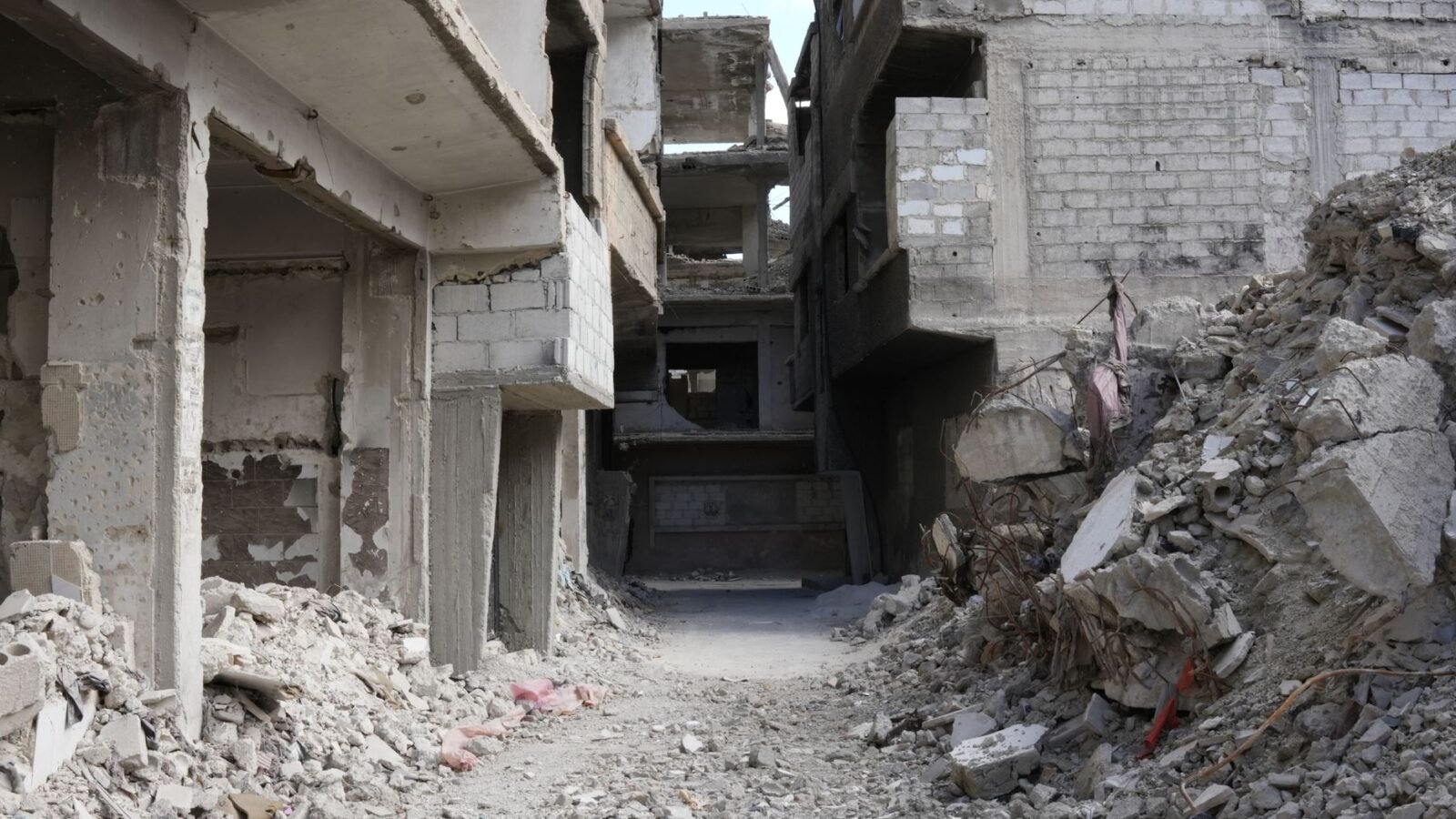
The current context is one of profound instability, marked by widespread displacement, a collapsing economy, and a humanitarian crisis. The conflict has not only devastated infrastructure but has also deepened societal divisions, making any political reconciliation an arduous undertaking. International efforts to mediate have yielded limited success, often struggling to reconcile the competing interests of the principal actors. The proposed dialogue, therefore, emerges against a backdrop of entrenched mistrust and a history of failed transitions, where agreements have frequently unravelled due to a lack of genuine commitment from all parties or the inability to enforce their terms. The success of al-Burhan's initiative hinges not merely on the offer of immunity, but on its acceptance by a sufficiently broad spectrum of political and civil society actors, and crucially, on the practical mechanisms for its implementation and enforcement.
Scenario one: Controlled Transition and Limited Stability
Under this scenario, al-Burhan's dialogue initiative gains sufficient traction among a segment of Sudan's political class and some civil society groups. The immunity pledge facilitates initial participation, leading to the formation of an interim civilian government with limited executive powers, operating under the implicit or explicit oversight of the SAF. This outcome would likely involve the marginalisation of Hemedti's faction, potentially through continued military pressure or a negotiated exile, rather than a full integration into the political process. The international community might cautiously endorse this transition, offering conditional financial aid and technical support, viewing it as the least undesirable path to some semblance of order.
By 2030, Sudan under this scenario could exhibit a fragile, semi-authoritarian stability. Economic recovery would be slow and uneven, concentrated in areas under SAF control or those with strategic resource interests. While some democratic institutions might nominally exist, their efficacy would be constrained by the military's enduring influence. Security challenges would persist in peripheral regions, potentially manifesting as localised insurgencies or continued inter-communal violence, as the central government struggles to project authority uniformly. The primary risk to this scenario would be internal dissent within the SAF, or a resurgent challenge from elements loyal to Hemedti, exploiting any perceived weakness in the civilian administration. This path avoids outright state collapse but sacrifices genuine democratic reform for pragmatic stability.
Scenario two: Protracted Conflict and Regionalisation
This scenario posits that al-Burhan's dialogue fails to achieve broad buy-in, primarily due to the exclusion of Hemedti and his allies, or an inability to guarantee the safety and influence of participants. The conflict between the SAF and RSF, or their successor factions, would escalate or become entrenched, transforming into a protracted, low-intensity struggle. This would lead to a de facto fragmentation of Sudan, with different regions falling under the control of various armed groups, local militias, or even neighbouring state proxies. The central government, if one exists, would command diminishing authority, primarily confined to the capital and immediate surroundings.
By 2030, Sudan would resemble a collection of de facto autonomous zones, each with its own security arrangements, economic dependencies, and external patrons. Humanitarian crises would deepen, with massive displacement and widespread food insecurity becoming endemic features. Regional powers, concerned by the spillover effects of instability, might intervene more directly, supporting favoured factions and further entrenching the fragmentation. The formal state structure could persist on paper, but its practical sovereignty would be severely eroded. This scenario implies a sustained period of instability, hindering any meaningful development and perpetuating a cycle of violence, with the risk of the conflict metastasising across the wider Horn of Africa.
Scenario three: Broad-Based Inclusive Settlement
In this less probable but potentially more sustainable scenario, the diplomatic landscape shifts significantly, compelling both al-Burhan and Hemedti (or their respective factions) to engage in a genuinely inclusive political process. This might be triggered by overwhelming international pressure, a complete exhaustion of military options, or a severe internal crisis that threatens the existence of all parties. The initial dialogue, perhaps facilitated by external mediators, would need to expand its scope beyond al-Burhan's current parameters, finding a mechanism to address the grievances and future role of all significant armed and political actors, including those aligned with Hemedti.
By 2030, this path could see Sudan transition towards a more stable, genuinely civilian-led governance structure. This would likely involve a comprehensive security sector reform, demobilisation and reintegration of fighters, and a constitutional process that addresses power-sharing and regional autonomy. Economic recovery would be prioritised, potentially supported by substantial international investment contingent on demonstrated political stability and transparency. While challenges would remain – including reconciliation, justice for past abuses, and economic disparity – this scenario offers the most optimistic trajectory for a unified and democratic Sudan. Its feasibility, however, depends on a level of political will and compromise that has thus far proven elusive among Sudan's rival elites.
Wildcards that would break every scenario
Several unpredictable factors possess the potential to fundamentally alter or invalidate any of the projected scenarios. A sudden, unpredicted death or incapacitation of a key leader – al-Burhan or Hemedti – could either create a power vacuum leading to intensified conflict or open an unexpected pathway to a new alignment of forces. Similarly, a significant external intervention, either military or diplomatic, from a major global power or a regional bloc, could dramatically shift the balance of power, imposing a solution or exacerbating conflict beyond current expectations. This could take the form of direct military support for one side, or an unprecedented, unified international sanctions regime.
A severe escalation of the humanitarian crisis, perhaps triggered by widespread famine or a major disease outbreak, could also force a re-evaluation of all political strategies, potentially leading to a greater internationalisation of the conflict or a collapse of state functions that makes any political dialogue irrelevant. Lastly, the discovery of significant new natural resources, or a dramatic shift in global commodity prices, could alter the economic incentives for various actors, potentially fuelling conflict over resource control or providing unexpected avenues for financing a peace process. These wildcards highlight the inherent fragility of any long-term projection in a conflict as dynamic as Sudan's.
Strategic implications
The strategic implications of Sudan's trajectory extend far beyond its borders, affecting regional stability, migratory patterns, and international counter-terrorism efforts. For neighbouring states, a fragmented Sudan (Scenario Two) would present significant security risks, including cross-border illicit trade, refugee flows, and the potential for proxy conflicts. A controlled transition (Scenario One), while offering some stability, would still likely see a continuation of humanitarian needs and a constrained economic environment, limiting opportunities for regional integration. An inclusive settlement (Scenario Three), though challenging to achieve, would unlock the greatest potential for regional economic growth and stability.
For international actors, the choice between engaging with a semi-authoritarian but stable regime versus a fragmented state will be a critical policy dilemma. Support for a controlled transition might offer short-term stability but risks legitimising military rule and undermining long-term democratic aspirations. Conversely, pushing for a truly inclusive settlement demands sustained diplomatic engagement and significant resource allocation, with no guarantee of success. The enduring question for policymakers remains how to balance the immediate imperative of humanitarian relief and conflict cessation with the longer-term goal of fostering a genuinely representative and stable Sudanese state. What combination of incentives and disincentives could truly shift the calculus of Sudan's rival factions towards a lasting peace, rather than merely a tactical pause?
Scenario matrix
| Scenario | Probability | Confirming trigger |
|---|---|---|
| Controlled Transition and Limited Stability | 45% | Formation of a broad-based, internationally recognised interim civilian government, even if military-influenced, with sustained, albeit slow, economic recovery in key urban centres. |
| Protracted Conflict and Regionalisation | 40% | Continued military clashes and a clear fragmentation of territorial control among multiple armed factions, leading to a de facto collapse of central authority outside the capital. |
| Broad-Based Inclusive Settlement | 15% | A comprehensive ceasefire and power-sharing agreement involving all major armed groups and political blocs, leading to a unified security sector reform and a new constitutional framework. |
Probabilities are estimates, not certainties. They are published so the forecast can be scored later.
Source material: Al Jazeera – Breaking News, World News and Video from Al Jazeera