Hormuz Closure Futures: Three Pathways for Global Energy by 2030
Strategic Foresight
Renewed tensions in the Strait of Hormuz present a critical inflection point for global energy security and geopolitical alignments through 2030.
The starting conditions
The Strait of Hormuz, a maritime choke point approximately 33 kilometres wide at its narrowest point, remains the conduit for roughly a fifth of global oil consumption and a significant proportion of liquefied natural gas (LNG) shipments. Its strategic importance cannot be overstated; alternative transit routes for the volumes currently passing through the Strait are either non-existent or possess insufficient capacity to compensate for a sustained closure. Pipelines circumventing the Strait exist, such as the Abqaiq-Yanbu oil pipeline, but these offer only partial redundancy and are themselves vulnerable to disruption.
Recent escalations in the region serve as a potent reminder of this vulnerability. While the immediate impact on crude prices has been observed, the more profound implication lies in the erosion of confidence regarding long-term transit stability. The global energy market has, for decades, operated under the implicit assumption of unimpeded passage through Hormuz. This assumption underpins investment decisions, supply chain logistics, and strategic energy reserves. A persistent pattern of disruption, even if not leading to outright closure, could compel a fundamental re-evaluation of these foundational premises. The geopolitical landscape surrounding the Strait is characterised by entrenched rivalries and a complex web of security guarantees and counter-threats, rendering any resolution highly intricate and susceptible to external shocks.
Scenario one: Constrained but Open
Under this scenario, the Strait of Hormuz remains technically open for transit, but with significantly increased operational risk and costs. Sporadic, low-level incidents — such as harassment of commercial vessels, drone incursions, or limited attacks on infrastructure — persist through 2030. These events would not typically trigger a full-scale military conflict or a sustained closure, but they would impose a 'risk premium' on all transiting cargo. Insurance rates for shipping would remain elevated, and some shippers might opt for longer, more expensive routes where feasible, or invest in enhanced security measures.
The primary drivers for this scenario would be a continuation of the current geopolitical stalemate, where no party is willing or able to escalate to full conflict, but none is prepared to de-escalate entirely. Economic pressures and a desire to avoid direct confrontation would keep the Strait from closing, while underlying tensions ensure continuous friction. This environment would likely accelerate the diversification of energy supply chains where possible, with a renewed focus on strategic petroleum reserves and non-Hormuz-dependent energy projects. However, the fundamental reliance on the Strait would not be broken, merely complicated.
Scenario two: Controlled Access and Naval Escorts
This scenario envisages a more formalised, yet heavily militarised, transit regime by 2030. Following a period of heightened and sustained disruption, international naval coalitions would establish a permanent, mandated escort system for commercial vessels through the Strait. This would effectively transform the passage into a semi-militarised corridor, with designated shipping lanes and strict protocols enforced by naval patrols. Transit would be guaranteed, but under conditions of constant surveillance and potential intervention.
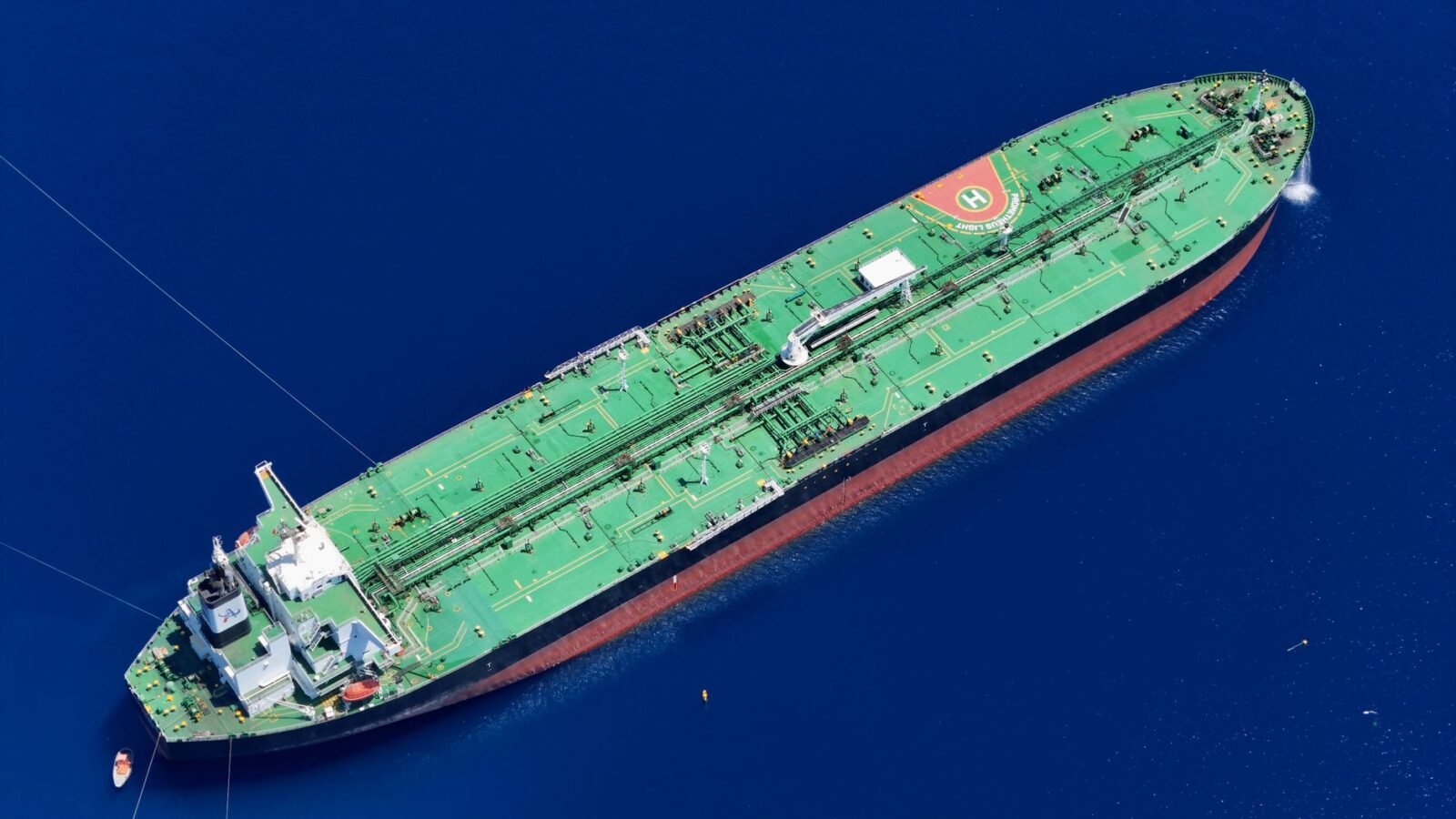
The trigger for such a scenario would likely be an incident of sufficient gravity to provoke a unified international response, falling short of outright war but demanding a decisive solution to guarantee energy flows. This could involve a major attack on a supertanker or a prolonged, but ultimately unsuccessful, attempt to block the Strait. The implementation of such a system would necessitate significant diplomatic coordination and a sustained military presence from multiple global powers, potentially leading to new security alliances or re-alignments in the region. The costs of transit would rise due to security surcharges, but the certainty of passage would be restored, albeit under duress.
Scenario three: Prolonged Closure and Global Re-alignment
This most severe scenario predicts a sustained closure of the Strait of Hormuz for several months or even longer, occurring at some point before 2030. Such a closure would almost certainly be the result of a major regional conflict, likely involving state actors, or a successful, prolonged interdiction campaign. The economic repercussions would be catastrophic, triggering a global recession as oil prices surge to unprecedented levels and supply chains for all goods are severely disrupted.
In this scenario, the global energy landscape would undergo a radical transformation. Nations would rapidly accelerate investments in alternative energy sources, domestic production, and non-Hormuz dependent import infrastructure. Strategic petroleum reserves would be depleted, and energy rationing might become a necessity in major consuming nations. Geopolitically, this scenario would likely lead to a re-drawing of alliances, potentially fracturing existing blocs and forging new ones based on energy security imperatives. The long-term effects would include a permanent shift away from fossil fuels in some sectors and a profound re-evaluation of maritime trade routes and naval power projection globally. The global economy would emerge fundamentally different, with a diminished reliance on single-point energy transit and a greater emphasis on regional self-sufficiency.
Wildcards that would break every scenario
Several unforeseeable developments could fundamentally alter the trajectory of these scenarios. A rapid, breakthrough technological advancement in energy storage or production, such as commercially viable cold fusion or ultra-efficient battery technology, could significantly diminish the world's reliance on hydrocarbon fuels, thereby reducing the strategic importance of Hormuz. Conversely, the discovery of vast, easily extractable oil or gas reserves outside the Persian Gulf, coupled with rapid development, could also dilute the Strait's centrality.
A sudden, comprehensive diplomatic breakthrough leading to a regional peace accord, addressing the underlying grievances of all major actors, would similarly invalidate these projections. Such a development, while presently remote, would fundamentally alter the threat landscape. Conversely, a major non-state actor acquiring advanced anti-ship capabilities could introduce an unpredictable element of chaos that even state-level actors struggle to contain, creating a security dilemma not presently accounted for in current strategic thinking.
Strategic implications
The implications of these scenarios extend far beyond energy markets. For defence planners, each scenario demands different levels of naval projection, intelligence gathering, and regional alliance building. In a 'Constrained but Open' environment, the focus might be on anti-piracy and escort capabilities. 'Controlled Access' would necessitate a standing multinational naval force, implying significant resource commitments and complex command structures. A 'Prolonged Closure' would shift focus to rapid response, expeditionary logistics, and the protection of alternative supply lines, potentially far from the Gulf.
For economic strategists, the imperative is diversification and resilience. Investment in renewable energy, nuclear power, and domestic resource development would be accelerated under any scenario involving heightened Hormuz risk. The development of new trade routes, including overland corridors, would also gain urgency. The question for policymakers, therefore, is not merely how to react to a crisis in Hormuz, but how to proactively reshape the global energy and trade architecture to mitigate the consequences of its inherent vulnerability. What level of risk are nations prepared to tolerate for the sake of existing energy paradigms, and at what point does the cost of maintaining the status quo outweigh the investment required for true strategic independence?
Scenario matrix
| Scenario | Probability | Confirming trigger |
|---|---|---|
| Constrained but Open: Hormuz remains open but with persistent, low-level disruptions and elevated transit costs. | 55% | Continued sporadic incidents (e.g., vessel harassment, minor infrastructure attacks) without sustained military escalation or formal interdiction by any state actor. |
| Controlled Access and Naval Escorts: A formal, internationally mandated naval escort system is established for all commercial transit. | 30% | A significant, but not catastrophic, incident (e.g., major attack on a supertanker, brief partial closure) prompting unified international military intervention to secure transit without full-scale conflict. |
| Prolonged Closure and Global Re-alignment: The Strait is closed for several months or longer due to major regional conflict. | 15% | A direct military conflict between major regional powers, or a successful, sustained interdiction campaign, leading to a complete cessation of commercial shipping through the Strait. |
Probabilities are estimates, not certainties. They are published so the forecast can be scored later.
Source material: Al Jazeera – Breaking News, World News and Video from Al Jazeera