Eurovision 2027: Bulgaria’s Host Role and Geopolitical Stakes

Predictive Analysis
Bulgaria's selection as Eurovision 2027 host for Burgas signals more than cultural triumph; it reflects strategic calculations within a contested region.
The signal
The announcement that Burgas, Bulgaria, will host the Eurovision Song Contest in 2027, following a Bulgarian victory, offers a signal that extends beyond the conventional narrative of cultural achievement. While the immediate interpretation centres on national pride and the logistical challenge of staging such an event, the deeper reading concerns the deliberate positioning of a Black Sea port city on an international platform. This is not merely an entertainment decision; it is an economic and geopolitical assertion. Hosting Eurovision demands significant public and private investment, international logistical coordination, and a demonstrable capacity for large-scale event management. For a country situated at a strategic crossroads, the commitment to host reflects a calculation that the benefits — in terms of visibility, infrastructure development, and soft power projection — outweigh the considerable costs and inherent risks.
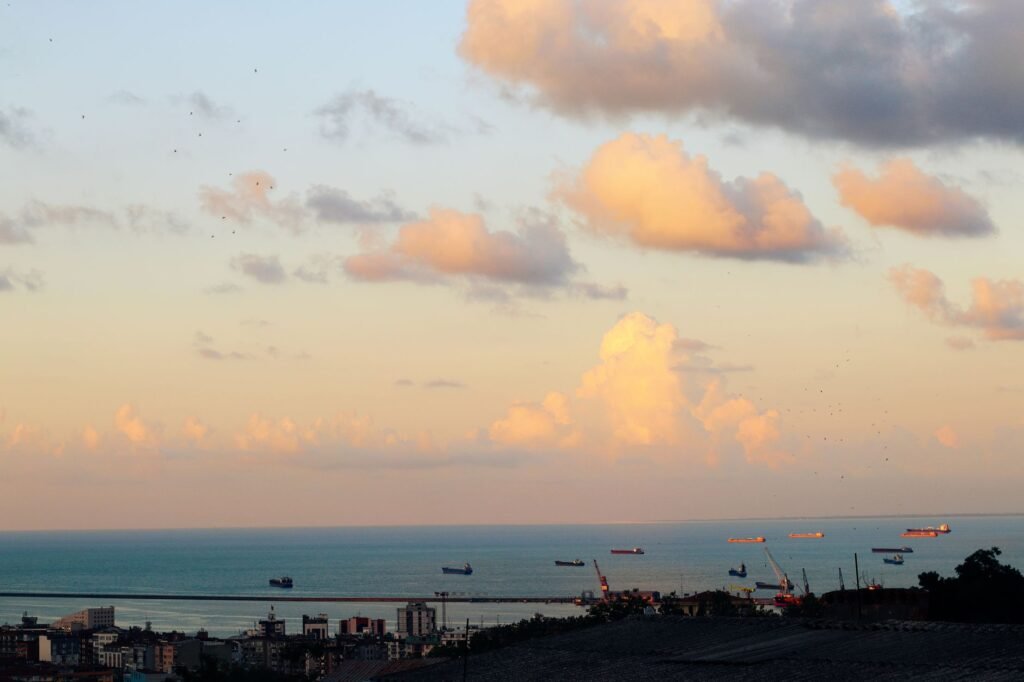
The selection of Burgas specifically, rather than a more established capital like Sofia, amplifies this signal. Burgas is a critical maritime hub, serving as Bulgaria's largest port and a nexus for energy and trade flows in the western Black Sea. Placing a high-profile, internationally televised event in such a location implicitly elevates its strategic importance and draws global attention to the broader Black Sea region. This move can be interpreted as a deliberate effort to solidify Bulgaria's standing within its alliances, particularly NATO and the European Union, by demonstrating stability and capacity in a contested geopolitical theatre. The signal is one of confidence and strategic intent, inviting closer examination of the mechanisms by which this intent might be realised.
The mechanism
The mechanism by which hosting Eurovision in Burgas is intended to yield strategic advantage operates on several interlocking levels. Economically, the event will necessitate substantial investment in local infrastructure, including transport links, accommodation, and venue upgrades. This capital injection, if managed effectively, could serve as a catalyst for broader regional development, attracting further foreign direct investment and boosting the local tourism sector beyond the immediate event window. The visibility afforded by Eurovision's vast audience offers an unparalleled marketing opportunity for Burgas and Bulgaria, potentially shifting perceptions and attracting a new demographic of visitors and investors.
Geopolitically, the mechanism is more subtle but no less significant. By successfully staging an event of this magnitude, Bulgaria can project an image of stability, modernity, and European integration. This is particularly salient given the ongoing security dynamics in the Black Sea. A successful Eurovision in Burgas would serve as a tacit endorsement of Bulgaria's security environment and its capacity to operate as a reliable partner within Western alliances. It would demonstrate effective governance and logistical competence, bolstering arguments for increased investment and cooperation in the region. The event, therefore, becomes a form of soft power projection, aiming to influence international perceptions and reinforce Bulgaria's strategic alignment without recourse to conventional diplomatic or military tools. The question remains whether these mechanisms will translate into the desired outcomes or expose unforeseen vulnerabilities.
Who gains and who is exposed
The primary beneficiaries of Burgas hosting Eurovision 2027 are likely to be the local economy and the Bulgarian government. The immediate gains will accrue to the hospitality sector, construction industry, and ancillary services in Burgas and its environs. Beyond the direct economic uplift, the government stands to gain significant political capital, both domestically through a surge of national pride and internationally through enhanced reputation. The event offers a platform to showcase Bulgaria's cultural richness and its commitment to European values, potentially strengthening its negotiating position within the EU and attracting further integration initiatives.
However, this exposure also carries considerable risks. The sheer scale of Eurovision demands flawless execution, and any logistical failure, security lapse, or significant public protest could rapidly undermine the intended positive messaging. The financial burden of hosting is substantial, and there is a risk of cost overruns or white elephant projects that fail to deliver long-term economic benefit. From a geopolitical perspective, the heightened international profile of Burgas could also make it a more visible target for malign actors seeking to disrupt European unity or challenge regional stability. Furthermore, the event places a spotlight on Bulgaria's domestic governance and rule of law, exposing any perceived deficiencies to intense international scrutiny. The balance between potential gain and inherent exposure will define the ultimate strategic impact of this decision.
Leading indicators to track
To assess the evolving implications of Burgas hosting Eurovision 2027, several leading indicators warrant close observation. Firstly, tracking the scale and nature of infrastructure investment will be crucial. Announcements regarding new transport links, venue renovations, and hotel developments will signal the level of commitment from both public and private sectors. Delays or significant scaling back of these projects would suggest underlying difficulties or a re-evaluation of the event's strategic importance.
Secondly, monitoring international security cooperation and defence posture in the Black Sea region will offer insights into the geopolitical dimension. Any increase in joint military exercises, naval deployments, or intelligence sharing involving Bulgaria and its allies could indicate heightened awareness of the region's strategic value, partly catalysed by the upcoming event. Conversely, a reduction in such activities might suggest a miscalculation of the strategic utility of the event or a shift in broader regional priorities. Thirdly, observing shifts in foreign direct investment into Burgas and the wider Bulgarian Black Sea coast, particularly in the tourism and logistics sectors, will provide an economic barometer of the event's long-term impact. Finally, public opinion polling within Bulgaria regarding the costs and benefits of hosting will offer a domestic political indicator of the project's perceived success.
The twelve-month forecast
Over the next twelve months, the primary focus will remain on the preparatory phase for Eurovision 2027. We anticipate a series of announcements detailing the specific venue, infrastructure upgrade plans, and initial budget allocations. These announcements will be critical in shaping early perceptions of the event's viability and scale. Political rhetoric from Bulgarian officials will likely emphasise the national and European significance of hosting, aiming to build domestic consensus and attract international partnerships. Concurrently, we expect increased diplomatic activity around Black Sea security, with Bulgaria likely to leverage its upcoming host status to draw greater attention and resources to regional stability discussions within NATO and the EU.
The market response will also be a key area of observation. Early investment signals in Burgas, particularly in real estate and hospitality, will indicate the private sector's confidence in the long-term economic uplift. However, this period will also likely see the emergence of initial criticisms regarding potential costs, environmental impact, or logistical challenges, creating a tension between the aspirational vision and practical realities. The twelve-month horizon will therefore be characterised by a delicate balancing act: generating enthusiasm and commitment while managing expectations and addressing nascent concerns, all against the backdrop of an inherently unstable geopolitical region.
Scenario matrix
| Scenario | Probability | Confirming trigger |
|---|---|---|
| Successful execution and strategic gain: Burgas leverages Eurovision to catalyse significant infrastructure development and elevate its geopolitical standing, attracting sustained investment and reinforcing Bulgaria's role as a stable EU/NATO partner in the Black Sea. | 45% | Announcement of major international partnerships for infrastructure financing and a demonstrable increase in foreign direct investment into Burgas by late 2025. |
| Logistical challenges and limited long-term impact: While the event proceeds, it is plagued by cost overruns, minor logistical issues, or fails to generate the anticipated long-term economic or geopolitical benefits, resulting in a net neutral or marginally negative outcome for Burgas and Bulgaria. | 35% | Significant delays in venue construction or infrastructure upgrades, coupled with a lack of new, substantial foreign investment commitments by mid-2025. |
| Geopolitical disruption or major incident: External events (e.g., escalated regional conflict, cyberattacks) or internal failures (e.g., severe security breach) significantly disrupt preparations or the event itself, leading to reputational damage and undermining Bulgaria's strategic objectives. | 20% | Heightened security alerts or specific, credible threats targeting the Black Sea region or large public gatherings in Bulgaria, leading to visible changes in security protocols or international travel advisories, prior to 2027. |
Probabilities are estimates, not certainties. They are published so the forecast can be scored later.
Source material: BBC News