Seismic Migration: Venezuela’s Exodus Navigates Disaster Risk
Predictive Analysis
The flight of Venezuelans from economic collapse and natural disaster exposes a complex interplay of migration, tectonics, and state capacity.
The signal
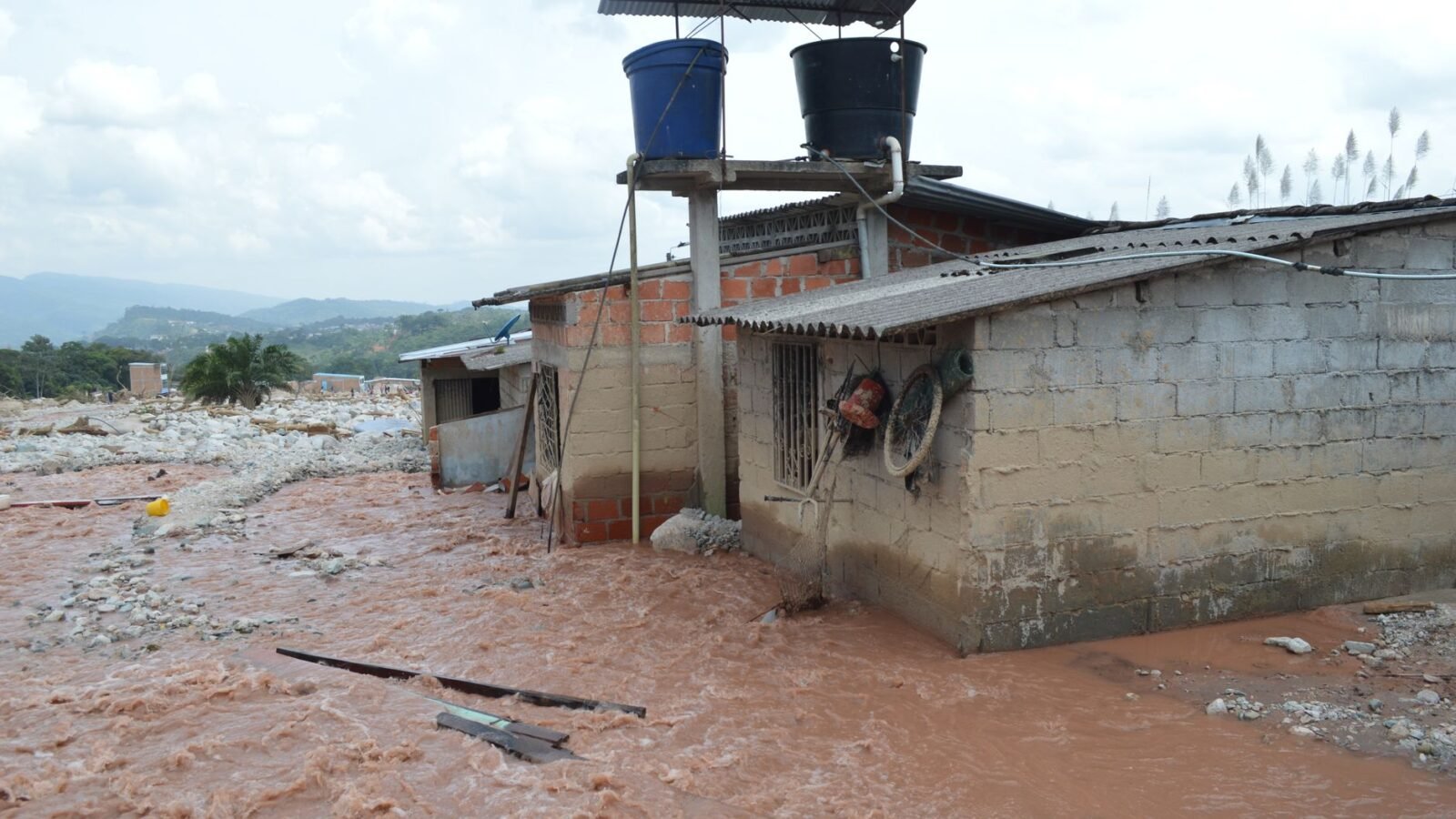
The narrative of individuals like Deivi Delfín, fleeing seismic devastation in Venezuela only to encounter further catastrophe in Colombia, serves as a stark signal. It illustrates a critical, yet often under-analysed, dimension of contemporary displacement: the compounding effect of natural hazards on populations already rendered vulnerable by economic and political crises. For years, the primary drivers of Venezuelan migration have been understood through the lens of hyperinflation, food insecurity, and political instability. The sheer scale of this exodus, with millions relocating across Latin America, has dominated the policy discourse.
What this specific instance illuminates, however, is a secondary, equally potent, and potentially accelerating factor: the intersection of human mobility with geophysical risk. Venezuela and Colombia both lie within active seismic zones. When state capacity to manage disaster response and provide basic services is already eroded, as it is in Venezuela, a seismic event can become a powerful 'push' factor, indistinguishable in its effect from economic privation. The subsequent relocation into neighbouring territories, themselves not immune to similar geological forces, transforms the initial crisis into a trans-national challenge, demanding a more integrated analytical framework than current humanitarian models typically provide.
The mechanism
The mechanism at play is a multi-layered vulnerability cascade. First, prolonged economic collapse in Venezuela has degraded infrastructure, weakened early warning systems, and diminished the state's capacity for disaster preparedness and response. This translates directly into higher casualty rates and greater post-event displacement when seismic activity occurs. A family losing their home and livelihood to an earthquake in a functional state might receive aid and begin reconstruction; in Venezuela, such an event often leaves no viable alternative but to leave the country.
Second, the receiving states, most notably Colombia, are then faced with accommodating populations that arrive not only economically destitute but also potentially traumatised and, critically, without the social or financial capital to secure safe housing. This leads to an increase in informal settlements, often on marginal land or in areas susceptible to landslides and other natural hazards – precisely the conditions that exacerbate disaster risk. The mechanisms of migration, therefore, do not merely shift a population; they can transfer and amplify vulnerability, creating new pockets of acute risk within host communities. This is not simply a humanitarian problem; it is a structural one, challenging urban planning, resource allocation, and long-term resilience strategies across the region. The critical question is whether host nations possess the institutional architecture and fiscal bandwidth to absorb this compounded risk without generating new systemic fragilities.
Who gains and who is exposed
In the immediate term, there are no clear 'gainers' from this convergence of crises. The exposure is widespread and systemic. Vulnerable populations, particularly those displaced from Venezuela, are unequivocally the most exposed. They face precarious living conditions, limited access to formal employment, and heightened risk of secondary displacement. Their individual trajectories, exemplified by the Delfín brothers, underscore the personal cost of this intersectional vulnerability.
Host nations, such as Colombia, are also significantly exposed. While some sectors may experience a short-term increase in informal labour supply, the long-term costs associated with providing social services, managing informal settlements, and integrating large migrant populations often outweigh these benefits. The strain on public services, particularly healthcare and education, is considerable. Furthermore, the political economy of migration can become fraught, leading to social tensions and potential backlashes against migrant communities, particularly if local populations perceive a disproportionate allocation of resources or increased competition for scarce jobs.
International aid organisations and multilateral institutions are exposed in a different sense: their existing frameworks and funding mechanisms are often designed for singular crises – either natural disaster response or refugee assistance. The convergence of these factors reveals a critical gap in their operational models, demanding a more holistic and adaptable approach. The current architecture struggles to account for the iterative, compounding nature of such displacement, where an initial economic migration becomes a disaster-induced displacement, which then cycles back into economic vulnerability in a new location. This exposure is not financial in the first instance, but structural and reputational, highlighting the limitations of current global governance models for complex emergencies.
Leading indicators to track
Several leading indicators will be crucial for tracking the evolution of this phenomenon. First, monitor seismic activity and its direct impact on Venezuelan infrastructure and population centres. An increase in significant seismic events within Venezuela's populated regions, particularly those already facing severe economic distress, would signal a likely acceleration of outward migration driven by disaster. This requires granular data on structural integrity and emergency response capacity within Venezuela itself.
Second, observe the growth and formalisation (or lack thereof) of informal settlements in Colombian border regions and major cities. Rapid, uncontrolled expansion of such settlements, especially in geologically unstable areas, indicates heightened vulnerability among migrant populations. This includes tracking land-use changes and local government capacity to enforce building codes and provide basic services in these areas. The rate of land tenure regularisation for migrant communities will also be a key signal.
Third, track the discourse and policy responses of host governments regarding migrant integration and disaster preparedness. Any shift towards more restrictive migration policies, or a reduction in humanitarian aid for Venezuelan migrants, would suggest increasing strain and potentially exacerbate the vulnerabilities of those already displaced. Conversely, proactive measures for urban planning and resilience building in areas with high migrant populations would indicate a more adaptive, though still challenged, response. Finally, monitor international funding allocations; a shift towards more integrated, multi-sectoral aid packages would signal an acknowledgement of the complex, interlinked nature of these crises.
The twelve-month forecast
Over the next twelve months, the interplay between Venezuelan migration and regional disaster risk is likely to intensify, rather than abate. The structural conditions within Venezuela, particularly the erosion of state capacity, are unlikely to undergo a significant reversal. This means that any substantial seismic activity will continue to act as a potent driver of displacement. Concurrently, the absorption capacity of neighbouring states, particularly Colombia, will remain under severe pressure.
The challenges of housing, employment, and social integration for Venezuelan migrants are systemic. Without a significant, coordinated international effort to support both disaster preparedness within Venezuela and comprehensive integration programmes in host countries, the cycle of vulnerability will persist. The question is not whether further instances of compounded disaster will occur, but rather their scale and the degree to which regional and international actors are prepared to respond to a crisis that transcends conventional categories of humanitarian aid and development.
Scenario matrix
| Scenario | Probability | Confirming trigger |
|---|---|---|
| Continued piecemeal response, leading to escalating vulnerability. | 55% | No major shift in international aid architecture or host country integration policies; continued reliance on ad-hoc humanitarian interventions. |
| Increased regional coordination on disaster risk reduction and migrant integration, mitigating some risks. | 30% | Formation of a dedicated regional task force with multilateral funding for integrated disaster-migration response; significant increase in formal housing solutions for migrants. |
| Major seismic event in a high-density migrant area, overwhelming regional capacity and triggering a new humanitarian crisis. | 15% | A magnitude 6.5+ earthquake in a major Colombian city with substantial informal migrant settlements, resulting in widespread infrastructure damage and mass displacement. |
Probabilities are estimates, not certainties. They are published so the forecast can be scored later.
Source material: BBC News