Trump’s D.C. Hotel Project: A Test of Executive Power and Congressional Prerogative
Trending Global
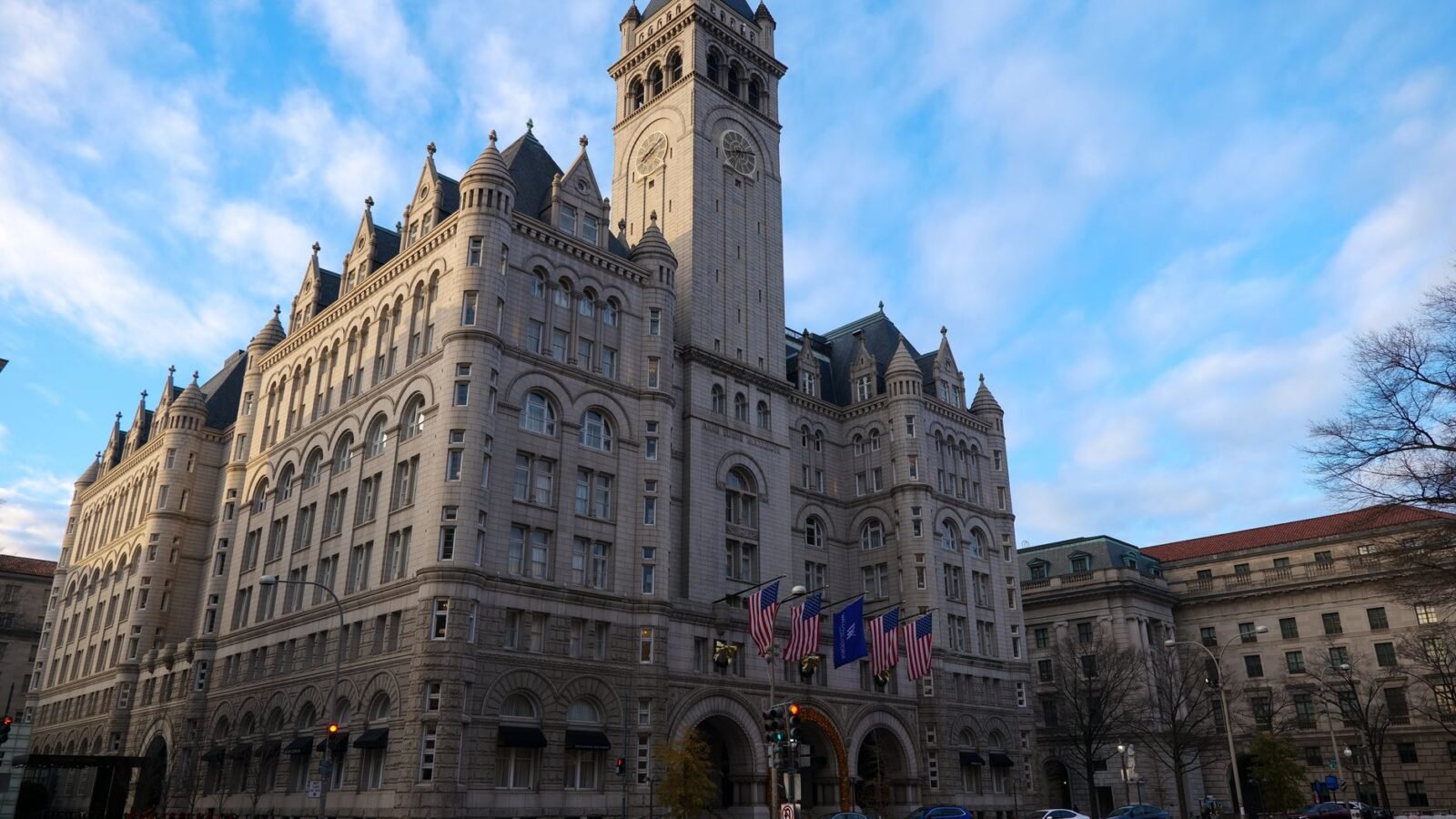
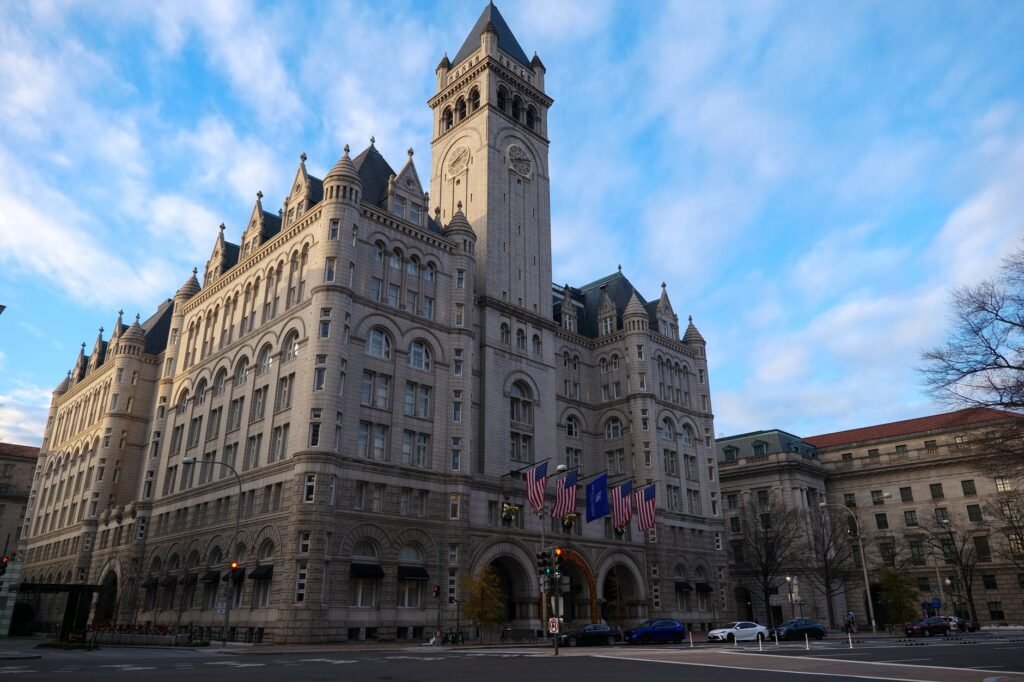
The legal dispute over the Trump International Hotel's ballroom project in Washington D.C. poses a critical test of separation of powers.
What just happened
Donald Trump has formally petitioned the US Supreme Court to overturn an appeals court ruling that mandated congressional authorisation for a substantial $400 million ballroom expansion at the Trump International Hotel in Washington D.C. This escalation places the long-running legal battle directly before the nation's highest court, transforming a dispute over a commercial property lease into a constitutional question of separation of powers.
The core of the legal challenge revolves around the lease agreement for the Old Post Office Building, which houses the hotel. Critics argue that the lease contains an 'emoluments clause' prohibiting elected officials from profiting from foreign or domestic governments. While the specific project is a commercial expansion, the broader context of a sitting president, or a former president with significant political influence, directly profiting from a lease with the US government has consistently drawn scrutiny. The appeals court's decision effectively sided with the argument that such a significant alteration requires explicit legislative oversight, implying a potential conflict of interest that only Congress can sanction or reject.
Why it is contested
The contestation stems from two primary interpretations of the Old Post Office lease and, by extension, the scope of presidential power. One view holds that the General Services Administration (GSA), as the federal agency responsible for managing government property, possesses the sole authority to approve such modifications, treating the lease as a purely contractual matter. Under this interpretation, presidential involvement, even if a conflict of interest, is a political issue to be addressed through elections or impeachment, not through judicial or legislative pre-approval of commercial ventures.
The opposing perspective asserts that the unique circumstances of a sitting president, or an individual with direct governmental ties, leasing federal property create an inherent conflict that transcends ordinary contract law. This view posits that the 'emoluments clause' of the Constitution, which restricts federal officials from accepting gifts or payments from foreign governments without congressional consent, should inform the interpretation of such leases. The appeals court's decision leans towards this latter interpretation, suggesting that Congress, as the body responsible for oversight and appropriations, must explicitly sanction any significant project that could be perceived as enriching a president or former president through federal property. The strongest objection to this reading is its potential to politicise what would ordinarily be routine commercial property management, setting a precedent that could empower Congress to micromanage presidential business dealings far beyond established norms.
The competing narratives
One dominant narrative frames this case as a defence of executive autonomy and the principle that commercial agreements, even with federal entities, should be subject to established contract law rather than political interference. Proponents of this view argue that requiring congressional approval for a specific building project sets a dangerous precedent, potentially weaponising legislative oversight against future presidents' private financial interests. They contend that the GSA is the appropriate body to manage its leases, and that injecting Congress into every substantial lease modification would paralyse federal property management and create an avenue for political obstruction unrelated to genuine legislative responsibilities. The strongest objection to this narrative is its perceived sidestepping of the ethical implications and the spirit of emoluments clauses, which aim to prevent self-enrichment through public office.
A counter-narrative argues that this case is fundamentally about accountability and preventing the appearance of impropriety by those holding or having recently held high office. This perspective emphasises that the presidency carries unique ethical obligations, and that a project of this scale, directly benefiting a former president through a federal lease, demands heightened scrutiny. Requiring congressional authorisation, in this view, is not micromanagement but a necessary check on potential conflicts of interest, upholding the integrity of public service. The strongest objection to this position is its potential for selective application, where congressional oversight could be disproportionately applied based on political animosity rather than clear ethical breaches, thereby politicising commercial development.
What to watch next
The Supreme Court's decision on whether to hear the case will be the immediate focus. A refusal to hear the appeal would leave the appeals court ruling intact, requiring congressional authorisation and potentially stalling the project indefinitely. Should the Court take the case, the arguments will likely delve deeply into the constitutional separation of powers, the interpretation of federal property law, and the scope of presidential ethics. Observers will be looking for any signals that the Court is prepared to redefine the boundaries of presidential business dealings and the role of Congress in overseeing them. The implications extend beyond this single project, potentially shaping how future presidents manage their private assets while in or out of office.
Beyond the legal proceedings, the political dimension remains critical. The ongoing public debate about presidential conflicts of interest, exacerbated by this case, will continue. Any ruling, regardless of its direction, will likely fuel further discussion on the need for clearer statutory guidelines regarding presidential financial holdings and business activities. The question of whether existing legal frameworks are adequate to address the complexities of modern presidential finances is likely to persist, irrespective of the Supreme Court's specific judgment on the ballroom expansion.
The bottom line
This case is more than a dispute over a hotel ballroom; it is a live test of the enduring tension between executive power and legislative oversight, particularly when private financial interests intersect with public office. The Supreme Court's eventual stance, whether by taking or declining the case, will not merely decide the fate of a commercial project but will offer a significant, if not definitive, reading on the ethical latitude of the presidency within the American system of checks and balances. What constitutes an ordinary business transaction versus an emolument requiring congressional consent remains the unresolved question, and one whose implications will resonate far beyond the Old Post Office Building.
Source material: Al Jazeera – Breaking News, World News and Video from Al Jazeera