India’s ‘Cockroach’ Movement: A Challenge to BJP Hegemony by 2030?
Strategic Foresight
The emergence of the 'Cockroach' movement signals a potential shift in India's political narrative control, with implications for the BJP's long-term strategy.
The starting conditions
For an extended period, the Bharatiya Janata Party (BJP) has demonstrated a pronounced capacity to shape and dominate media narratives within India. This capacity has been a cornerstone of its political strategy, enabling it to frame public discourse on a range of issues, from economic policy to social reforms. The party's disciplined communication apparatus and its perceived influence across various media platforms have contributed to a political environment where dissenting voices often struggled to gain widespread traction or to challenge the established narrative effectively. This has allowed the BJP to consolidate its support base and maintain electoral momentum, often by defining the terms of national debate.
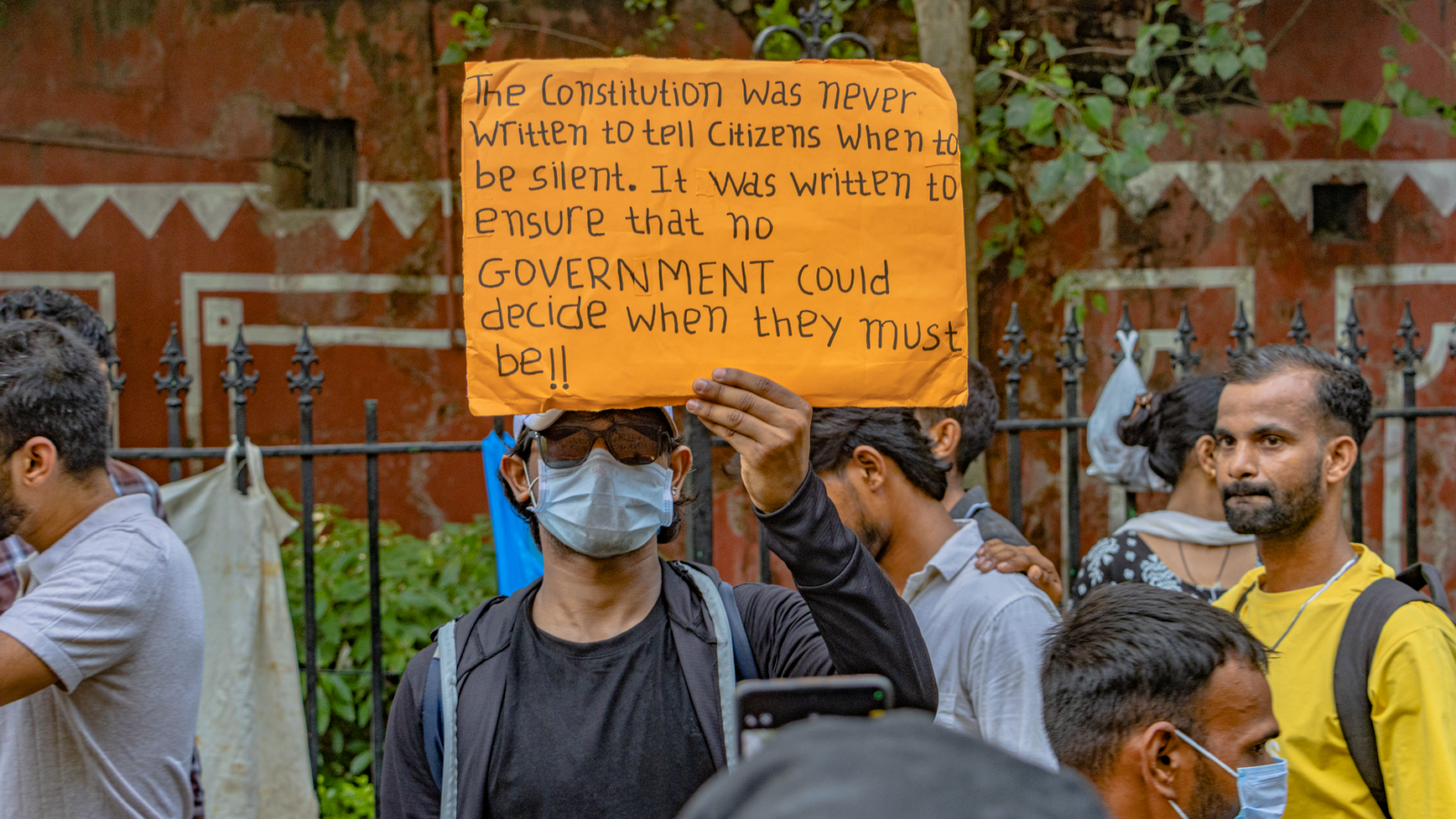
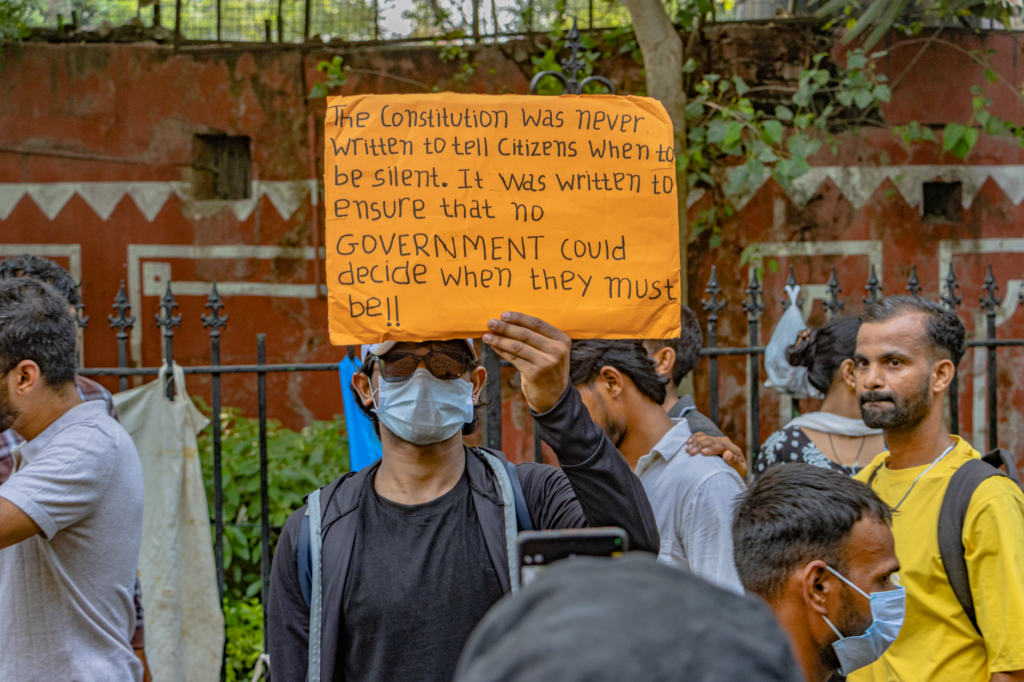
The emergence of the 'Cockroach' movement, however, suggests a potential inflection point in this dynamic. While details regarding the movement's precise nature and scale remain emergent, its very existence implies a challenge to the BJP's hitherto robust control over information dissemination. The nomenclature itself, if indicative of resilience and pervasiveness, suggests an entity that is difficult to suppress or ignore, even if not overtly powerful. This development raises the critical question of whether this movement represents a novel form of opposition capable of circumventing established narrative controls, or merely a temporary perturbation within a still-dominant political landscape. The subsequent trajectory of Indian politics will likely be determined by how this nascent challenge is met, absorbed, or countered by the incumbent power structures.
Scenario one: BJP adapts and co-opts
In this scenario, by 2030, the BJP could demonstrate a strategic agility that allows it to adapt to, and ultimately co-opt, the underlying grievances or emergent communication methods that define the 'Cockroach' movement. Rather than attempting outright suppression, which might prove counterproductive against a diffuse and resilient entity, the party might instead integrate elements of the movement's messaging or address specific concerns that have gained traction through its channels. This could involve a recalibration of public policy or a shift in rhetorical emphasis, designed to absorb dissent rather than confront it directly. Such an approach would leverage the BJP's established organisational strength and its capacity for narrative reframing.
Should this occur, the 'Cockroach' movement might lose its distinctiveness, its core appeals having been neutralised or incorporated into the mainstream political discourse by the dominant party. The BJP's control over the broader political narrative would remain largely intact, albeit having evolved to accommodate new societal pressures. This outcome would suggest a mature political system capable of internalising and managing emergent challenges without fundamental disruption to its existing power structures. The movement would, in essence, serve as a catalyst for the BJP's own evolution, strengthening its resilience rather than diminishing it.
Scenario two: Sustained narrative contestation
Under this scenario, the period leading up to 2030 would be characterised by a persistent, low-intensity struggle for narrative dominance between the BJP and the 'Cockroach' movement. The movement, perhaps due to its decentralised nature or its effective use of alternative communication channels, might prove impervious to direct co-option or suppression efforts by the BJP. It would not necessarily achieve outright political victory or electoral dominance but would succeed in consistently challenging the BJP's preferred narratives, introducing alternative perspectives, and fostering a more fragmented information environment.
This scenario would result in a more contested public sphere, where no single entity enjoys unchallenged control over discourse. The BJP might find its capacity to dictate terms diminished, leading to a more complex and unpredictable political landscape. While the party would likely retain significant power, its ability to shape public opinion unilaterally could be compromised, forcing it into a perpetual state of defensive messaging or reactive policy-making. This sustained contestation would keep political tensions elevated and could empower other opposition forces by demonstrating the feasibility of challenging established narratives.
Scenario three: Erosion of BJP narrative hegemony
This scenario posits a more significant long-term impact, where the 'Cockroach' movement, possibly in conjunction with other emerging factors, contributes to a substantial erosion of the BJP's narrative hegemony by 2030. This would not necessarily imply the BJP's electoral defeat but rather a fundamental shift in its ability to control the ideological and informational terrain. The movement could act as a vanguard, pioneering new methods of information dissemination or public mobilisation that other opposition elements subsequently adopt and scale.
Such an erosion could manifest as a proliferation of independent media, citizen journalism, and decentralised information networks that bypass traditional controls. The BJP's communication strategies might become less effective in this altered landscape, leading to a more diverse and less predictable public discourse. This could force the party to fundamentally rethink its engagement with the electorate, moving away from narrative control towards a more responsive and perhaps less ideologically rigid posture. The long-term implication could be a more pluralistic political environment, where the BJP, while still a dominant force, operates within a significantly more challenging informational ecosystem.
Wildcards that would break every scenario
Several unforeseen developments could fundamentally alter the trajectories outlined in these scenarios. A significant external geopolitical shock, such as a major regional conflict or a global economic crisis of unprecedented scale, could either galvanise national unity around the incumbent government or expose its vulnerabilities, shifting public attention away from internal narrative battles. Conversely, a severe internal crisis, such as a widespread natural disaster or a major social upheaval, could similarly reorient political priorities and reshape public opinion in ways currently unanticipated. The emergence of a charismatic, unifying figure outside the established political structures could also disrupt all current projections, offering a new focal point for discontent or aspiration.
Technological advancements, particularly in areas of artificial intelligence or quantum computing, could also introduce new methods of information control or dissemination that are not currently factored into these scenarios. A radical shift in global internet governance or a severe restriction on digital freedoms within India could similarly invalidate current assumptions about narrative contestation. Finally, the unforeseen actions of key political actors, whether through unexpected alliances, resignations, or policy reversals, could create discontinuities that render all current long-term projections obsolete. These wildcards highlight the inherent uncertainty in forecasting political evolution over an eight-year horizon.
Strategic implications
The strategic implications of these scenarios for international observers, investors, and foreign policy decision-makers are substantial. If Scenario One prevails, the BJP's continued narrative dominance, albeit through adaptive mechanisms, would signal a stable, albeit tightly managed, political environment. This might suggest continuity in policy direction and a predictable investment climate, albeit one where state influence over information remains significant. Foreign policy engagements would likely continue to navigate a landscape where central government narratives hold considerable sway.
Scenario Two, characterised by sustained narrative contestation, would introduce greater political volatility and unpredictability. Investors might face increased policy uncertainty as the government navigates a more fragmented public opinion, potentially leading to delays in reforms or shifts in regulatory frameworks. Foreign policy actors would need to engage with a more diverse set of stakeholders and be prepared for less cohesive national stances on international issues. Scenario Three, the erosion of BJP narrative hegemony, would represent the most significant shift. It could usher in an era of more open political debate, potentially leading to greater policy innovation but also increased political fragmentation. For foreign investors, this might mean a more complex but potentially more transparent operating environment. For foreign policy, it would necessitate engagement with a broader spectrum of Indian society, potentially reducing the efficacy of purely state-centric approaches. Understanding which scenario begins to materialise will be critical for shaping effective engagement strategies with India over the coming decade.
Scenario matrix
| Scenario | Probability | Confirming trigger |
|---|---|---|
| BJP adapts and co-opts | 45% | A noticeable shift in BJP rhetoric or policy addressing specific 'Cockroach' movement grievances, leading to a decline in the movement's independent visibility or public resonance. |
| Sustained narrative contestation | 35% | Continued, consistent reporting of the 'Cockroach' movement's activities and its counter-narratives gaining significant, albeit not dominant, traction across diverse media platforms over an extended period. |
| Erosion of BJP narrative hegemony | 20% | A demonstrable and sustained increase in the reach and influence of independent, non-aligned information sources and citizen-led initiatives, leading to a measurable decline in public trust in established narratives. |
Probabilities are estimates, not certainties. They are published so the forecast can be scored later.
Source material: Al Jazeera – Breaking News, World News and Video from Al Jazeera