Modi’s Public Overture to Putin: A Strategic Reassessment
Predictive Analysis
Indian Prime Minister Narendra Modi's public call for an end to the Ukraine war signals a potential recalibration of Delhi's strategic calculus.
The signal
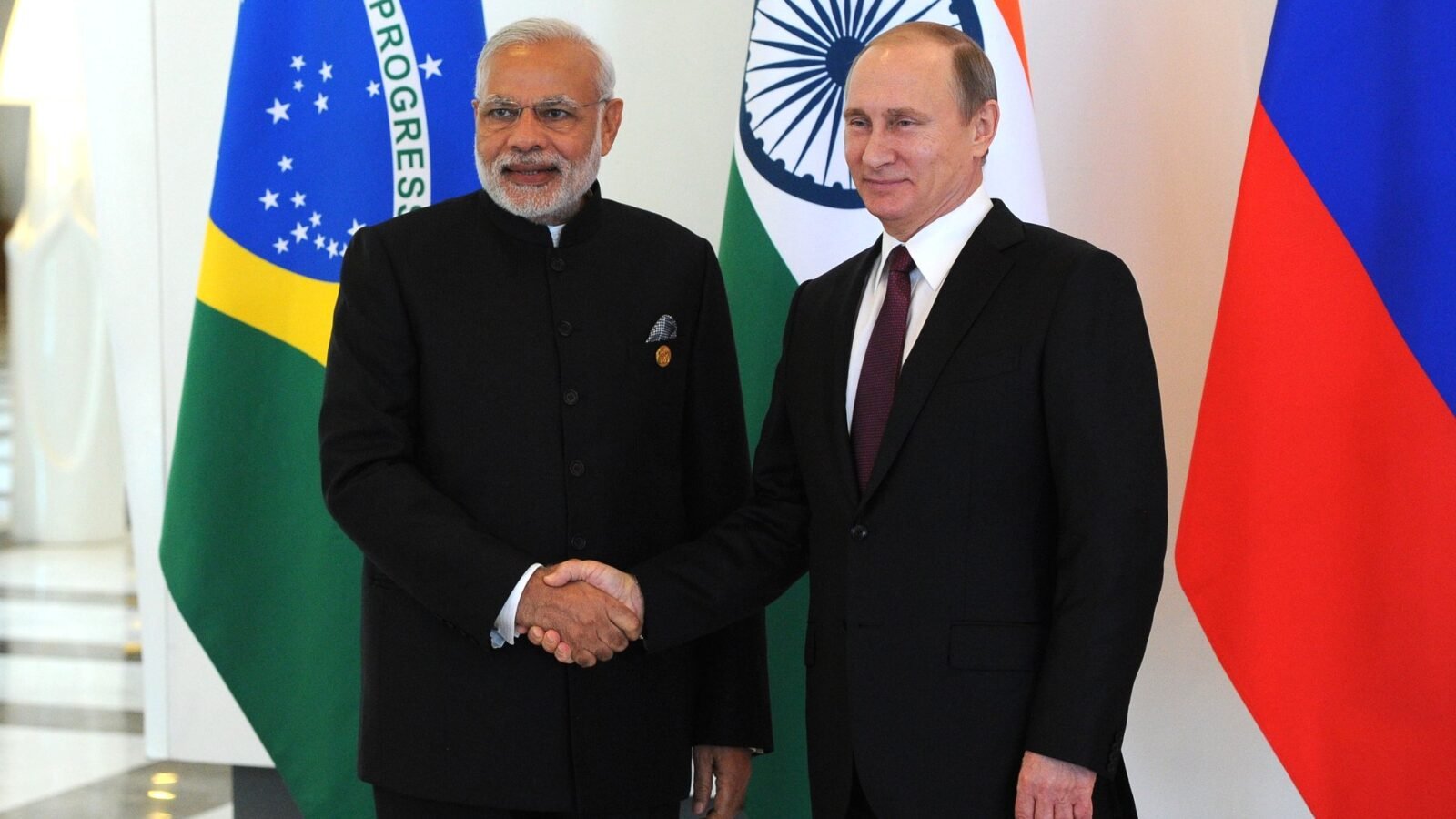
Indian Prime Minister Narendra Modi's direct, public appeal to President Vladimir Putin for an end to the Ukraine conflict represents a notable deviation from Delhi's carefully maintained strategic ambiguity. For months, India navigated the geopolitical fallout of the invasion by abstaining from condemnatory UN resolutions while simultaneously increasing its purchase of discounted Russian energy. This balancing act allowed India to preserve its vital defence ties with Moscow and secure economic advantage, while avoiding direct confrontation with Western powers. Modi's recent statement, delivered on a global stage, fundamentally alters this calculus. It is not merely a restatement of India's desire for peace; it is a public admonition, implying a degree of dissatisfaction with the conflict's prolongation and its broader destabilising effects. The timing and visibility of the statement suggest a deliberate intent to signal a shift, both to Moscow and to the wider international community, regarding the sustainability of the current status quo.
The significance lies not in the content of the message – India has consistently called for dialogue – but in its framing and delivery. By directly addressing Putin and employing language that implicitly questions the wisdom of continued hostilities, Modi has introduced a new variable into the diplomatic equation. This overture signals that the costs of the conflict, both economic and reputational, are beginning to outweigh the benefits of India's non-aligned posture, at least in its current form. It also implies a recognition that the protracted nature of the war is undermining the very principles of sovereignty and territorial integrity that India champions in other regional contexts. The strategic question is not whether India desires peace, but what specific leverage or constraint prompted this public articulation at this particular moment.
The mechanism
The mechanism behind Modi's public intervention is likely multifaceted, driven by a convergence of internal and external pressures. Domestically, India faces inflationary pressures exacerbated by elevated global energy and commodity prices, a direct consequence of the war. While discounted Russian oil has mitigated some impact, the overall economic environment remains challenging. Internationally, India's aspirations for a greater role on the global stage, including a permanent seat on the UN Security Council, are increasingly contingent on its ability to navigate complex geopolitical challenges responsibly. Its continued perceived alignment with Russia, however nuanced, risks alienating key partners in the West, particularly as the conflict shows no signs of abatement.
Furthermore, the protracted nature of the war has revealed the limitations of Russia as a reliable long-term security guarantor and technological partner. India's military, historically reliant on Russian hardware, is increasingly looking to diversify its procurement, a trend accelerated by Russia's own wartime industrial demands and sanctions-related export constraints. Modi's statement can be interpreted as a subtle signal to Moscow that the strategic utility of the relationship is undergoing re-evaluation in Delhi. Simultaneously, it provides a diplomatic opening for India to position itself as a potential mediator, should conditions permit. The statement, therefore, functions as both a gentle rebuke and an assertion of India's independent foreign policy agency, designed to manage competing interests rather than to effect an immediate policy reversal from Russia.
Who gains and who is exposed
In the immediate term, India gains enhanced diplomatic standing, particularly with Western nations, by demonstrating a willingness to challenge its traditional ally. This could unlock greater cooperation on trade, technology transfer, and security initiatives with the US and Europe, bolstering India's economic and strategic diversification goals. It also positions India as a potentially more credible voice in multilateral fora, appealing to those nations seeking alternatives to the existing power blocs. Russia, conversely, is exposed to further diplomatic isolation. While the statement is unlikely to alter Moscow's immediate military objectives, it undermines the narrative of unwavering support from key non-Western partners. It forces Moscow to contend with the reality that even its closest allies are feeling the strain of the conflict and are publicly signalling their desire for its resolution. This could subtly alter Russia's strategic calculations regarding the long-term costs of its current posture.
The G7 nations and their allies stand to gain by seeing a significant non-aligned power shift, however subtly, towards a more critical stance on the conflict. This strengthens the international consensus against the invasion and could encourage other fence-sitting nations to re-evaluate their positions. The global energy market, while not directly impacted by this diplomatic move, could see longer-term implications if such pressure eventually contributes to de-escalation, potentially stabilising prices. The primary exposure for India lies in managing Russia's reaction; any perceived abandonment could prompt Moscow to reassess its own strategic commitments, particularly in defence supplies. However, given Russia's current geopolitical isolation, its options for retaliatory measures against India are limited, making this a calculated risk for Delhi.
Leading indicators to track
To discern the true impact and trajectory of this development, several leading indicators warrant close observation. Firstly, monitor India's voting patterns in upcoming UN resolutions concerning Ukraine. A move towards stronger condemnation or even a shift from abstention to a 'yes' vote would signify a more profound recalibration. Secondly, observe the frequency and tone of high-level bilateral engagements between India and Russia. A reduction in visits or a more reserved public posture from Delhi would suggest a cooling of relations beyond mere rhetoric. Conversely, continued robust engagement, particularly on energy and defence, would indicate that the statement was primarily a diplomatic signal rather than a precursor to a fundamental reorientation.
Thirdly, track India's defence procurement announcements. Any new, significant deals with Western suppliers, particularly for systems historically sourced from Russia, would confirm a strategic diversification. Fourthly, observe the trajectory of global energy prices and their impact on India's domestic economy; sustained high prices could compel India to exert further pressure for de-escalation. Finally, monitor the public and private statements from the US and European Union regarding their engagement with India. Enhanced diplomatic overtures or specific offers of cooperation from Western capitals would validate the effectiveness of Modi's signal in strengthening India's position with these partners.
The twelve-month forecast
Over the next twelve months, the implications of Modi's intervention will likely unfold along several plausible trajectories, each contingent on the evolving dynamics of the Ukraine conflict and broader geopolitical currents. The most probable outcome involves India continuing its delicate balancing act, albeit with a more pronounced tilt towards advocating for peace and de-escalation. This will entail maintaining economic ties with Russia where advantageous, particularly in energy, while simultaneously deepening strategic partnerships with Western nations. The explicit public call for peace provides Delhi with greater diplomatic flexibility, allowing it to engage more robustly with Western initiatives without fully abandoning its long-standing relationship with Moscow. This strategy aims to maximise India's strategic autonomy and economic resilience in an increasingly multipolar world, rather than forcing an immediate choice between global blocs.
A less likely, but still plausible, scenario involves a more decisive shift by India away from Russia, driven by either escalating Western pressure or a dramatic worsening of the war's economic fallout. This would manifest in a significant reduction of Russian energy imports, a halt in new defence contracts, and a more explicit alignment with Western diplomatic positions. Conversely, a scenario where the conflict de-escalates or a robust diplomatic solution emerges could see India revert to a more neutral stance, having achieved its objective of promoting peace without having to fundamentally alter its established foreign policy tenets. The persistent question remains whether this public signal represents the beginning of a genuine strategic pivot, or merely a sophisticated recalibration within India's enduring framework of strategic autonomy.
Scenario matrix
| Scenario | Probability | Confirming trigger |
|---|---|---|
| India maintains strategic autonomy with a pro-peace emphasis, balancing ties. | 55% | Continued Indian abstentions on most UN resolutions, coupled with new defence or trade agreements with Western nations, while Russian energy imports persist at current levels. |
| India makes a more decisive pivot away from Russia due to escalating external pressures. | 30% | India votes with Western powers on a critical UN resolution condemning Russia, announces a significant new defence procurement deal with a non-Russian supplier, and reduces Russian oil imports below current volumes. |
| De-escalation or resolution of the Ukraine conflict allows India to return to a more traditional neutral stance. | 15% | A verifiable ceasefire or peace agreement in Ukraine, leading to a significant reduction in global energy prices and a loosening of Western sanctions on Russia, prompting India to reduce its public advocacy for peace. |
Probabilities are estimates, not certainties. They are published so the forecast can be scored later.
Source material: BBC News