Olive Tree Destruction: Escalation Pathways to 2030
Strategic Foresight
The systematic destruction of Palestinian agricultural land signals a potential entrenchment of conflict, demanding analysis of future trajectories.
The starting conditions
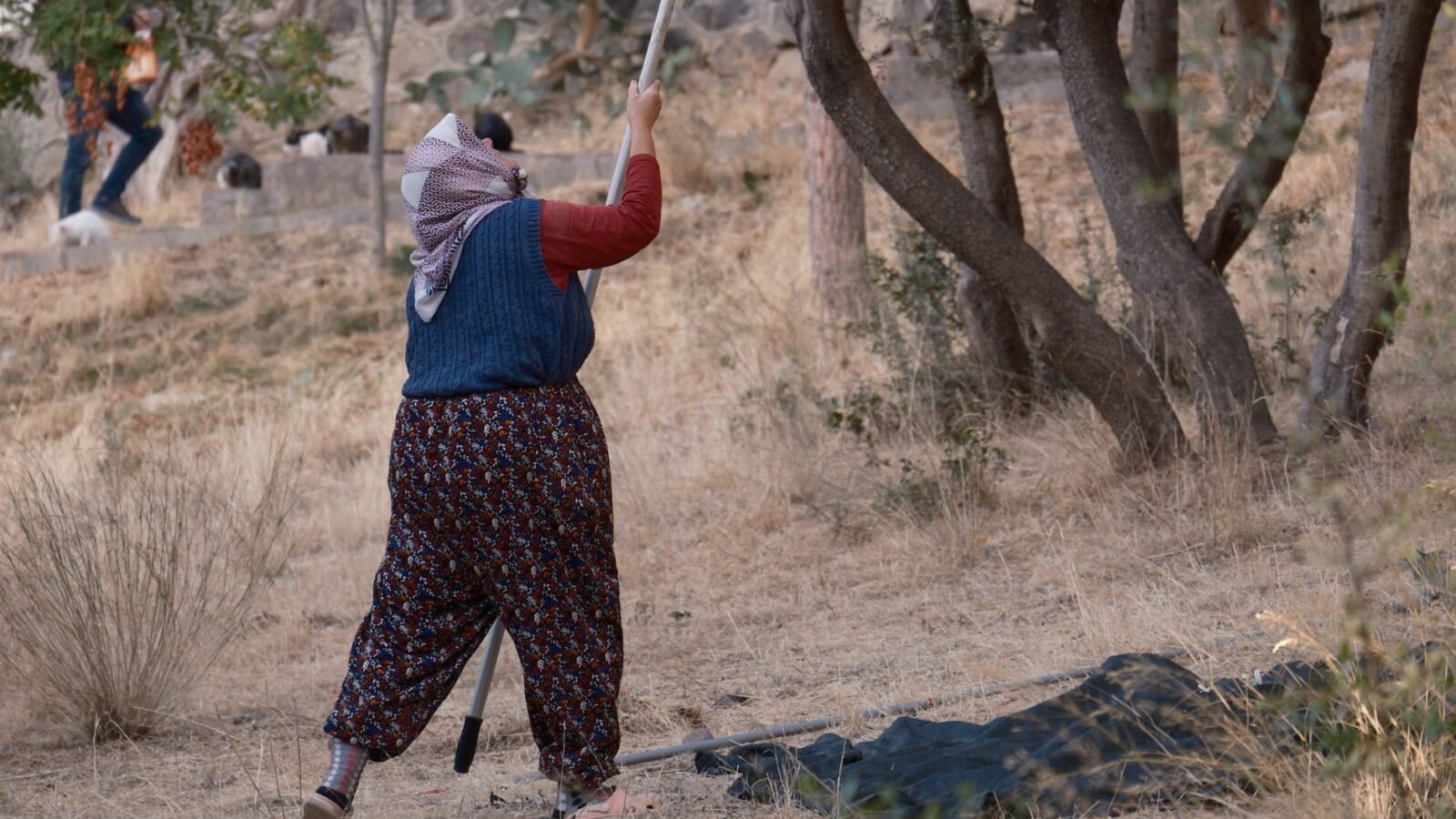
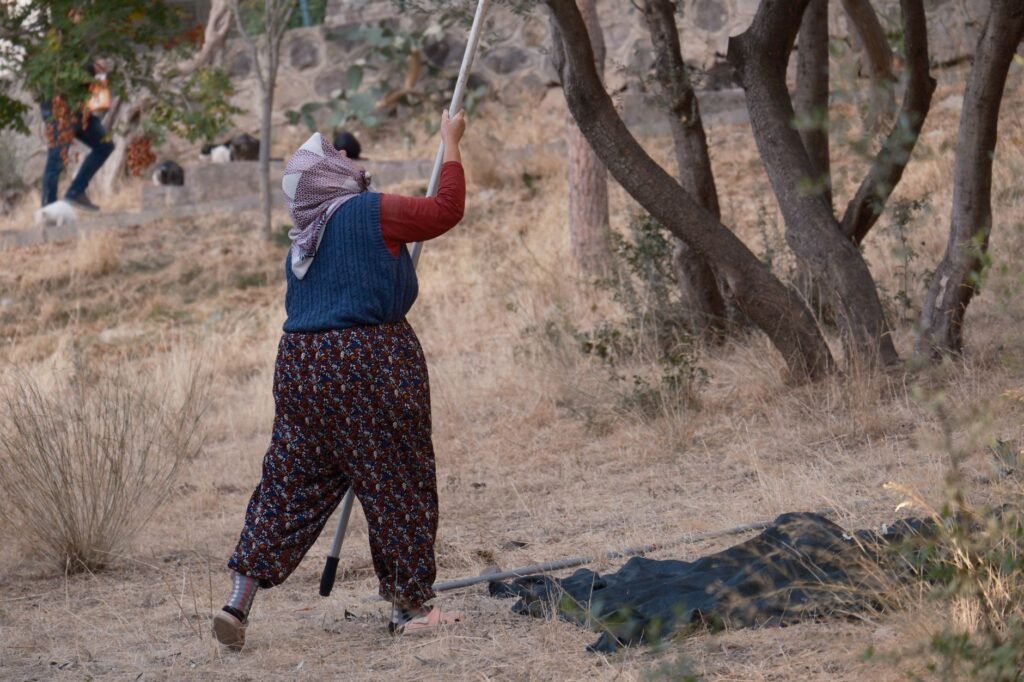
The recent reports of Israeli forces bulldozing Palestinian olive trees underscore a persistent and multifaceted dimension of the Israeli-Palestinian conflict. While such actions are not unprecedented, their recurrence signals a continuing pattern of land appropriation and agricultural disruption that carries significant second-order implications. Olive trees, beyond their economic value, hold deep cultural and symbolic significance for Palestinians, representing heritage, resilience, and rootedness to the land. Their destruction is thus not merely an economic act but also a profound psychological and political one, intended to dispossess and displace.
This specific tactic operates within a broader context of contested territorial control, settlement expansion, and the ongoing blockade of Gaza. The current geopolitical landscape is characterised by a weakened Palestinian Authority, internal divisions within Palestinian factions, and an Israeli government increasingly aligned with hardline annexationist policies. Internationally, the focus on the conflict has waxed and waned, with recent normalisation agreements between Israel and some Arab states having arguably marginalised the Palestinian cause in certain diplomatic circles, while simultaneously intensifying a sense of isolation among Palestinians. These starting conditions establish a baseline of high tension, asymmetric power dynamics, and a pronounced absence of a viable political horizon, making the region ripe for continued friction and potential escalation.
Scenario one: Entrenched status quo and incremental escalation
Under this scenario, the current trajectory largely persists, leading to a deepening of existing patterns of conflict by 2030. The destruction of agricultural assets, such as olive groves, would continue intermittently, driven by Israeli security imperatives or settlement expansion. This would not necessarily trigger a full-scale regional war but would instead foster a sustained, low-intensity conflict. Palestinian resistance, while fragmented, might manifest through increasingly sophisticated, albeit localised, acts of defiance. The international community, absent a significant shift in diplomatic priorities, could remain largely reactive, issuing condemnations without applying substantive pressure for a resolution.
The internal political dynamics on both sides would likely reinforce this entrenchment. In Israel, a hardening of right-wing political sentiment could further reduce the appetite for concessions, potentially leading to de jure annexation of additional West Bank territories. For Palestinians, the absence of a credible political process might fuel disillusionment, potentially leading to a generational shift towards more confrontational strategies or a further fracturing of leadership. The economic conditions in the Palestinian territories would likely deteriorate further, exacerbating social grievances and potentially creating fertile ground for radicalisation. This scenario projects a slow, grinding escalation of hostilities, characterised by periodic flare-ups and a steady erosion of any remaining prospects for a two-state solution, gradually transforming the conflict into a de facto one-state reality under Israeli control, but with persistent internal resistance.
Scenario two: Managed de-escalation through renewed international engagement
This scenario posits a shift by 2030 towards a more concerted international effort to de-escalate tensions and revive a political process. A critical mass of key international actors, potentially including the United States, the European Union, and influential regional states, might conclude that the costs of the current trajectory – in terms of regional instability, humanitarian crises, and the erosion of international law – have become untenable. This shift could be triggered by a particularly egregious act of violence or a widespread humanitarian catastrophe that forces a re-evaluation of current diplomatic approaches.
Under this scenario, renewed international engagement could manifest in several ways: a more robust monitoring presence in the West Bank to deter actions like agricultural destruction, increased humanitarian and development aid conditioned on specific de-escalation measures, and a concerted diplomatic push for confidence-building measures. This might involve freezing settlement expansion, easing restrictions on Palestinian movement, and creating a framework for renewed, albeit limited, negotiations. The success of this scenario would hinge on the willingness of both Israeli and Palestinian leaderships to engage meaningfully, potentially under significant external inducement or pressure. While a comprehensive peace agreement might remain elusive by 2030, this scenario suggests a pathway towards mitigating the most destructive aspects of the conflict and preventing its further entrenchment, perhaps by establishing a long-term interim agreement.
Scenario three: Regionalisation and proxy conflict
The third scenario envisions the Israeli-Palestinian conflict becoming increasingly integrated into broader regional power struggles by 2030. Rather than remaining primarily a bilateral dispute with international oversight, it could transform into a more complex proxy confrontation involving multiple state and non-state actors across the Middle East. The destruction of Palestinian assets could be leveraged by regional rivals as a casus belli or a propaganda tool, drawing external powers more directly into the conflict. This might involve increased financial and military support for various Palestinian factions from states seeking to challenge Israeli or Western regional influence.
In this scenario, the conflict's geography could expand, with attacks and counter-attacks spilling over into neighbouring countries or involving non-state actors operating across borders. The potential for miscalculation and unintended escalation would be significantly higher. The pursuit of a two-state solution would likely become entirely secondary to the strategic objectives of external patrons, with Palestinian grievances instrumentalised for wider geopolitical advantage. By 2030, this could result in a highly volatile regional environment, characterised by shifting alliances, increased arms flows, and a pervasive sense of insecurity that makes any form of de-escalation exceedingly difficult to achieve. The destruction of olive trees, in this context, would be seen not just as a local issue but as a spark within a larger regional tinderbox, signalling a broader struggle for influence and legitimacy.
Wildcards that would break every scenario
Several unforeseen events, or 'wildcards', could fundamentally disrupt the trajectories outlined in these scenarios. A significant internal political upheaval in either Israel or the Palestinian territories, such as the collapse of the Palestinian Authority or a radical shift in Israeli governing ideology, could instantly invalidate current projections. A major regional war, independent of the Israeli-Palestinian conflict but involving key regional powers, could either subsume the conflict entirely or dramatically alter the strategic calculus of all parties involved, potentially leading to unexpected alignments or disengagements. Similarly, a global economic crisis of unprecedented scale could divert international attention and resources away from the region, leaving the conflict to fester or forcing a dramatic reduction in external aid and influence.
Technological advancements, particularly in surveillance, weaponry, or cyber warfare, could also introduce new dimensions to the conflict, altering the balance of power or creating novel forms of asymmetric engagement not currently accounted for. Finally, the emergence of a charismatic and unifying leader on either side, capable of transcending existing political divisions and commanding widespread popular support, could unlock previously unimaginable pathways towards either peace or intensified conflict, rendering incremental predictions obsolete.
Strategic implications
The strategic implications of these scenarios extend far beyond the immediate confines of the Israeli-Palestinian conflict. For international security, the entrenchment or regionalisation scenarios suggest a persistent source of instability in a geopolitically crucial region, with potential implications for global energy markets, migration flows, and the spread of radical ideologies. The erosion of international law and norms, particularly concerning civilian protection and territorial integrity, could set dangerous precedents for other protracted conflicts worldwide. For diplomacy, the continued failure to address the core issues of the conflict risks further undermining the credibility of multilateral institutions and the efficacy of traditional peace-making efforts.
Economically, continued instability will deter investment, perpetuate cycles of poverty, and impose significant costs on all parties involved, as well as on international donors. The symbolic destruction of agricultural resources, such as olive trees, highlights the broader strategic objective of control over land and resources, which remains central to the conflict's perpetuation. Understanding these alternative futures is crucial for policymakers seeking to navigate the complex dynamics of the region, not merely to react to events but to proactively shape outcomes. The question remains whether the international community possesses the collective will and strategic foresight to intervene decisively, or if it will merely observe the unfolding of increasingly bleak probabilities.
Scenario matrix
| Scenario | Probability | Confirming trigger |
|---|---|---|
| Entrenched status quo and incremental escalation | 55% | Continued settlement expansion and agricultural destruction without significant international diplomatic pushback or a major internal political shift on either side by late 2025. |
| Managed de-escalation through renewed international engagement | 25% | A coordinated, high-level diplomatic initiative from multiple international powers, coupled with substantial economic incentives and disincentives, materialises before mid-2026, explicitly targeting de-escalation and a return to political dialogue. |
| Regionalisation and proxy conflict | 20% | A significant increase in overt material support from a major regional power to Palestinian factions, or a direct military confrontation between Israel and a neighbouring state involving non-state actors, occurs before 2027. |
Probabilities are estimates, not certainties. They are published so the forecast can be scored later.
Source material: Al Jazeera – Breaking News, World News and Video from Al Jazeera