Escalation in Red Sea: US Strikes on Iran Challenge Regional Deterrence
Trending Global
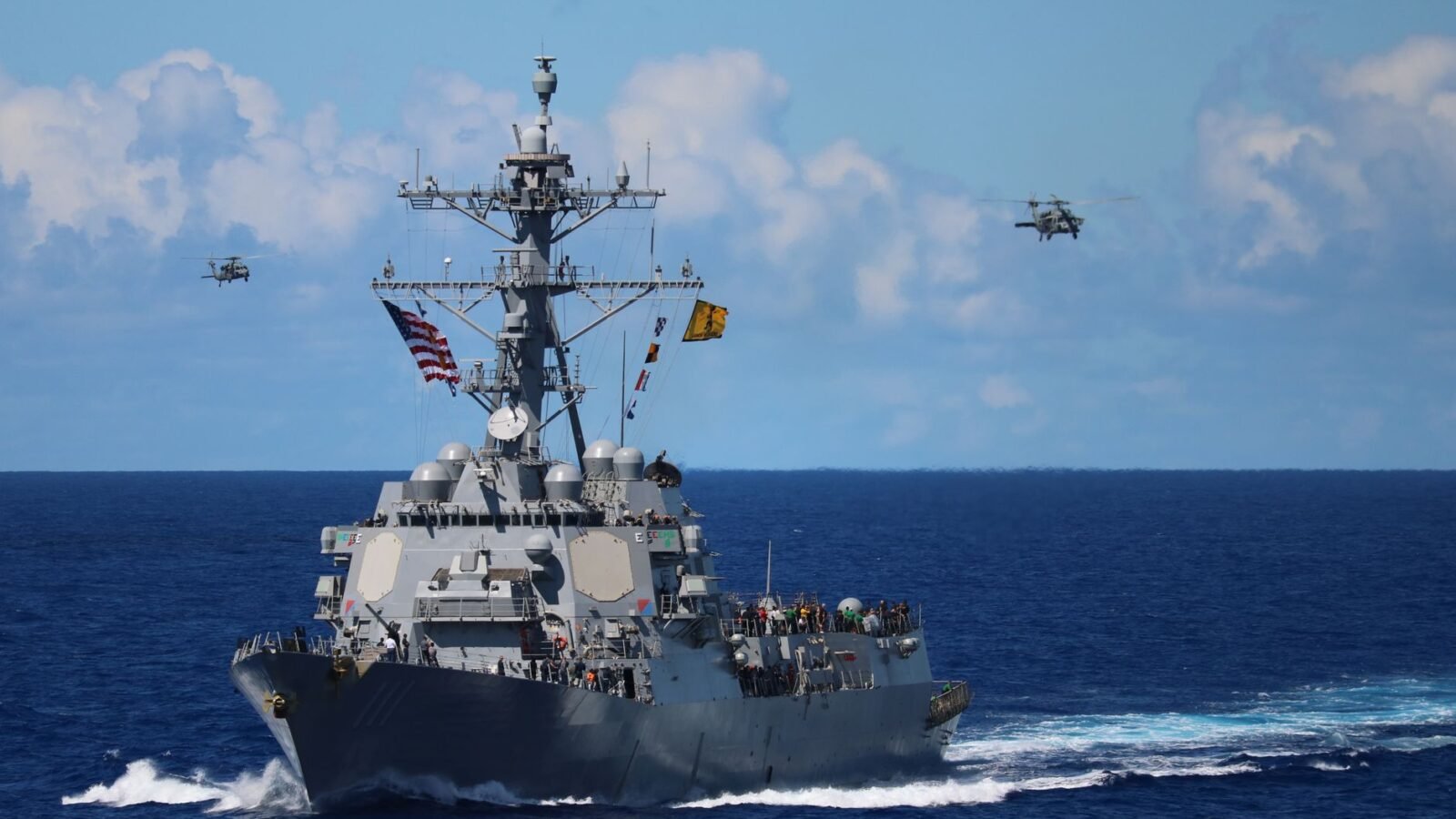
US Central Command's retaliatory strikes against Iranian-backed forces mark a critical inflection point for regional stability and global shipping.
What just happened
The United States Central Command has launched a series of strikes against targets linked to Iran, following a period of heightened aggression in the Red Sea. These actions were explicitly framed as responses to reported attacks on commercial shipping lanes and American military personnel operating within the region. While the precise nature and extent of the damage inflicted by these strikes remain to be fully assessed, their immediate effect has been to elevate the operational tempo and perceived risk profile across a critical maritime corridor. This marks a departure from previous, more circumscribed engagements, suggesting a re-evaluation of the threshold for direct military response to proxy actions.
Why it is contested
The central contention surrounding these strikes lies in their intended and actual impact on regional deterrence. On one reading, the US action constitutes a necessary reassertion of force, designed to restore a credible deterrent against further attacks on international shipping and military assets. Proponents of this view argue that anything less would embolden actors perceived as destabilising the region, ultimately leading to greater insecurity. The strongest objection to this interpretation is that such strikes, rather than deterring, could instead provoke an escalatory cycle, drawing the US into a more direct and protracted confrontation with Iran or its proxies. The historical record suggests that limited retaliatory strikes do not always achieve their desired deterrent effect, sometimes merely shifting the locus or method of attack.
Conversely, another perspective posits that these strikes are primarily a signalling exercise, calibrated to demonstrate resolve without triggering an unmanageable expansion of hostilities. This view suggests that the US aims to draw a clearer red line, compelling a reassessment of risk by state and non-state actors alike. However, the counter-argument here is that the ambiguity of such signalling can be misread, leading to unintended escalation if the US's precise threshold for further action is not clearly communicated or understood. Furthermore, if the strikes fail to demonstrably reduce attacks, they risk undermining US credibility and the efficacy of its regional security posture.
The competing narratives
Two primary narratives are presently vying for prominence. The first asserts that the US strikes represent a decisive move to restore maritime security and protect international trade routes, which have come under increasing threat. This narrative emphasises the imperative of safeguarding the global economy and the principle of freedom of navigation. It positions the US as acting defensively, responding to unprovoked aggression. The implicit assumption is that a strong, unambiguous response will compel a de-escalation from the perpetrators, either through direct impact or by forcing a recalibration of their risk calculus.
The second, contrasting narrative frames the strikes as a dangerous escalation that risks broadening the conflict beyond its current parameters. This perspective suggests that the US action, however justified in isolation, could be perceived by adversaries as an opportunity or a pretext for further retaliation, potentially drawing in additional regional actors. It highlights the inherent volatility of the situation and the difficulty of predicting the second and third-order consequences of military interventions in a complex geopolitical environment. This reading posits that the ultimate outcome may be a more entrenched and geographically expanded conflict, rather than a return to prior stability.
What to watch next
The immediate aftermath of these strikes will be critical in determining the trajectory of the Red Sea situation. Observers will be scrutinising the nature and frequency of any subsequent attacks on commercial shipping or US assets. A sustained reduction in such incidents would lend credence to the deterrence narrative, while any continuation or intensification would bolster arguments of an escalatory spiral. Attention will also be paid to the rhetoric emanating from Tehran and its regional proxies, specifically whether it signals a desire for de-escalation or a commitment to further confrontation. The involvement, or non-involvement, of other regional powers in either overt or covert actions will also offer insight into the broader implications of the current US strategy. The question remains whether this represents a reset of regional power dynamics or merely another phase in an enduring, low-intensity conflict.
The bottom line
The US strikes in the Red Sea have irrevocably altered the calculus for all parties involved, yet the ultimate meaning of this shift remains unwritten. Is this the necessary re-establishment of a credible deterrent, or has Washington merely opened another vector for a wider regional confrontation that it had sought to avoid? The coming weeks will reveal whether this intervention has narrowed the path to escalation or broadened it, and how the international community will navigate the increasingly complex interplay of maritime security, proxy warfare, and great power competition.
Source material: BBC News