Diminished US-ROK Drills Signal Strategic Reorientation, Not Just Diplomacy
Predictive Analysis
The curtailment of joint military exercises between the US and South Korea portends a recalibration of strategic priorities beyond immediate denuclearisation efforts.
The signal
The announcement of reduced military exercises between the United States and South Korea, framed within the context of a 'very good relationship' with North Korea's leader, constitutes more than a mere diplomatic concession. While presented as a facilitative measure for denuclearisation talks, the underlying signal is one of strategic reorientation. The linkage drawn by the US President between these exercises and South Korea's non-participation in a hypothetical conflict with Iran suggests a transactional calculus that diverges from the established principles of alliance management. This implies that the utility of the US-ROK alliance, traditionally viewed as a cornerstone of regional stability and a bulwark against North Korean aggression, is now being assessed through a lens of immediate, disparate foreign policy objectives rather than its inherent strategic value.
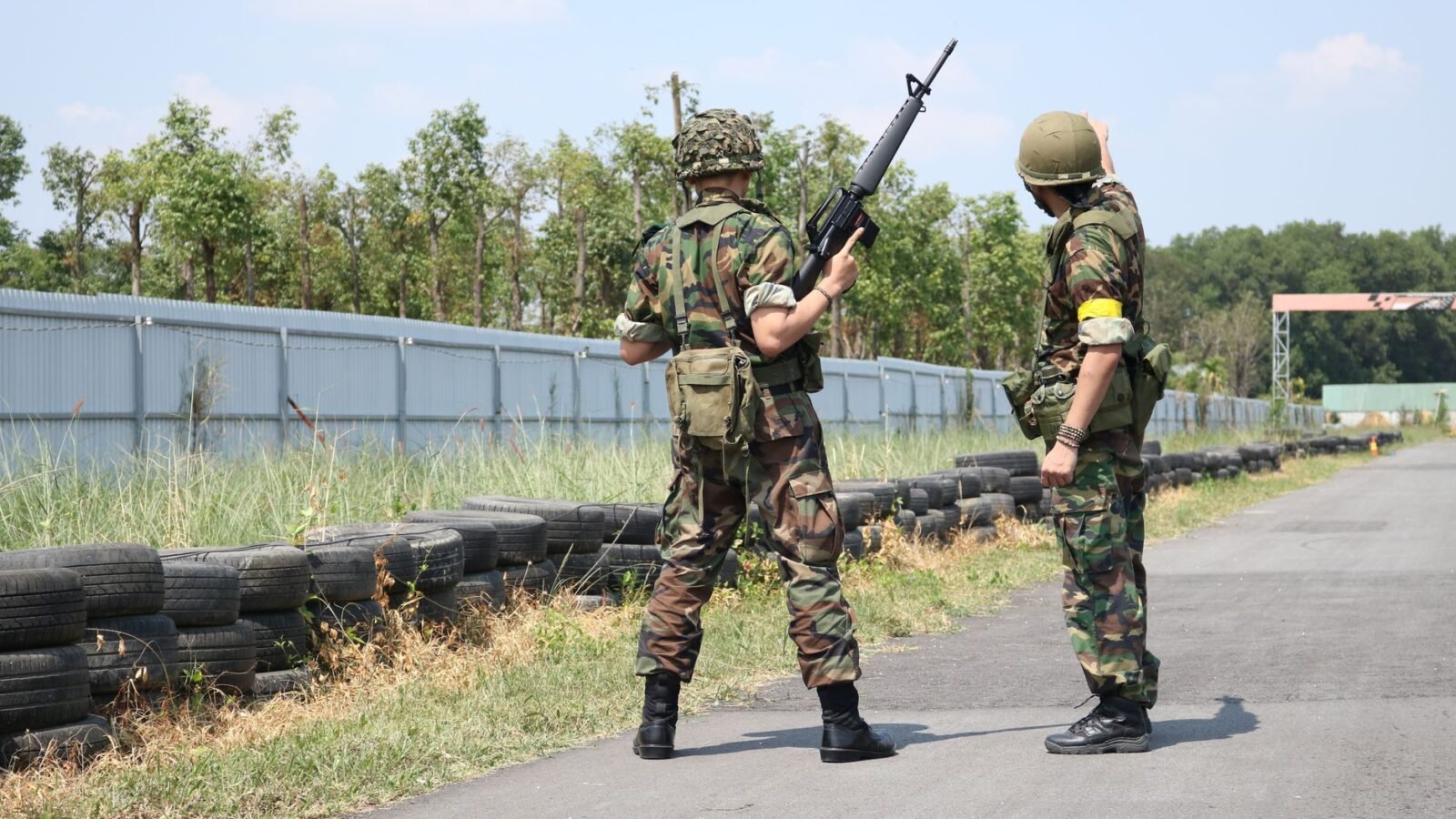
The reduction itself is a tangible manifestation of a shifting operational paradigm. Joint military exercises are not merely symbolic; they are critical for interoperability, readiness, and the credible projection of deterrence. Their diminution, therefore, raises questions about the enduring commitment to collective defence and the operational effectiveness of the alliance in a crisis. This decision, regardless of its stated rationale, transmits a message of potential disengagement or at least a reprioritisation of US military deployments and commitments in the Indo-Pacific, compelling allies to reassess their own security architectures and strategic autonomy.
The mechanism
The mechanism through which this signal operates is multifaceted. Firstly, it directly impacts the operational readiness of the US-ROK alliance. Regular, large-scale exercises are essential for training personnel, testing command and control structures, and refining joint operational plans. A sustained reduction erodes these capabilities, potentially creating gaps in combined defence readiness and diminishing the alliance's ability to respond effectively to contingencies. This degradation of readiness is not immediately visible but accrues over time, weakening the deterrence posture against potential adversaries.
Secondly, the decision reshapes the perception of alliance reliability. Allies rely on predictable commitments and consistent strategic messaging. When core alliance activities are made contingent on unrelated foreign policy considerations, it introduces an element of uncertainty that can destabilise regional security frameworks. This transactional approach risks eroding trust and encouraging allies to hedge against potential US retrenchment, possibly by pursuing independent defence capabilities or realigning with other regional powers. The explicit mention of South Korea's stance on Iran suggests a broader, albeit unstated, framework where alliance benefits are conditional on broader US foreign policy alignment, rather than solely on mutual defence obligations.
Thirdly, the reduction of drills provides tangible strategic advantages to North Korea and, by extension, potentially China. For Pyongyang, fewer exercises reduce the perceived threat of invasion and the immediate pressure of an aggressive military posture on its borders, thereby granting it more operational space and potentially alleviating the internal impetus for rapid military modernisation. For Beijing, a weakening of the US hub-and-spoke alliance system in Northeast Asia could be interpreted as an opportunity to assert greater regional influence and diminish the collective counterweight to its own strategic ambitions. The mechanism here is not just about direct military capability but also about the psychological and political effects on regional power dynamics.
Who gains and who is exposed
The primary beneficiaries of this strategic adjustment are likely North Korea and China. For North Korea, the immediate gain is a reduction in perceived external military pressure, which could be leveraged to advance its own strategic objectives without the constant backdrop of large-scale US-ROK military drills. This creates a more favourable environment for its long-term nuclear and missile programmes, even as it engages in diplomatic overtures. China also gains, as any perceived weakening or transactionalisation of US alliances in the region contributes to its broader strategic goal of diminishing American influence and fostering a more Sinocentric regional order. A less robust US-ROK alliance provides Beijing with greater latitude to project power and influence within its immediate periphery.
Conversely, South Korea is significantly exposed. While the immediate political optics of reduced tensions with North Korea might be domestically appealing, the long-term strategic implications are concerning. Its defence posture, built around the US alliance, relies heavily on combined operational readiness. A reduction in drills directly impacts its ability to deter aggression and defend itself. Furthermore, if the US commitment is increasingly conditional, South Korea faces the unenviable task of either aligning more closely with broader US foreign policy — even on unrelated issues — or developing greater strategic autonomy, which carries significant economic and geopolitical costs. The move also exposes Japan, another key US ally, to similar uncertainties regarding the steadfastness of US security guarantees.
The United States itself faces exposure to the erosion of its alliance network and credibility. While a transactional approach might yield short-term diplomatic wins or cost savings, it risks undermining the very architecture that has underpinned its global strategic posture for decades. Should allies begin to question the reliability of US commitments, the ripple effects could extend beyond Northeast Asia, impacting alliances in Europe and elsewhere. The long-term cost of rebuilding trust and re-establishing deterrence could far outweigh any immediate benefits.
Leading indicators to track
To discern the true trajectory of this strategic shift, several leading indicators warrant close observation. Firstly, the frequency, scale, and nature of future US-ROK military exercises will be paramount. Any further reductions or a sustained absence of major drills would confirm a more profound strategic pivot rather than a temporary diplomatic pause. Conversely, a resumption of larger exercises would suggest a re-evaluation or a tactical adjustment.
Secondly, the rhetoric and actions of North Korea will be critical. Will the reduced pressure translate into genuine denuclearisation steps, or will it be exploited to advance its weapons programmes? Any significant advancements in its missile or nuclear capabilities, particularly during periods of reduced exercises, would indicate a failure of the 'trust-building' rationale.
Thirdly, observe South Korea's defence spending and procurement decisions. An uptick in indigenous defence development, particularly in areas traditionally covered by US capabilities, could signal a hedging strategy against perceived US disengagement. Similarly, any diplomatic overtures by Seoul towards Beijing or Moscow that extend beyond economic cooperation would suggest a diversification of its security partnerships.
Finally, monitor the broader US strategic posture in the Indo-Pacific. Are there similar adjustments to alliances or deployments in other regional hotspots? A pattern of reduced engagement or transactional demands across multiple alliances would confirm a systemic shift in US foreign policy, rather than an isolated decision pertaining to the Korean Peninsula.
The twelve-month forecast
Over the next twelve months, the implications of this decision will likely crystallise, revealing whether it represents a tactical adjustment or a fundamental reordering of regional security. The tension between immediate diplomatic expediency and long-term strategic stability will define the landscape. The core question is whether the perceived benefits of reduced tensions with North Korea outweigh the potential erosion of alliance cohesion and deterrence. The absence of a clear, verifiable denuclearisation pathway from Pyongyang further complicates this calculus, leaving the rationale for the exercise reduction open to interpretation. The true test will be whether this move creates a durable path to peace or merely creates new vulnerabilities in an already volatile region.
Scenario matrix
| Scenario | Probability | Confirming trigger |
|---|---|---|
| Sustained Reduction and Alliance Strain: The reduction in drills becomes a semi-permanent feature, leading to a measurable decline in US-ROK interoperability and a perception of weakening US commitment. South Korea explores greater defence autonomy or diversification of security partners. | 50% | No major US-ROK joint exercises are announced or conducted in the next 6-9 months, and South Korea publicly outlines plans for significant independent defence investments. |
| Tactical Reversal and Recommitment: Following a lack of meaningful denuclearisation progress from North Korea or a rise in regional tensions, the US re-escalates the scale and frequency of joint exercises, reaffirming its alliance commitments. | 30% | North Korea conducts a significant long-range missile test or nuclear-related activity, followed within 3 months by an announcement of large-scale US-ROK military drills. |
| Transactional Normalisation: Drill reductions become a variable component of a new, more transactional US foreign policy, with exercise levels fluctuating based on specific diplomatic or economic concessions from regional actors, but without a full abandonment of alliance structures. | 20% | Future exercise levels are explicitly linked by US officials to specific, unrelated policy alignments from South Korea, or to short-term, reversible concessions from North Korea. |
Probabilities are estimates, not certainties. They are published so the forecast can be scored later.
Source material: BBC News